
Villa Arena
- ÁBATON Architecture, Interior Design, and Landscape Architecture Project
Villa Arena is a project designed with the family in mind. The commission came from a family of six who wanted to find a place dedicated to tranquility, togetherness, and contemplation along the Cadiz coast.
The clients’ appreciation for detail allowed us to create a highly sensory design in which the architecture not only creates spaces but also carefully crafted atmospheres.

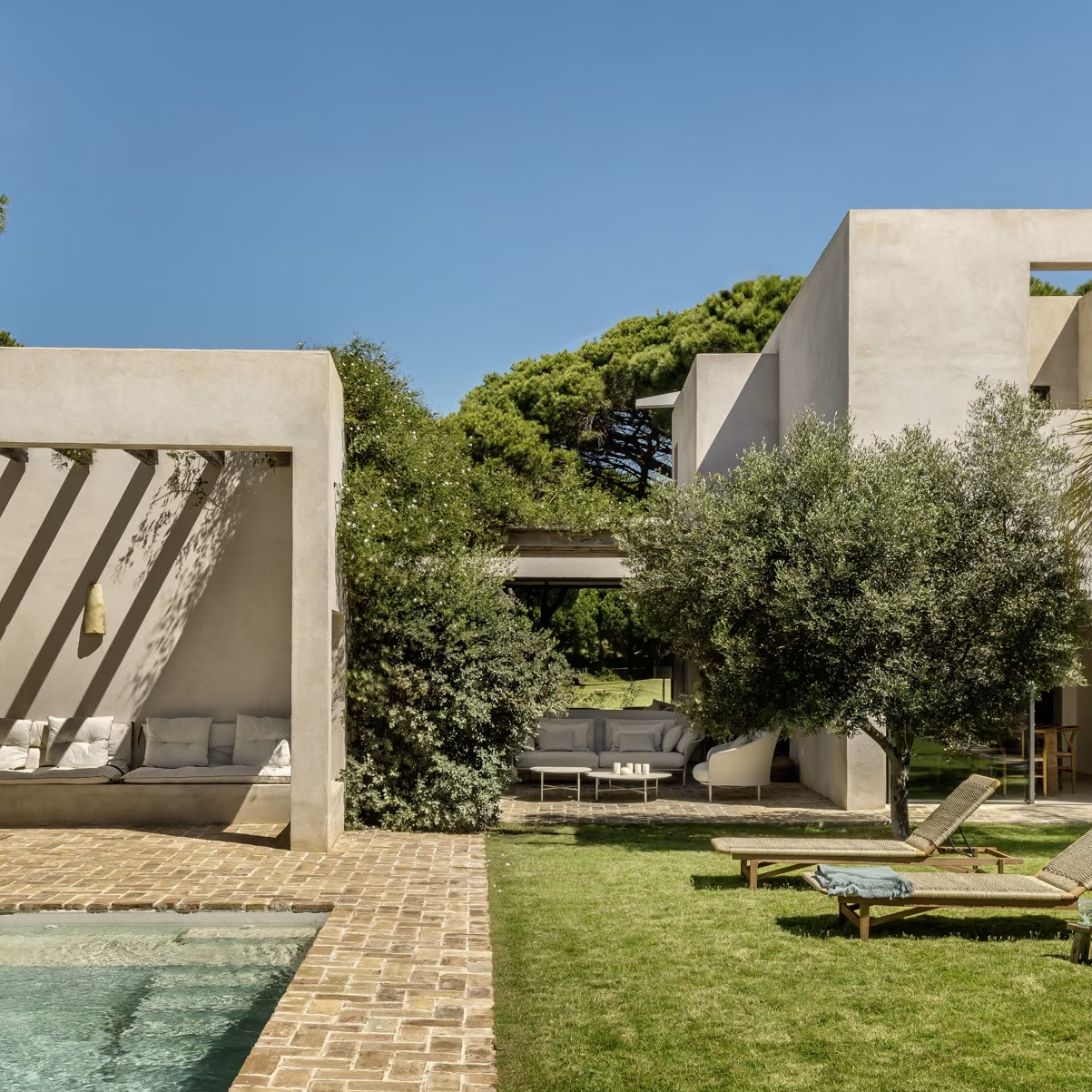
This approach takes shape in an architectural design consisting of two distinct volumes, clad in pigmented lime mortar, which are linked by a third volume that functions as a void within the home—open to the north and south—and creates a connection with the outdoor spaces, blurring the boundary between them and the interior. The two side volumes create a porch area sheltered from the area’s strong winds, facing the central volume. Although designed as a home for a large family, the goal was to achieve a compact interior size and proportions—on a human scale—while providing spacious outdoor living areas that encourage interaction among all family members, serve as common gathering spots, and foster continuous family togetherness.


The volumetric composition articulates the house at different heights, creating a variation in ceiling heights that is not only formal but also narrative: as the spaces become more private, the scale adjusts and becomes more intimate. The entire interior features a continuous finish that reinforces the sense of spaciousness and unity—a uniform surface that runs across floors, walls, and staircases as if the house were carved from a single material.


The entrance is accessed through a porch that offers a glimpse of the kitchen and, beyond it, views of the adjacent golf course. The entrance to the interior is through two large antique wooden doors—pieces with their own history and character that frame the entrance to the main space. Their texture and scale foreshadow the guiding principle that runs throughout the project: the search for materials and elements with history, character, and deep roots in the local area.
This approach is a conceptual aspect of the design. During construction, we sought out reclaimed and antique materials from local buildings in order to achieve a more authentic result that would be more in keeping with the local context.


The main volume combines the dining room and living room into a continuous space dominated by the staircase, which also features a seamless finish with a natural rope handrail. The living room has a proportionate ceiling height, with the exposed concrete slab ceiling visible above, creating a cozy, intimate space designed for family gatherings. Despite this, the enormous windows connect to the south porch and the north garden, framing the views of the golf course. The window and door frames are concealed within the wall to emphasize the connection with the outdoors. The fireplace hangs from the ceiling with a sculptural quality, establishing this space as the home’s gathering hub.


Visually connected to the living room is the dining room, a similarly compact and cozy space that opens onto the garden and features unique pieces of interior design—a blend of Eastern design elements, such as a large Chinese sideboard and the Chinese-inspired CH24 Wishbone, designed by Hans J. Wegner, with contemporary pieces such as the Aplomb Large by Foscarini.
A sage green lacquered panel opposite the dining room conceals the doors to a guest restroom, a closet, and the entrance to the kitchen, designed by ÁBATON’s kitchen department.


Here, the restored clay floor takes center stage, creating a material contrast with the Macael marble countertop and the natural wood. The kitchen opens onto two dining areas designed for use at different times of day. One is covered and sheltered from the sun for the sunniest hours, and the other is open-air and overlooks the golf course for the cooler hours.


The upper floor houses only the master bedroom, creating a more private area. The bedroom, bathroom, and terrace flow seamlessly into one another in an open, custom-designed layout. The closets, in a design that is both functional and aesthetic, feature wicker doors, allowing the interiors to “breathe”—a necessity in a humid environment near the sea.


The children’s bedrooms are located on the opposite side of the house. A double bedroom with direct views of the golf course and a bunk-bed room with its own unique character—designed to accommodate friends and guests—complete the layout of the main floor. Each room has its own bathroom finished in seamless materials, maintaining the sensory coherence that underpins the project.


Outside, the house features multiple gathering spaces that come to life at different times of the day depending on the sun’s position. A more secluded terrace facing the pool catches the direct midday sunlight. The garden, filled with Mediterranean vegetation, existing pine trees, palm trees, and other species such as olive trees and metrosideros, envelops the entire complex and gives each of these spaces its own unique character.


