Omoya and Hanare: a redistribution of social and private habitation
- Project by YSLA Architects
- Photographs by Munetaka Onodera
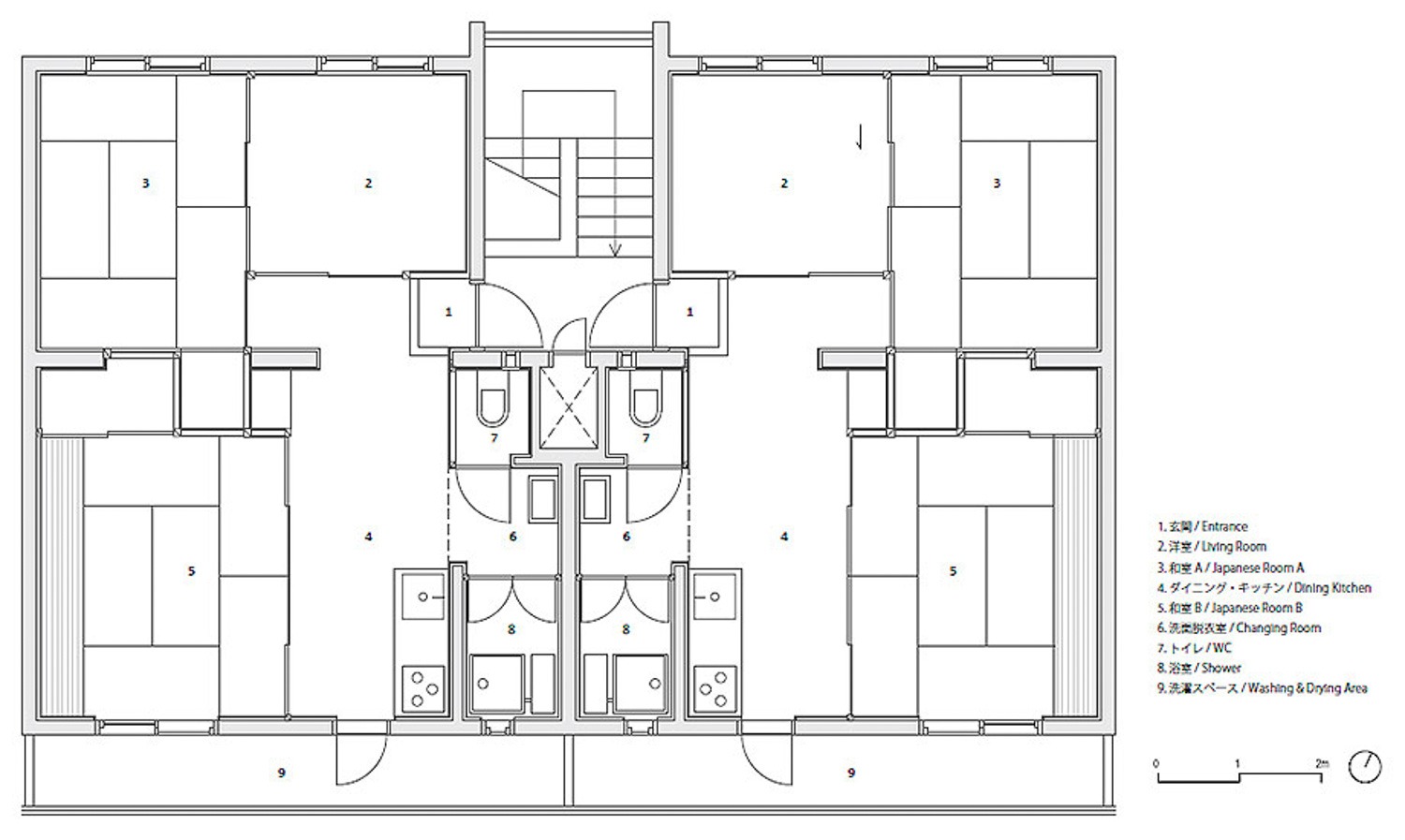
The Omoya and Hanare proposal, from YSLA Architectsemerges as a domestic experiment within the existing residential fabric of Osaka. Against the backdrop of an aging population and a deteriorated housing stock in post-crisis social neighborhoods, the architects – Natalia Sanz Laviña and Takeshi Yamamura – reinvent a housing complex built in the 1970s to propose a new way of living, more flexible and shared.
This project won a public competition promoted by the Osaka Prefectural Housing Corporation, with the premise of transforming four dwellings into two units, combining private and collective space.
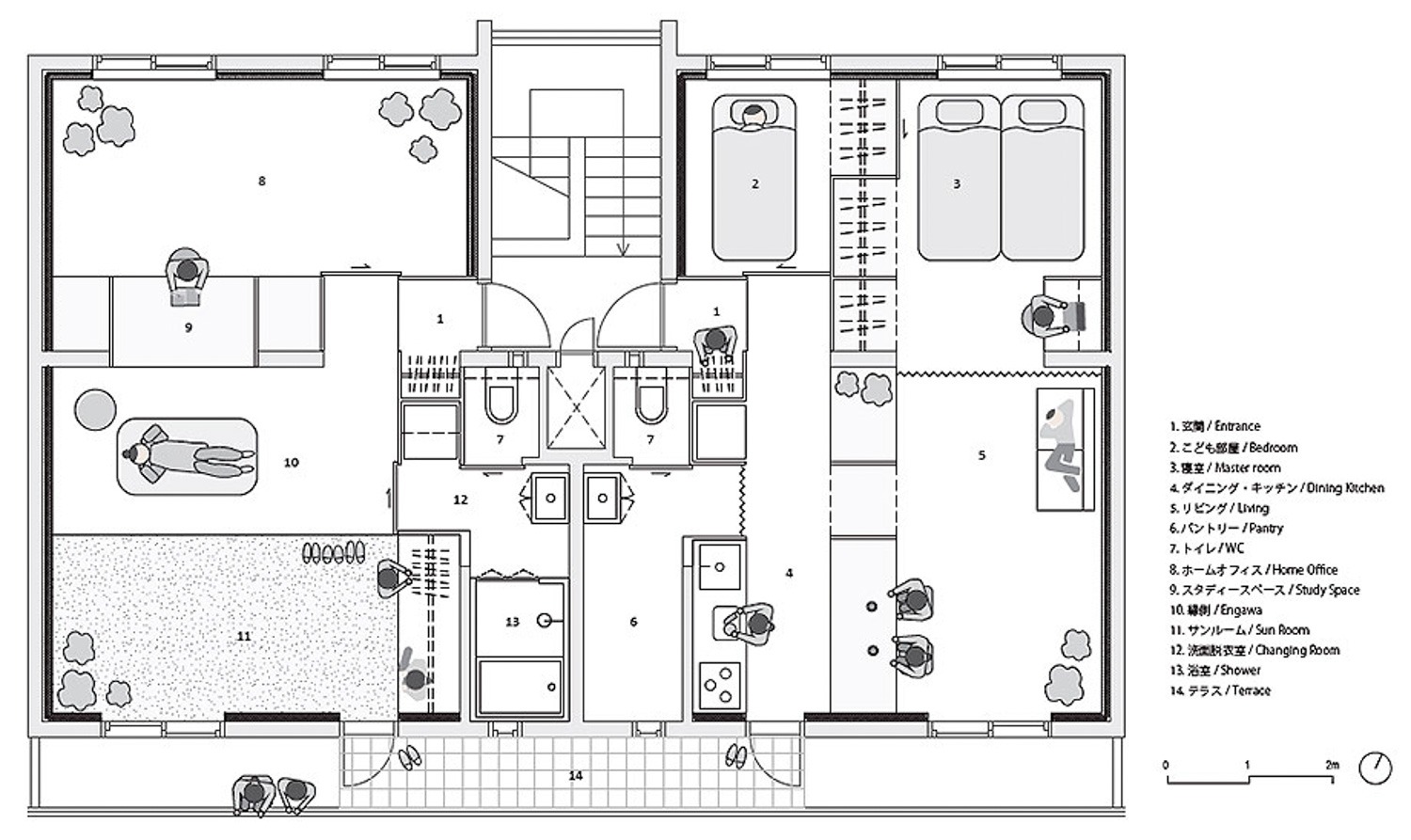
The formal solution articulates two entities: Omoya as a private nucleus and Hanare as a space for public or semi-private use, an annex where the possibility of collaborative living is built without losing the intimate shelter.
Spatial strategies: continuity and connection
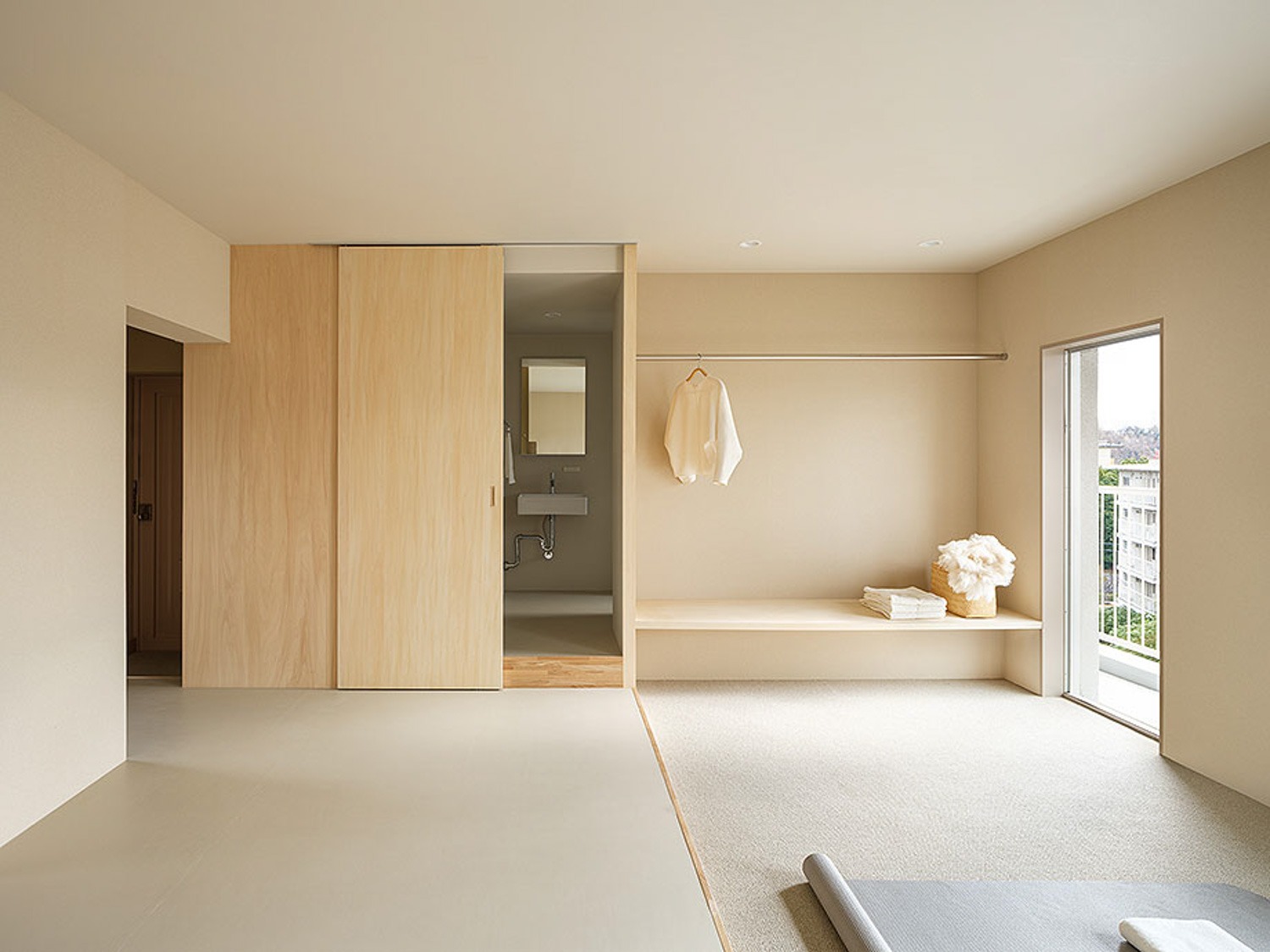
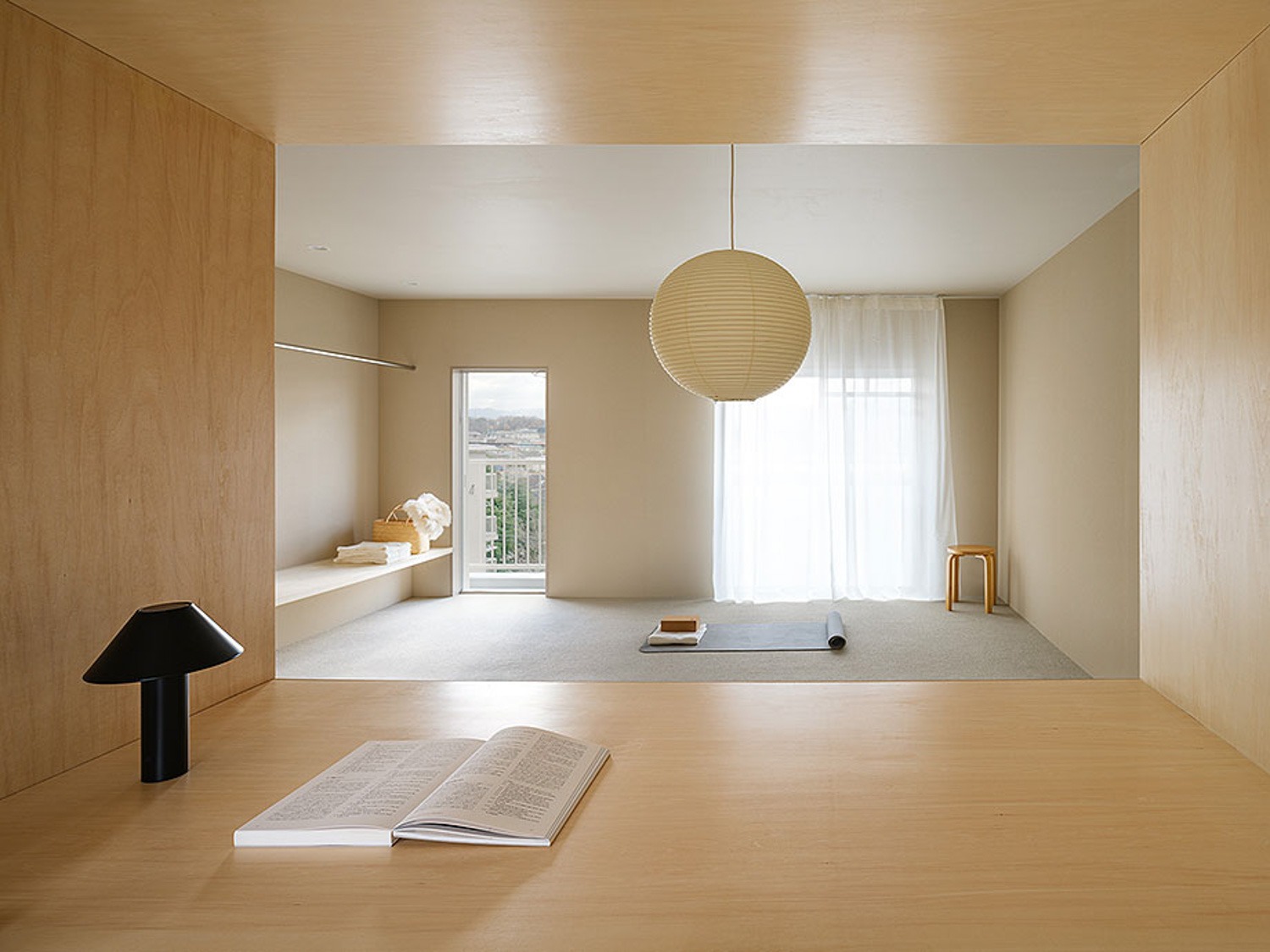
The intervention respects the original entrances of the dwellings. Instead of demolishing, the design recycles, remixes paths and adds connections through shared terraces and balconies. In this sense, Omoya and Hanare propose a transit between interior and exterior -a subtle spatial continuity- that links previously isolated areas.
Hanare houses more public spaces: expandable lounge, meeting area, mixed uses. Omoya concentrates the intimate: bedrooms, rest areas. The idea is not to divide by classic functions, but to allow users to redistribute according to their needs -work, leisure, living- between the two areas.
This approach seems to suggest an unfinished architecture in the sense that it leaves room for the user to complete the project with its use, life and relationships.
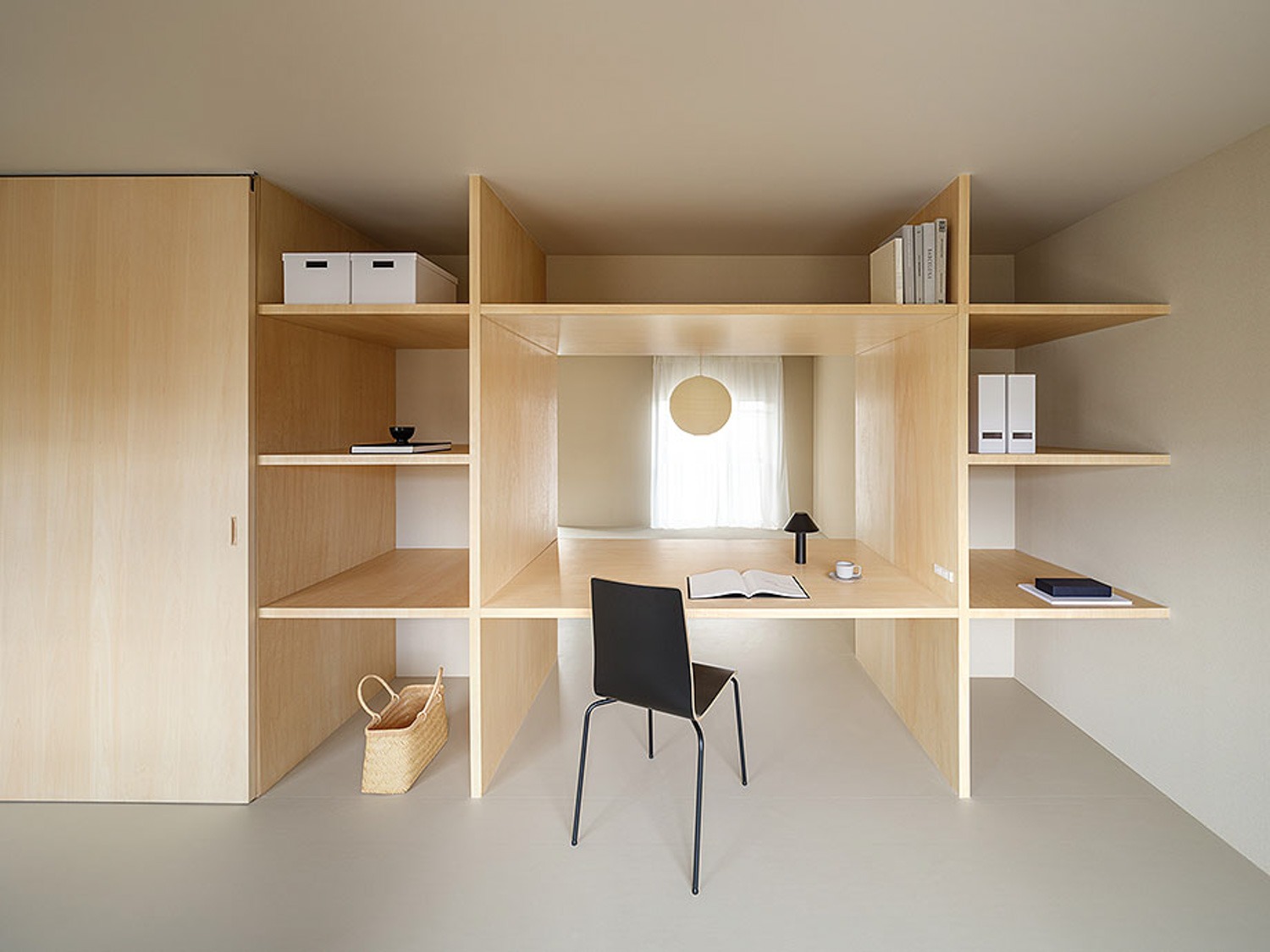
Materiality, atmosphere and minimal furnishings
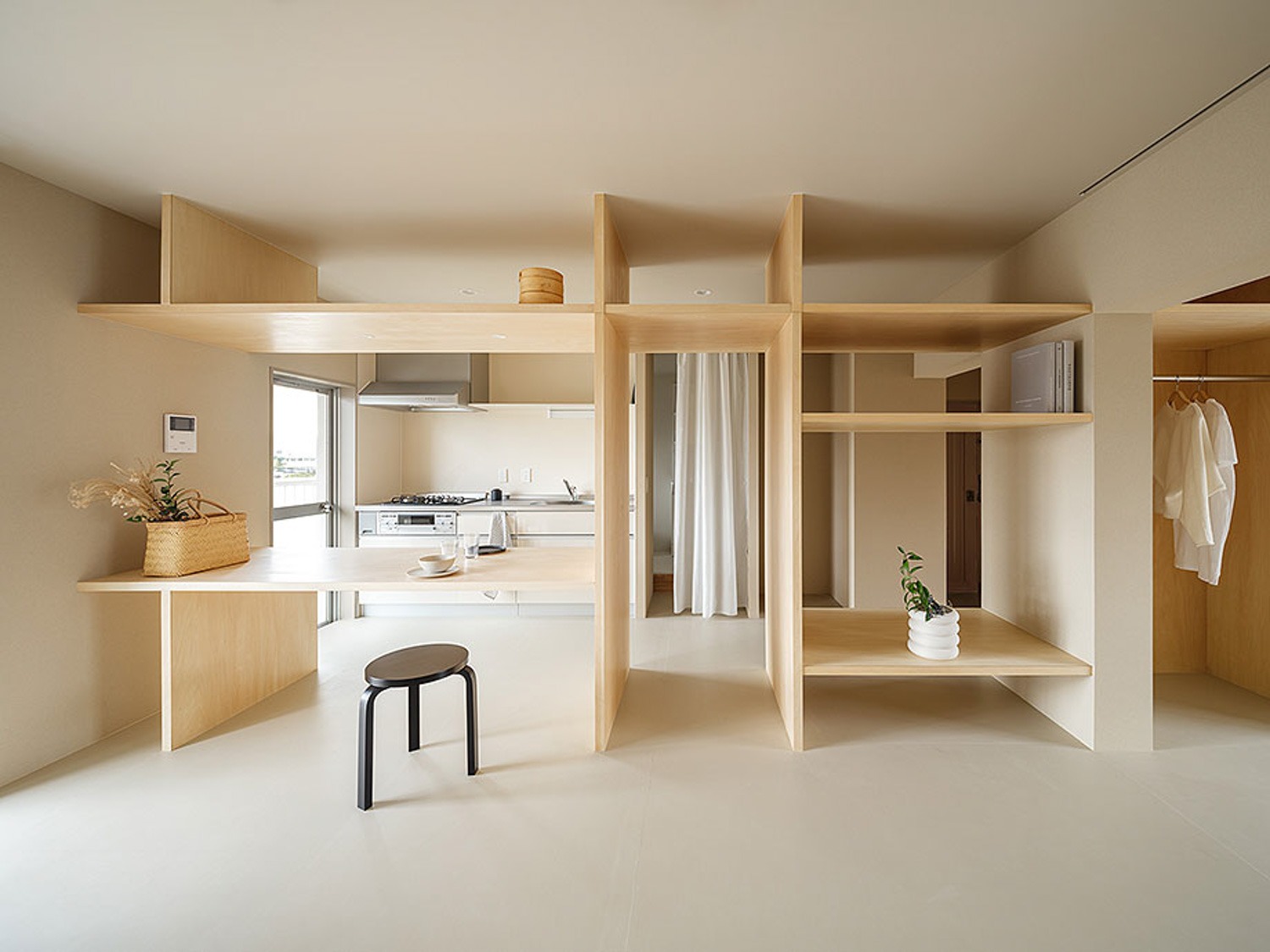
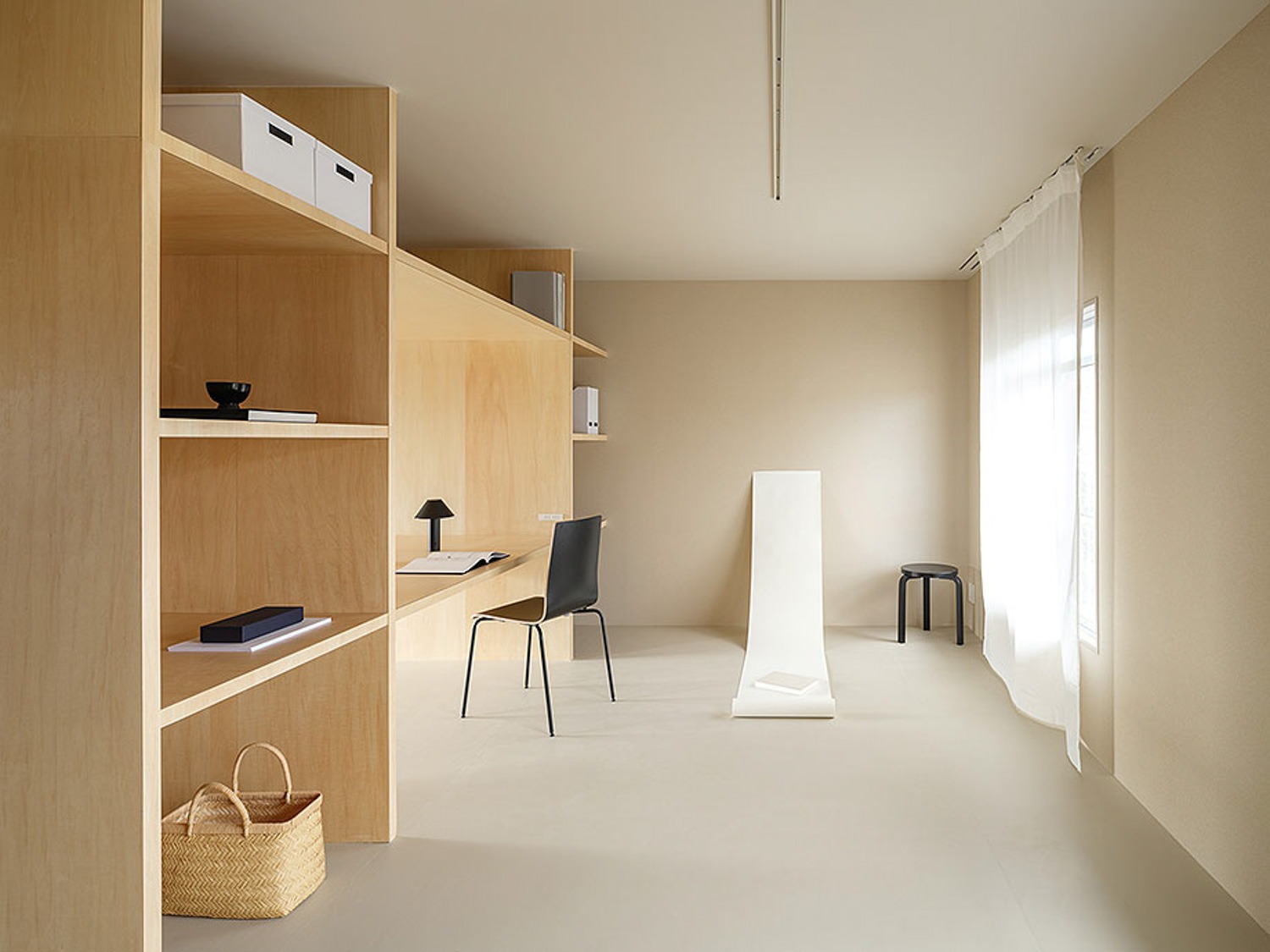
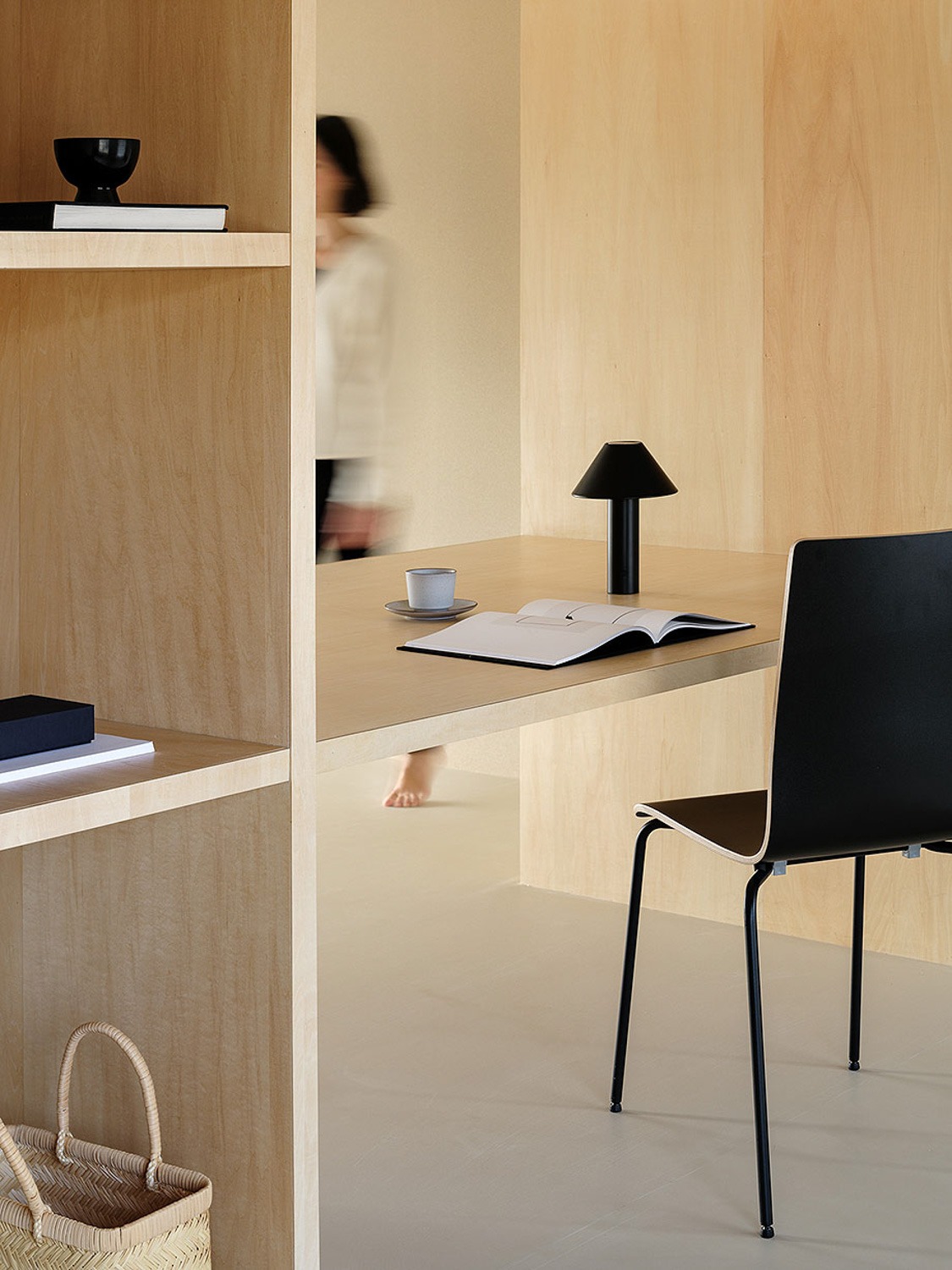
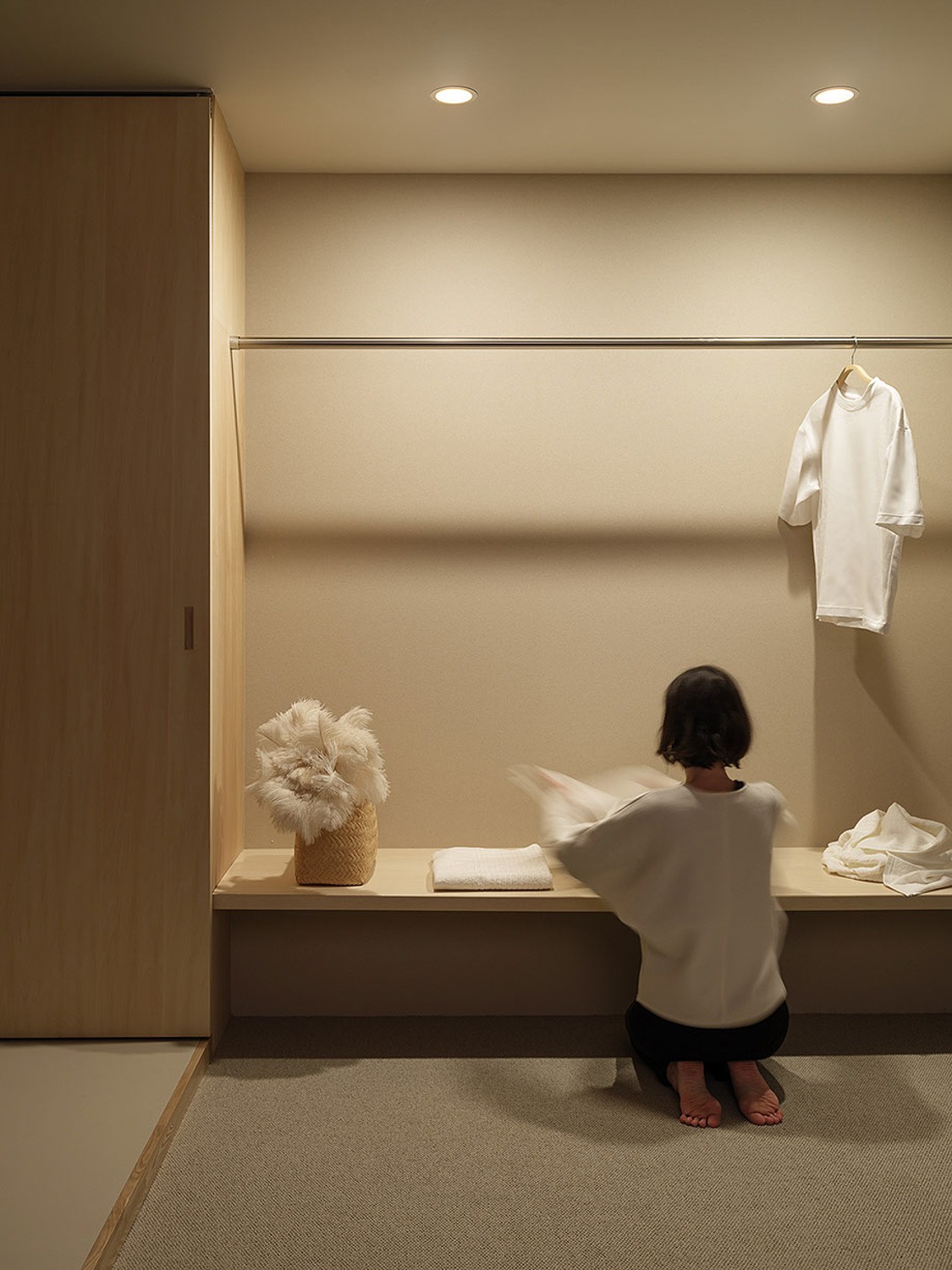
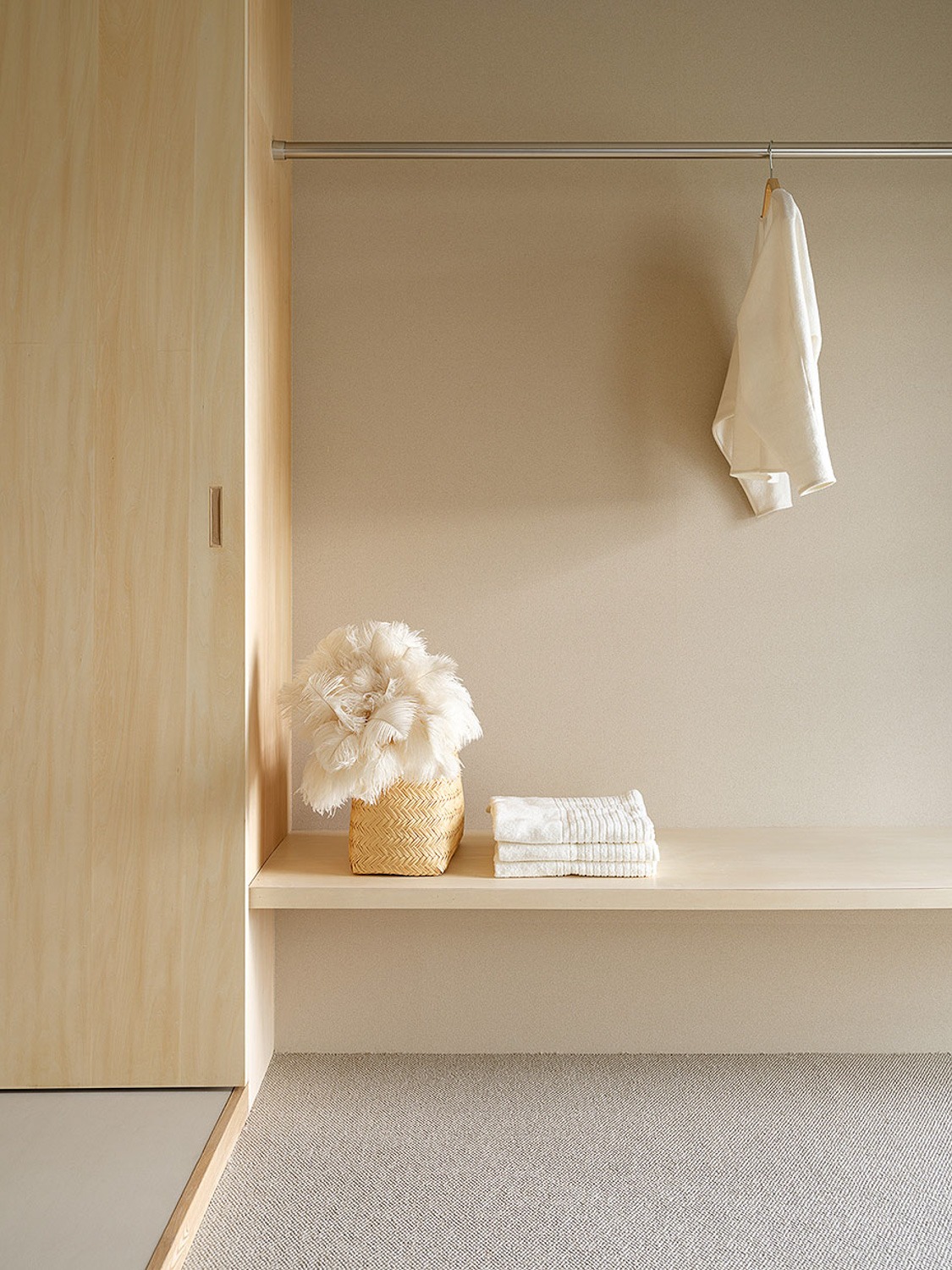
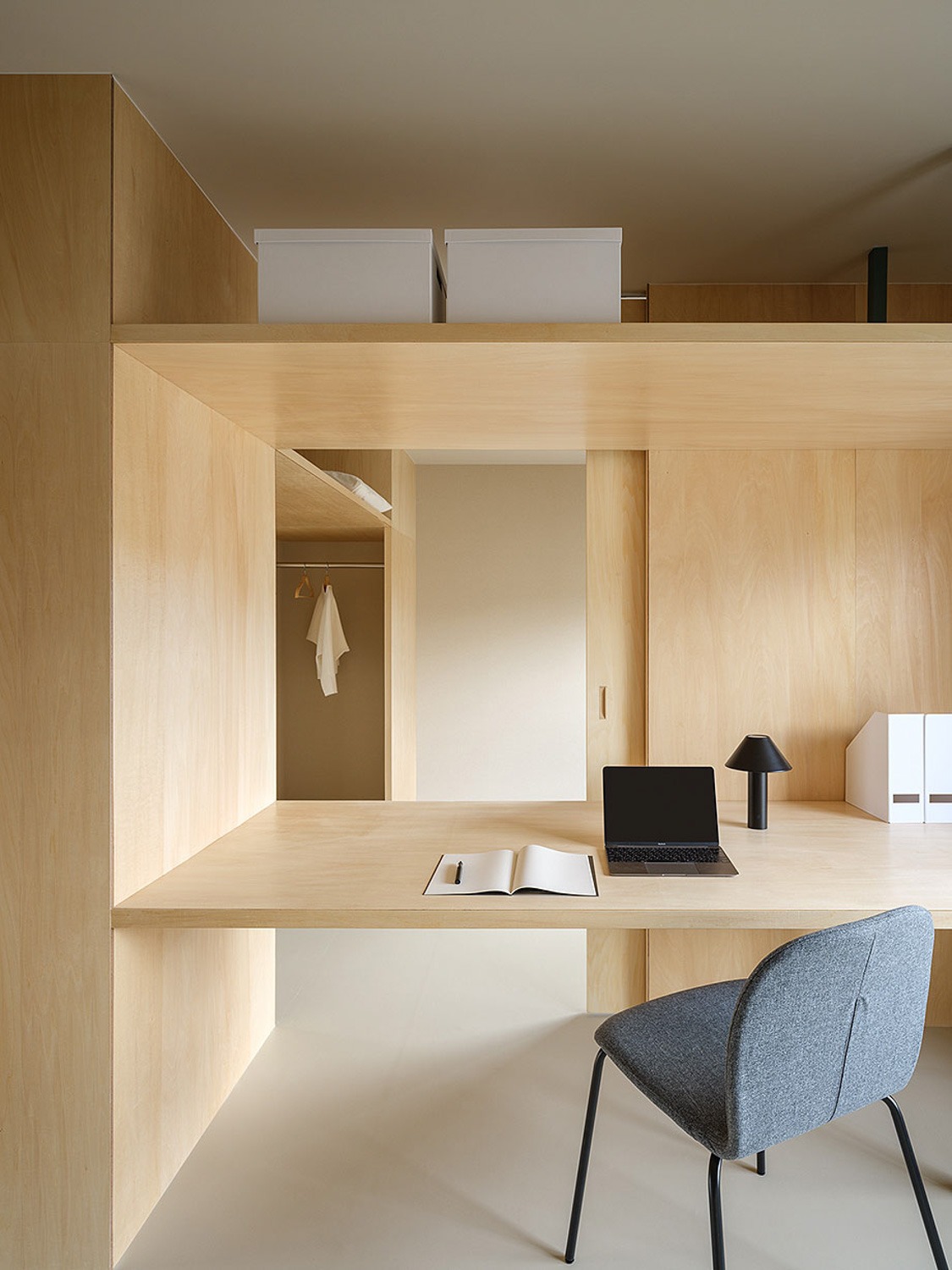
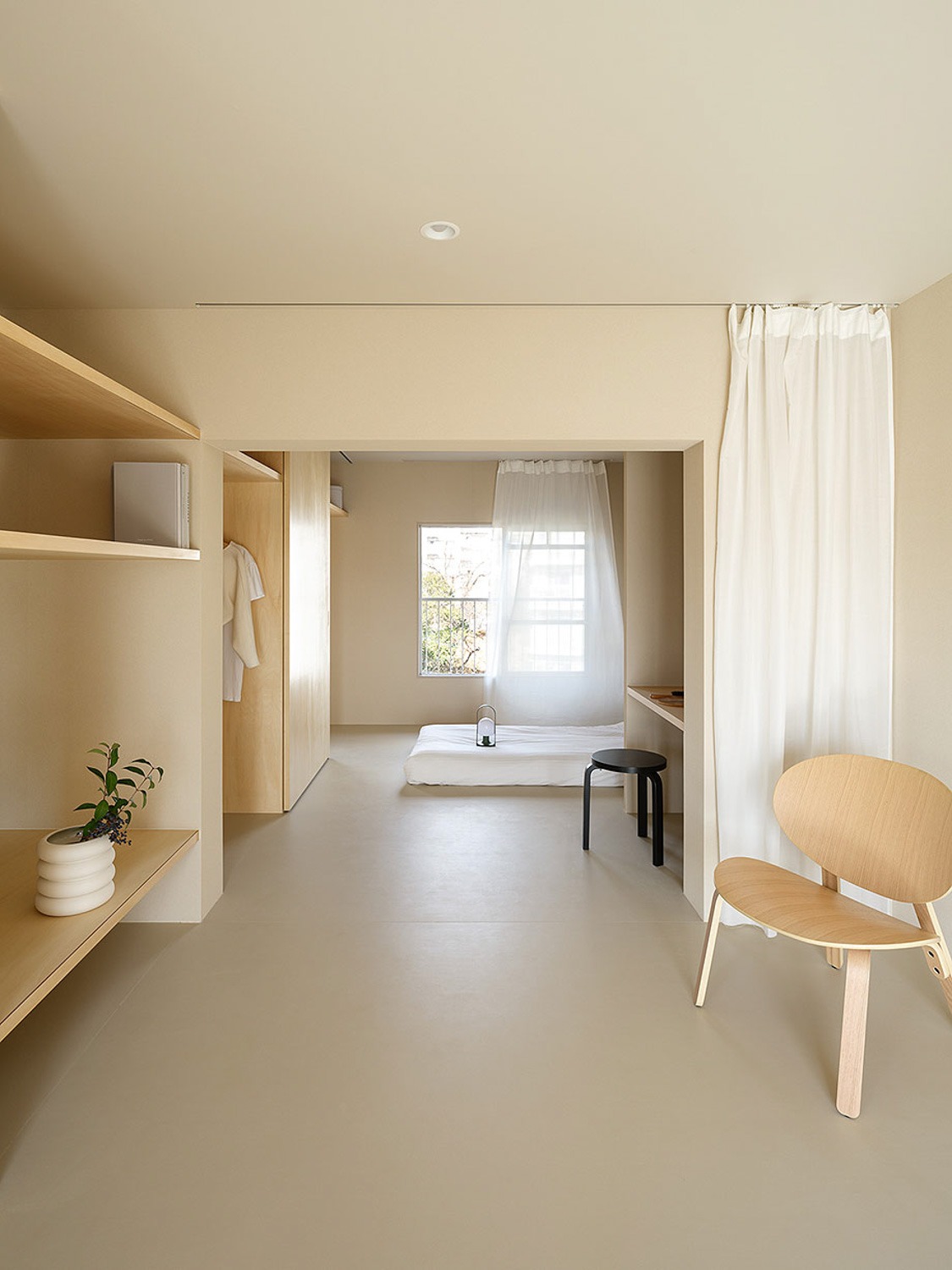
The interiors are furnished with minimalist wooden furniture that provides only the essentials. This restriction is not a limit: it prioritizes the quality of experiencing the space rather than saturating it. The divisions between rooms are made with light pieces and mobile elements, promoting flexibility.
The aesthetic palette is serene: natural woods, light walls and careful visual transitions. Nothing distracting, but everything with character and purpose.
Dwelling as a relational act
Omoya and Hanare do not pursue the scenic gaze of the spectator; it is an architecture of proximity that highlights the value of modest coexistence. Faced with an aging housing stock, it does not erect a new emblem but a social suture. Because in a city like Osaka, perhaps what is needed is not more housing, but another way of living together and connected while maintaining the dignity of the private.
This prototype builds less for monumental novelty and more for everyday reorganization. An architectural piece that proposes not only to reside but to share. And if time has the last word, these converted dwellings do not end with the act of building, but with the act of inhabiting.