ARCO House
- Architecture, interior design, landscaping and construction project ÁBATON
- Photographs by Belén Imaz, Derek Pedrós and Paula Cárdenas.
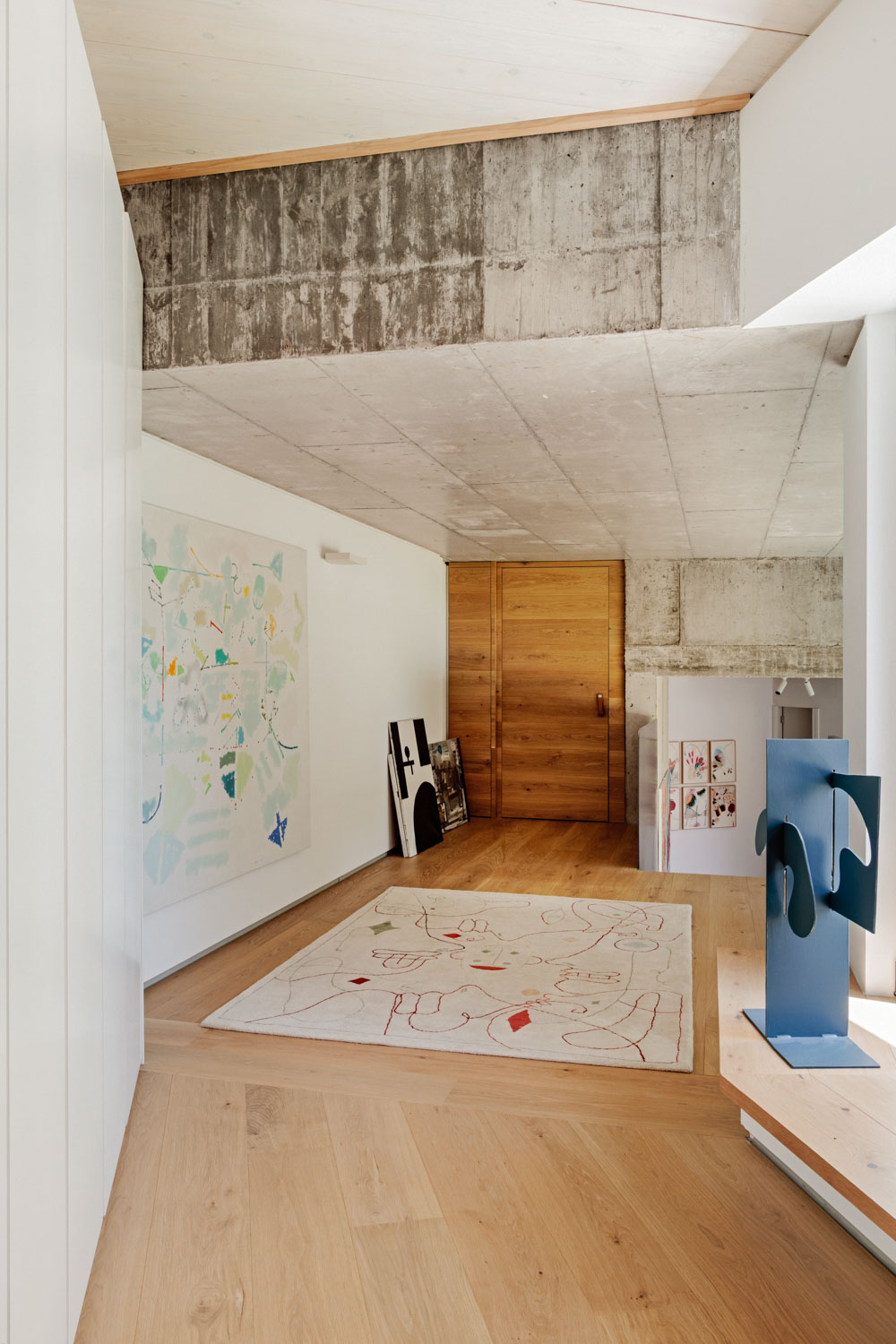
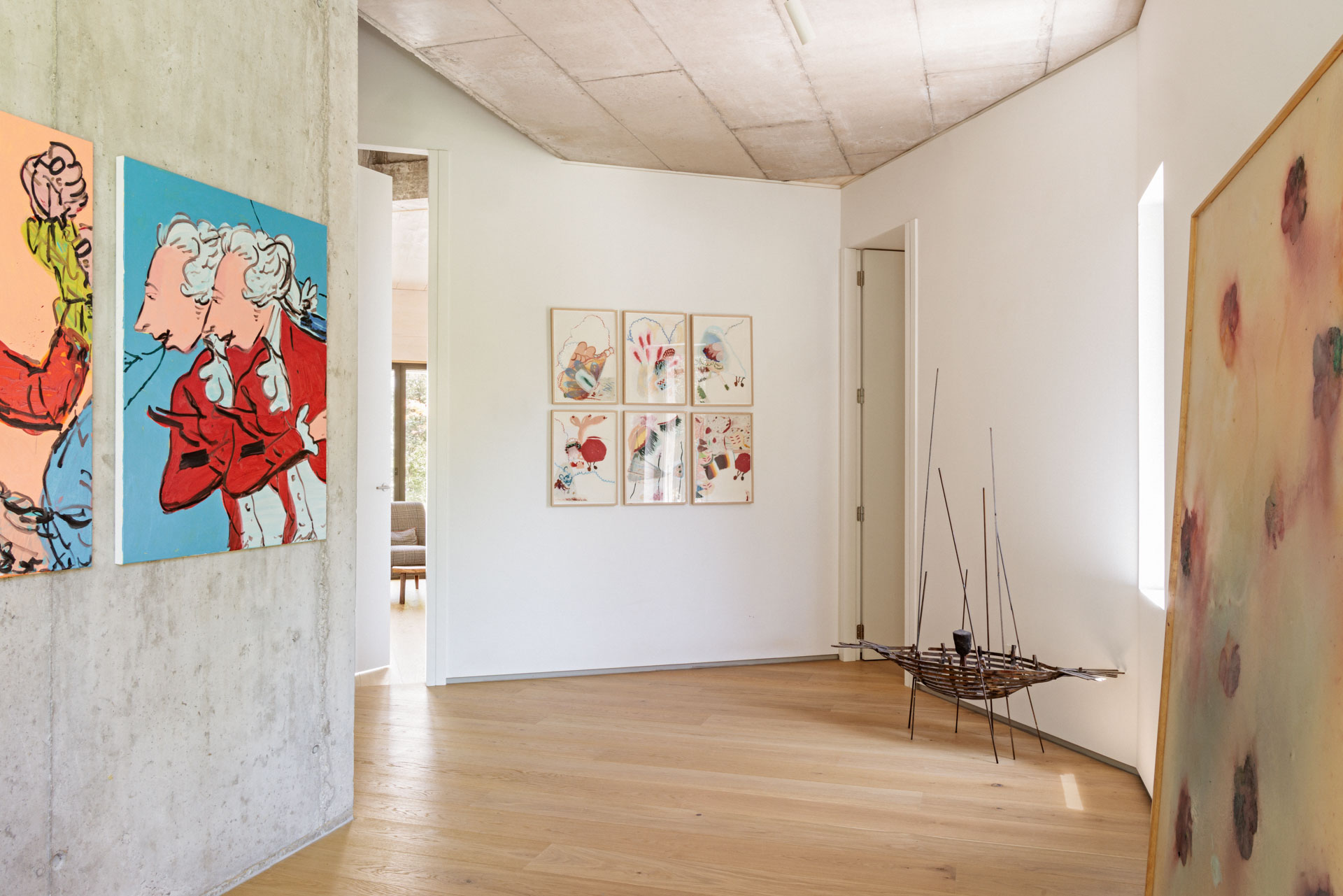
Casa ARCO is one of the most special projects we have worked on in recent years, as it is born from a clear and very special premise that conditions its concept from the beginning: to create a custom-made house for art.
Its owners, passionate collectors of contemporary art, understood architecture as an active part of the artistic and vital discourse that defines the way they live. The commission was based on a clear idea of the appreciation of beauty and the prominence of color.
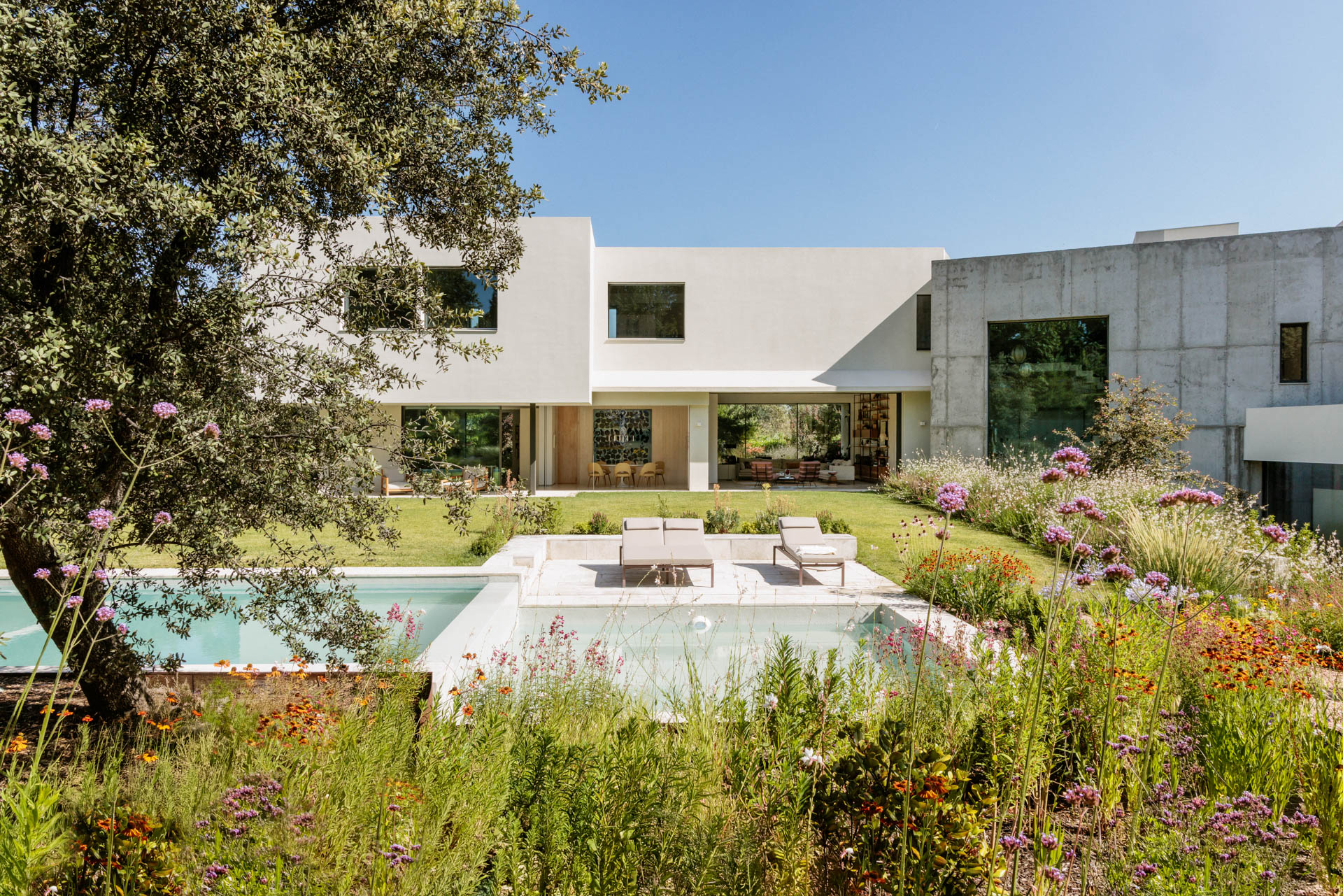
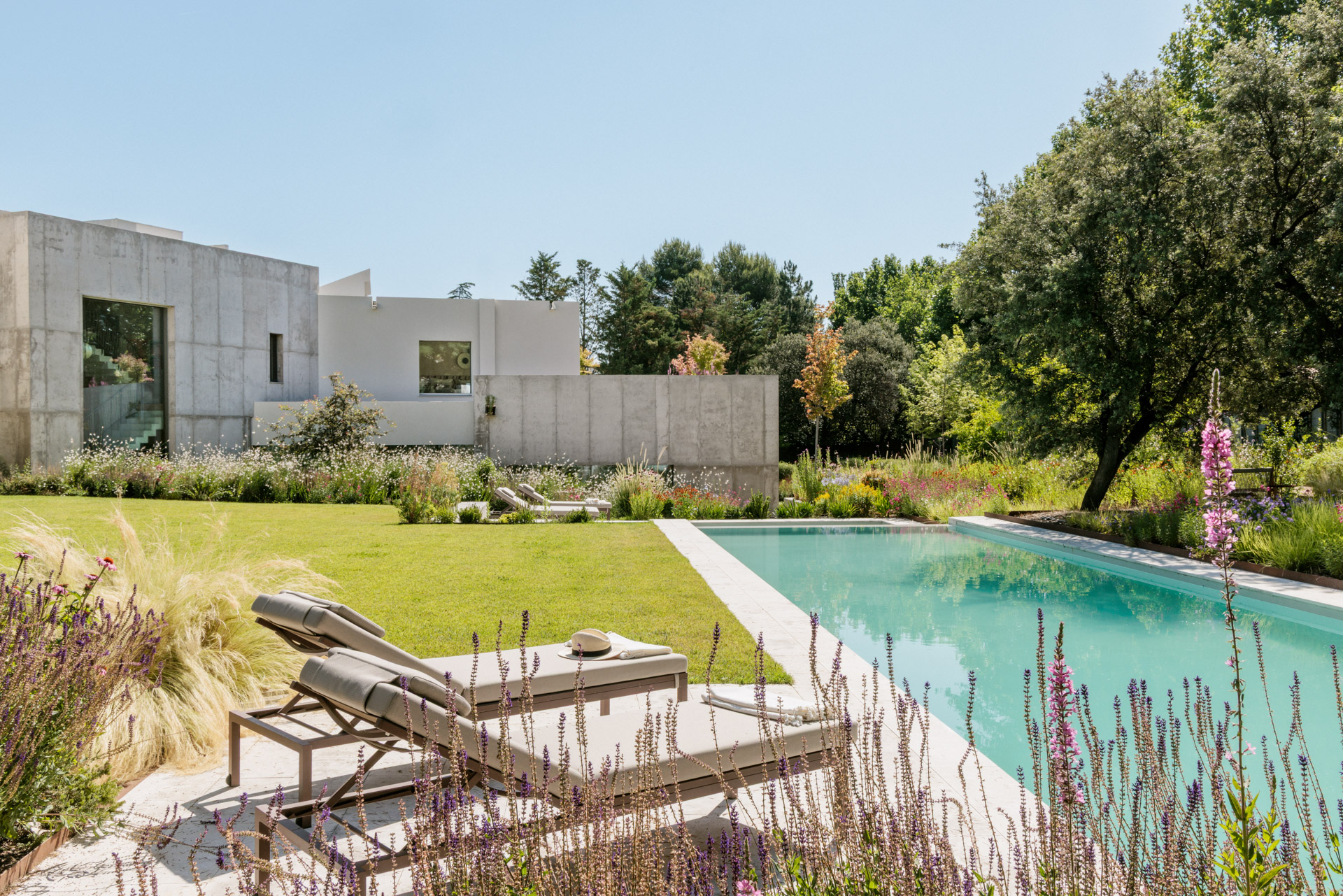
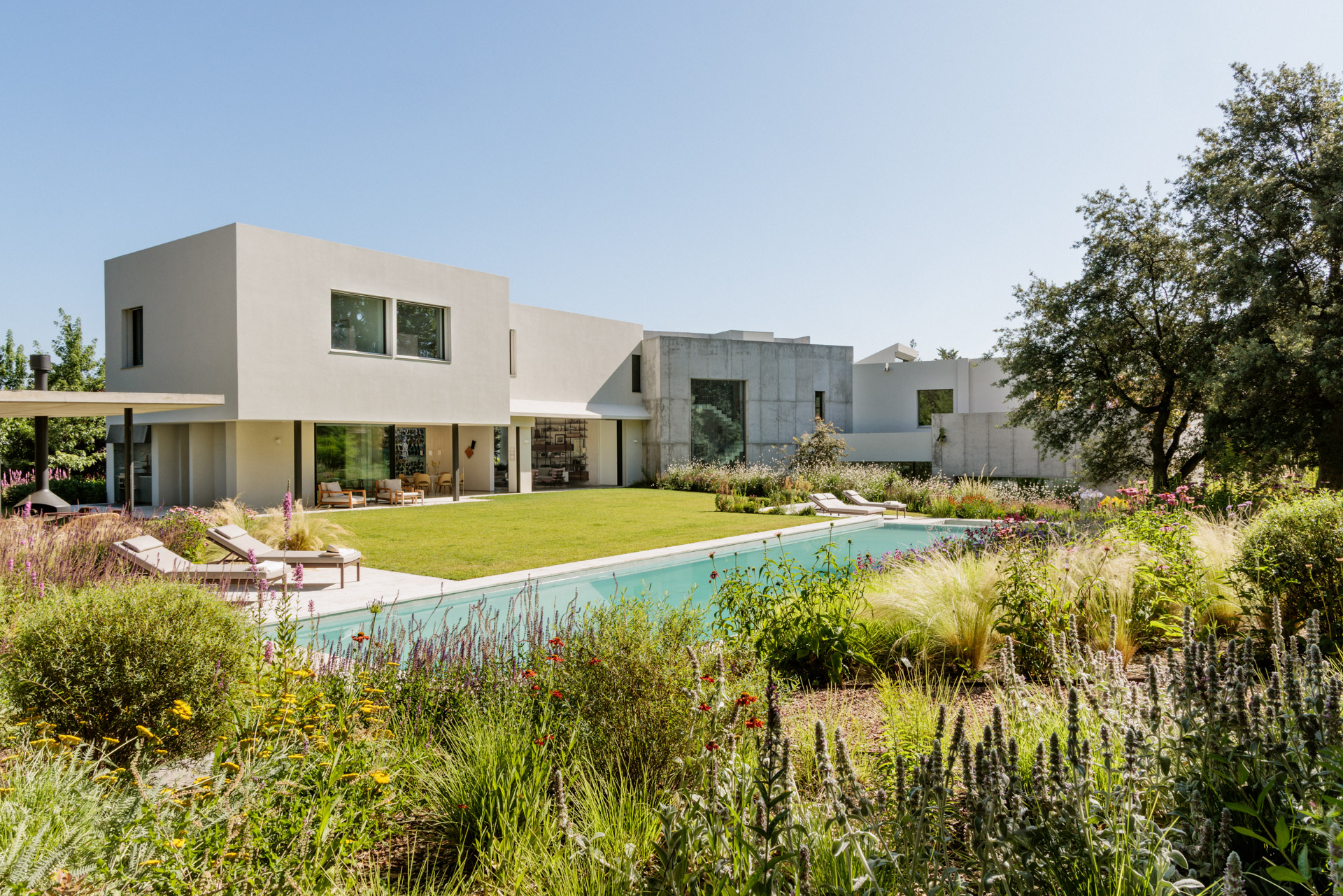
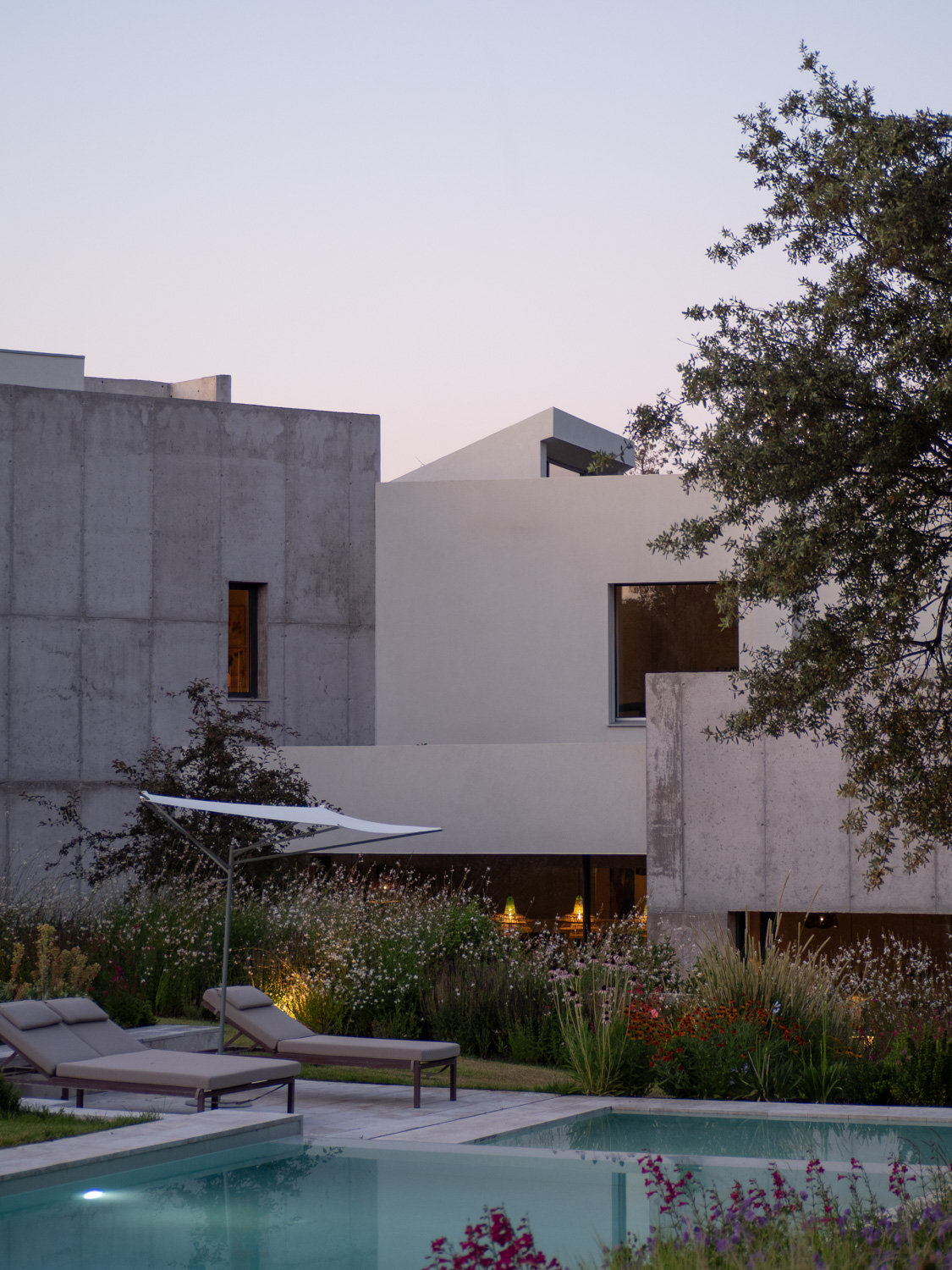
The project integrates architecture, interior design and landscaping: a single language at the service of art and connection.
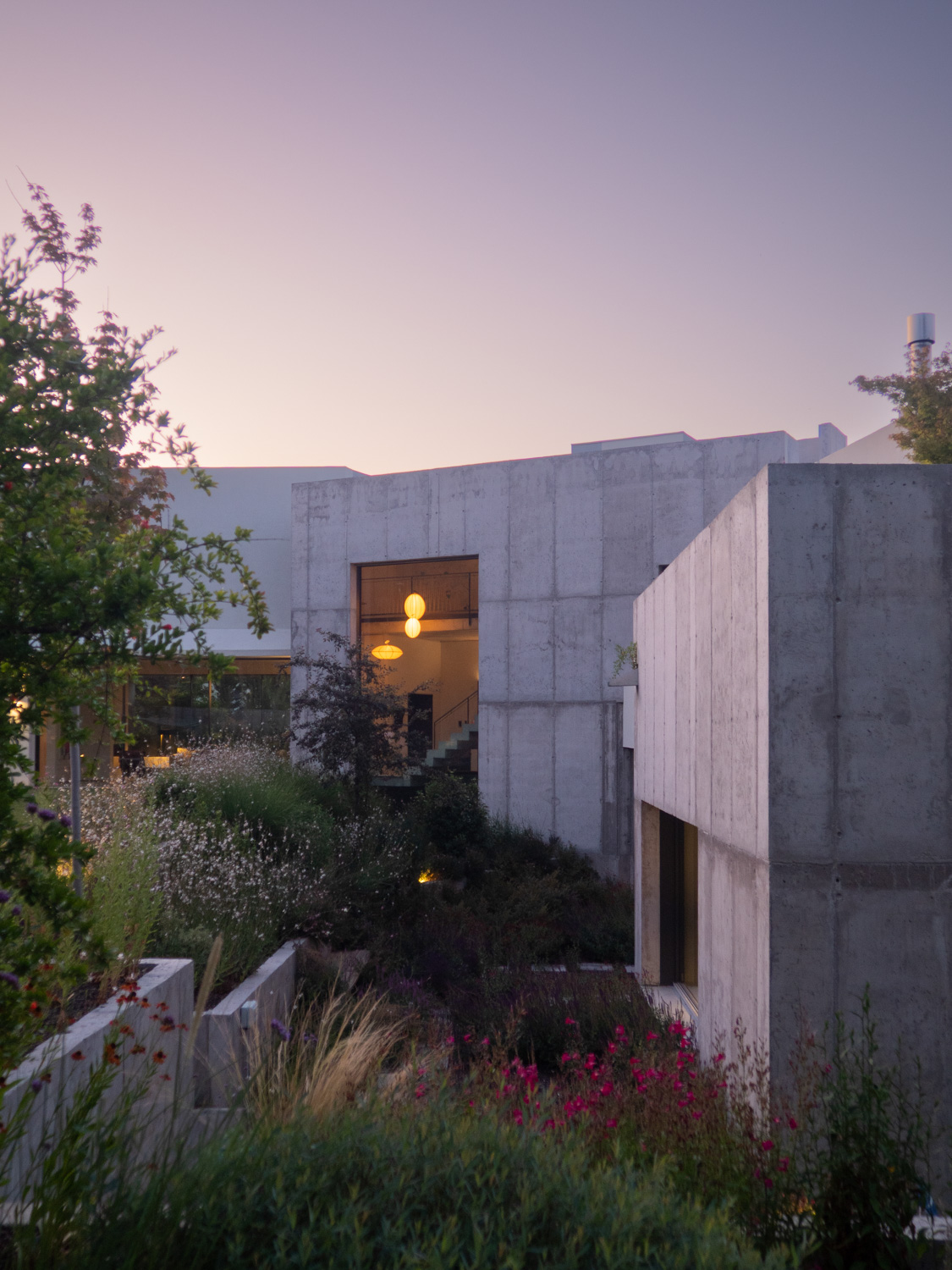
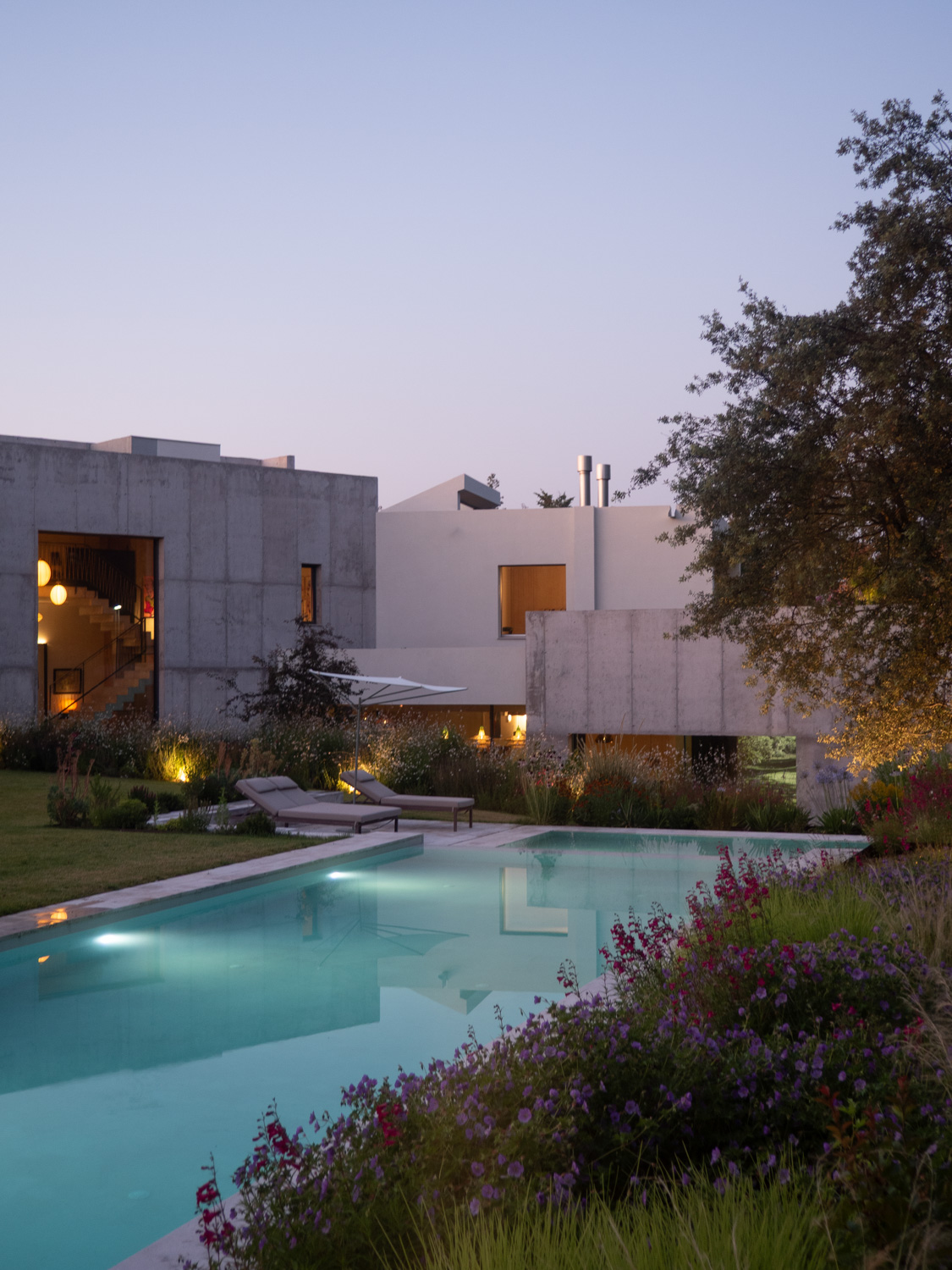
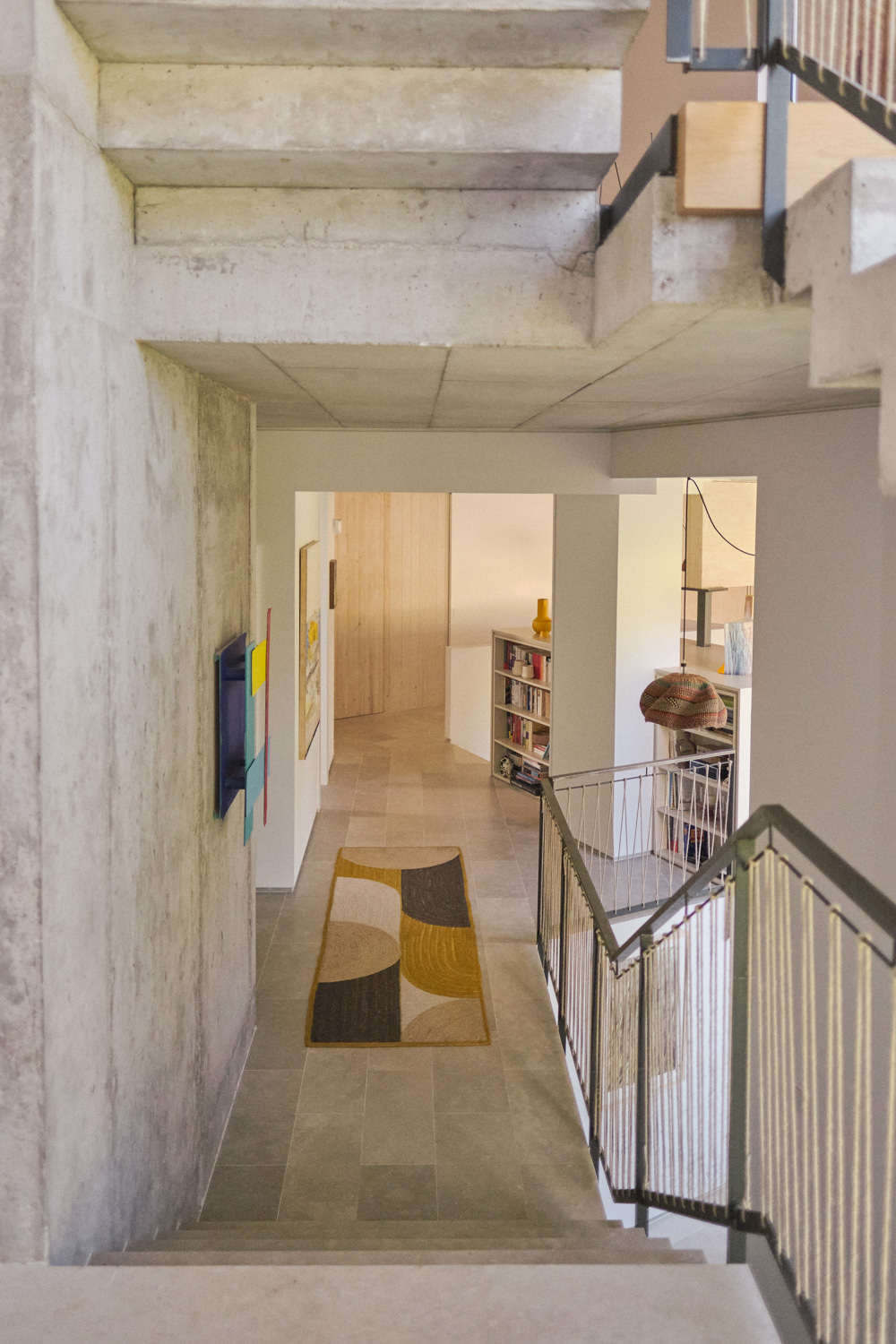
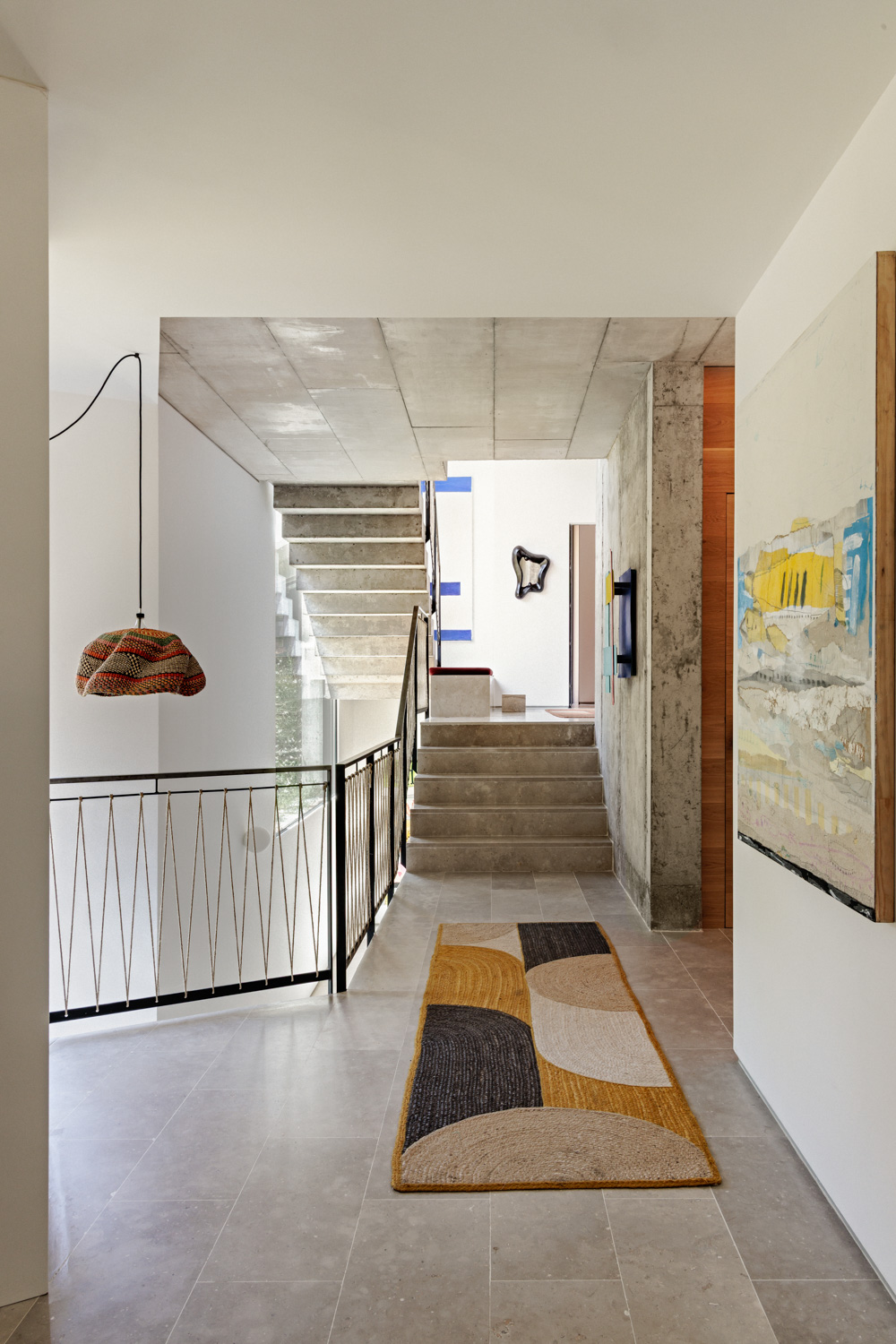
Casa ARCO is organized into two distinct areas -one more public and the other for family use- articulated by a central core where the entrance to the house is formalized through a pivoting door. A stepped concrete staircase presides over the space, framed by a large window that shows the northern part of the garden as a work of art that changes over time.
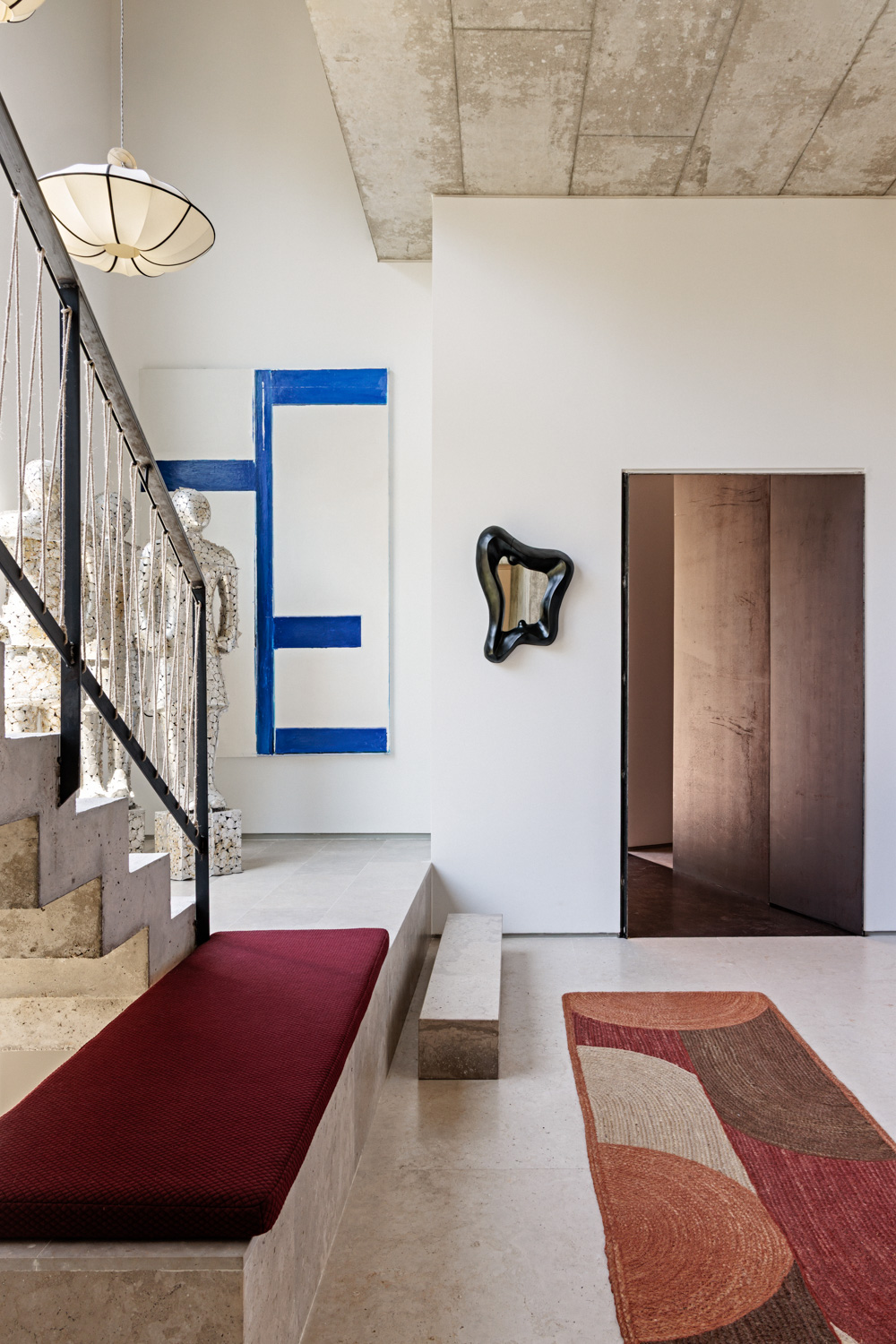
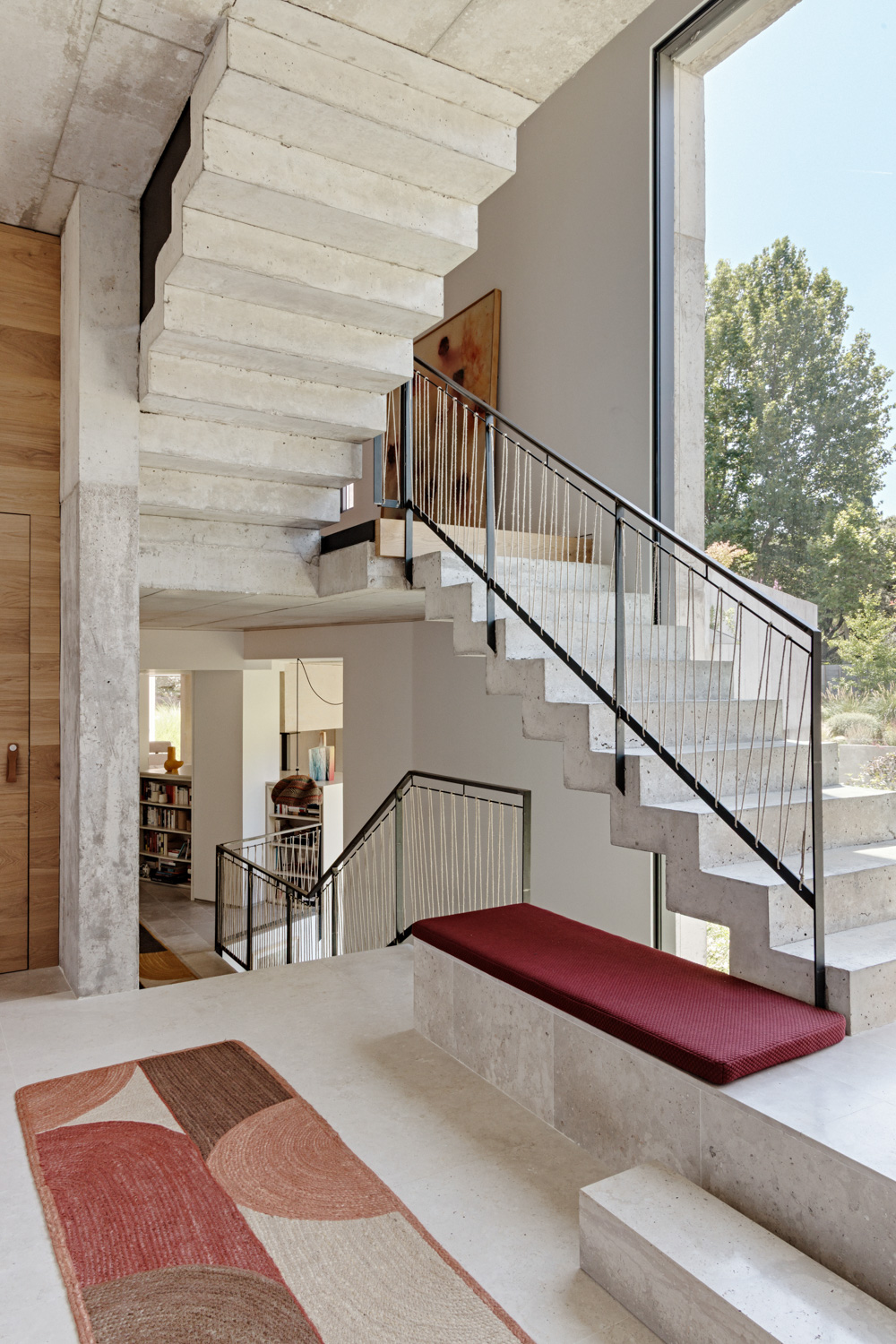
A tailor-made home for art
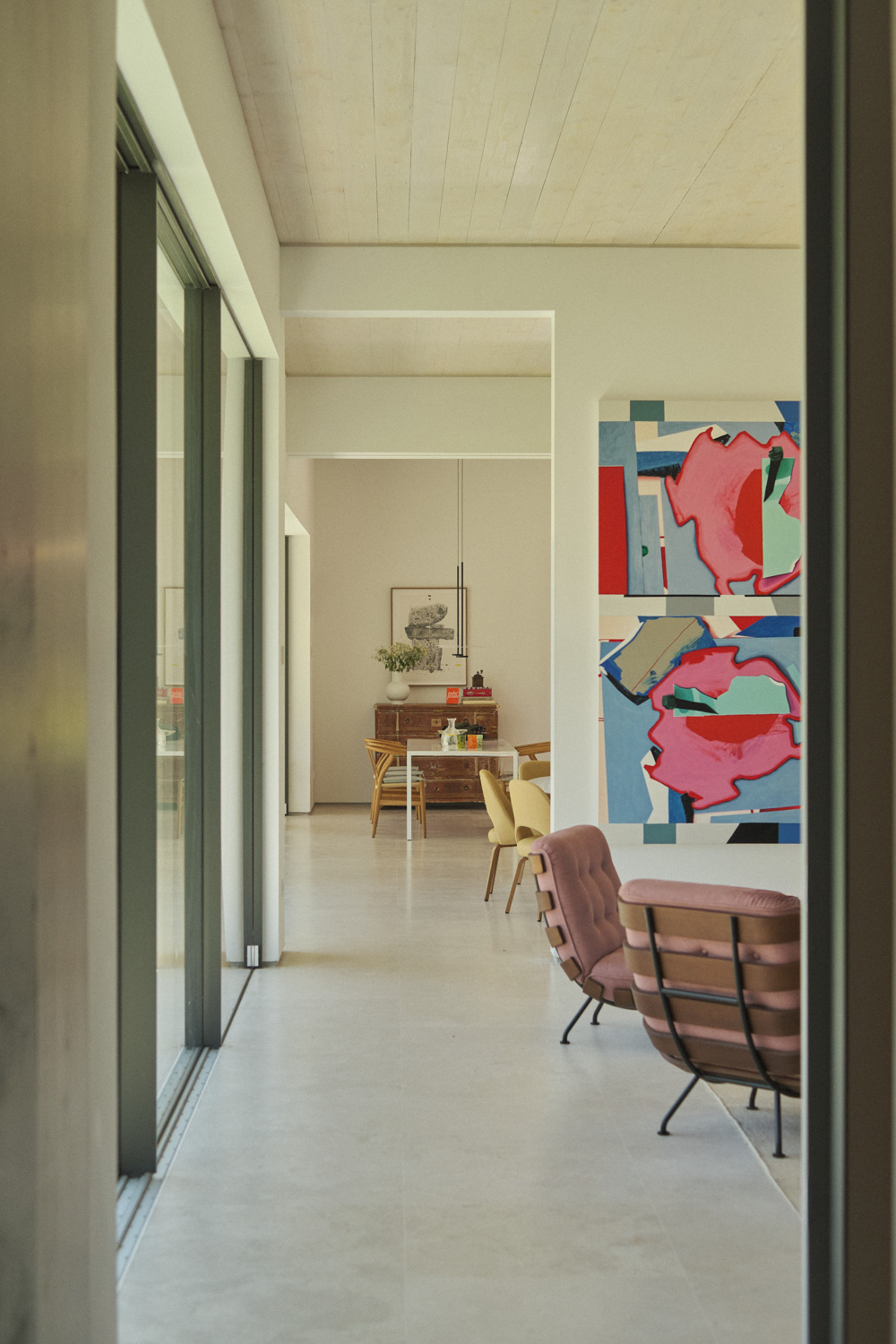
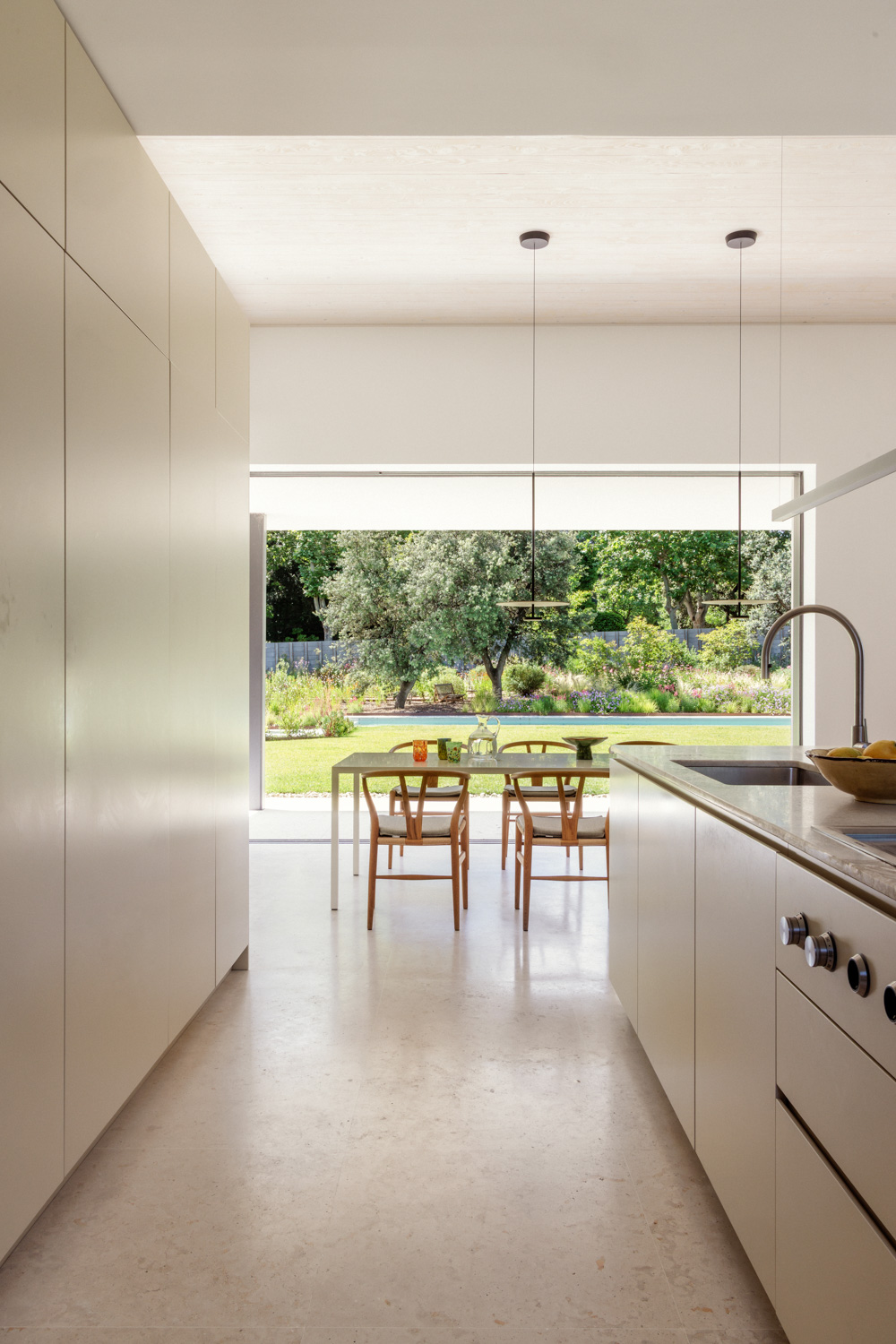
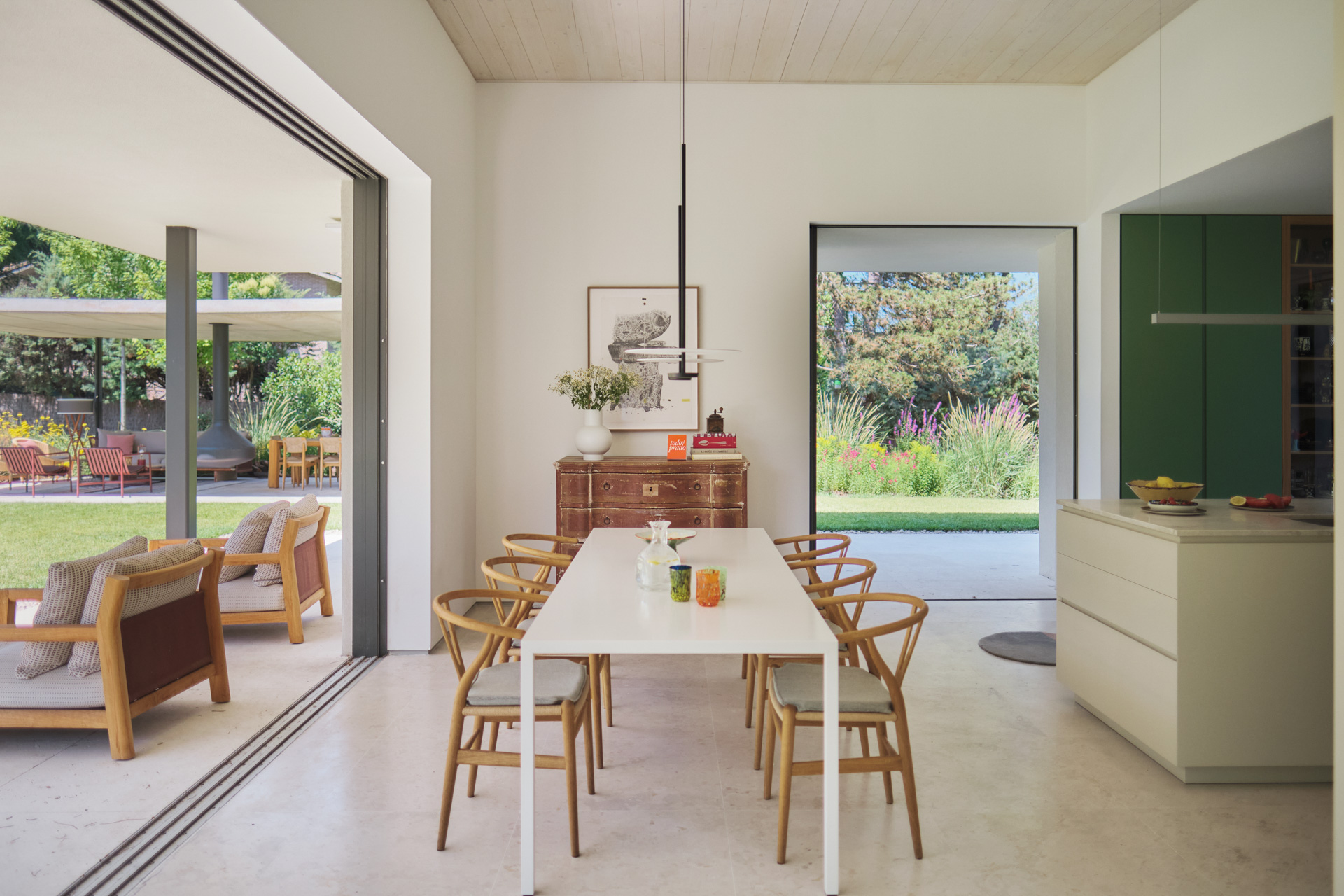
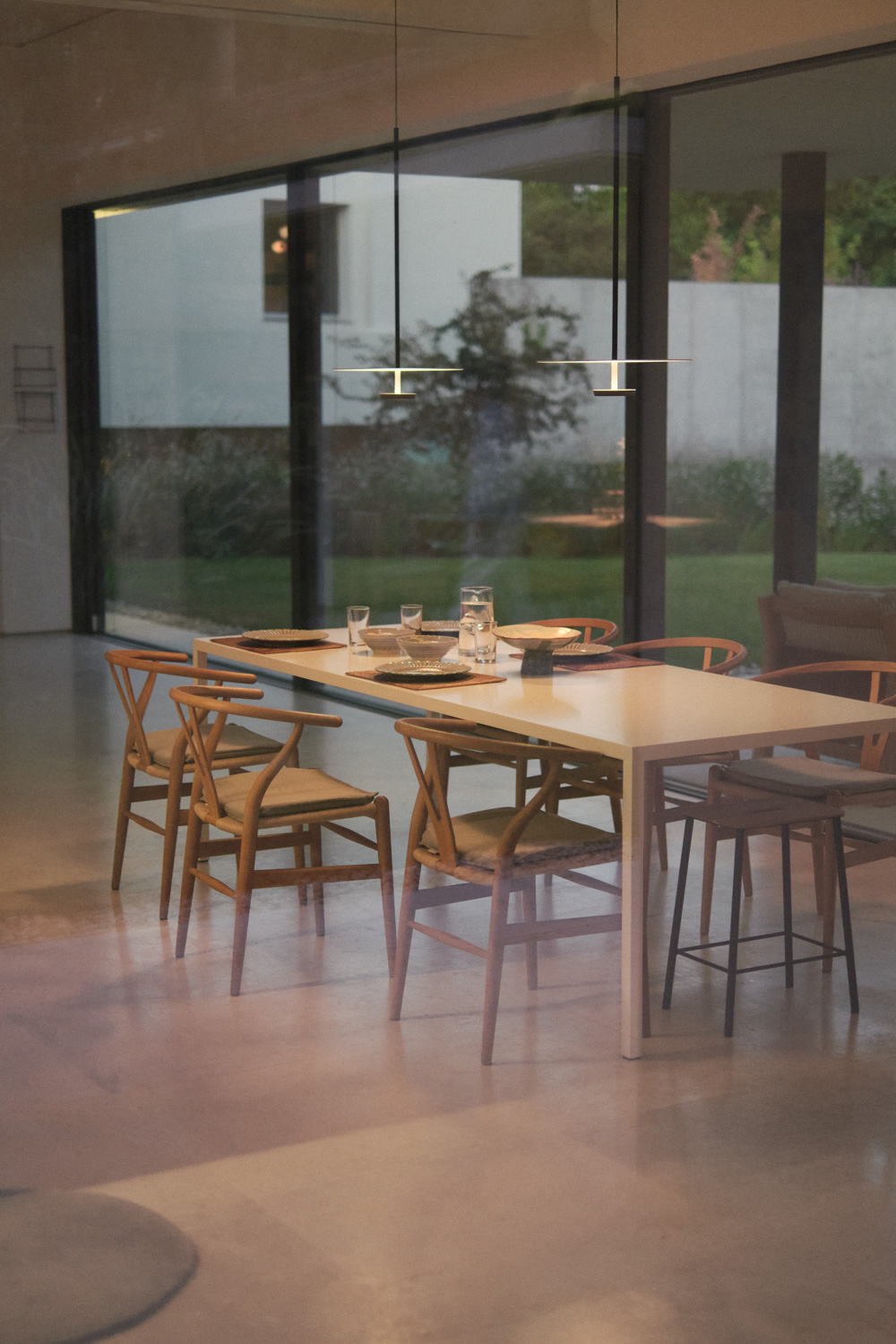
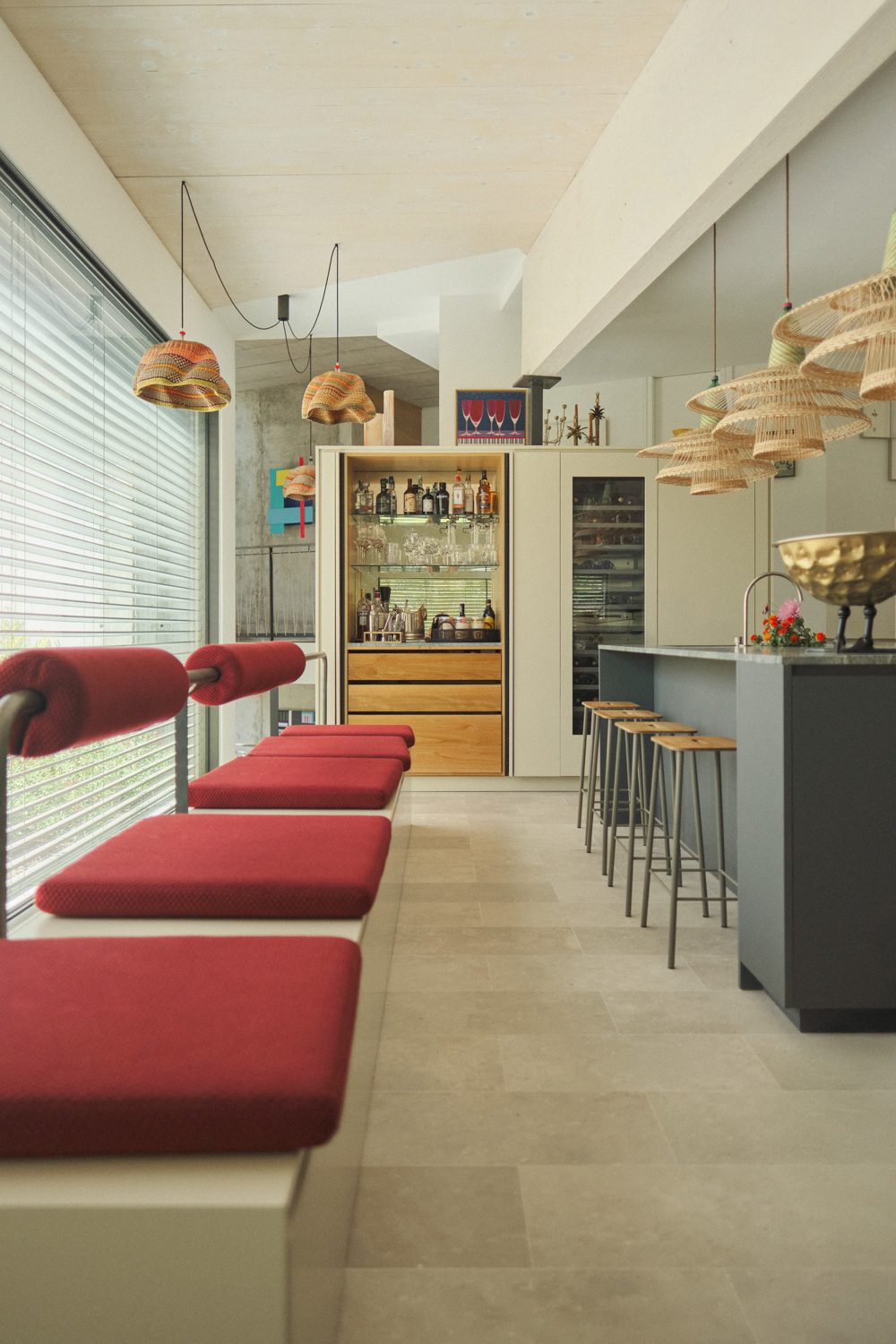
The east side of the house gathers the spaces destined to share with guests: living room, dining room and kitchen are developed in a fluid sequence of rooms, completely open to the outside through sliding windows that turn this space into a porch in the hot seasons.
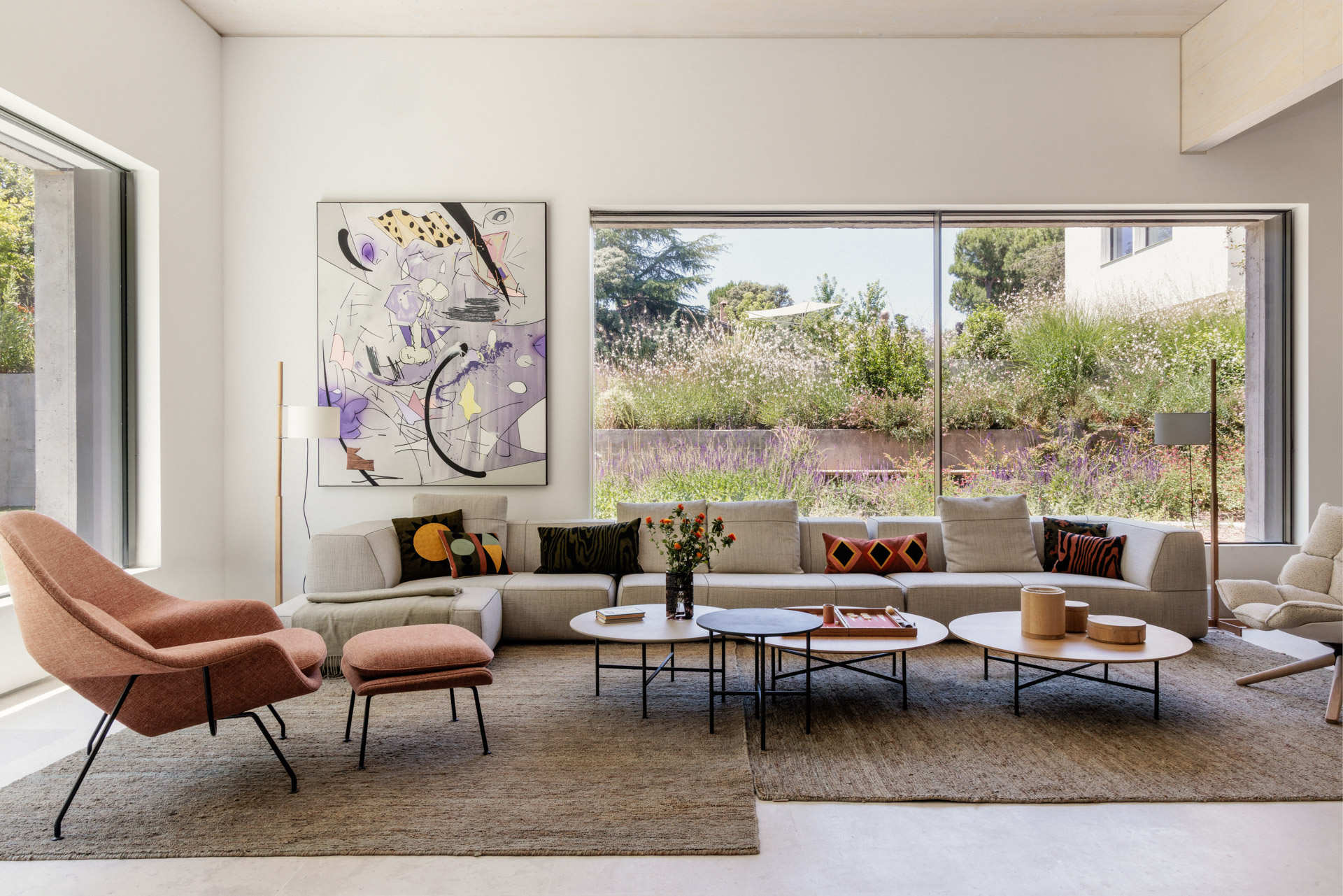
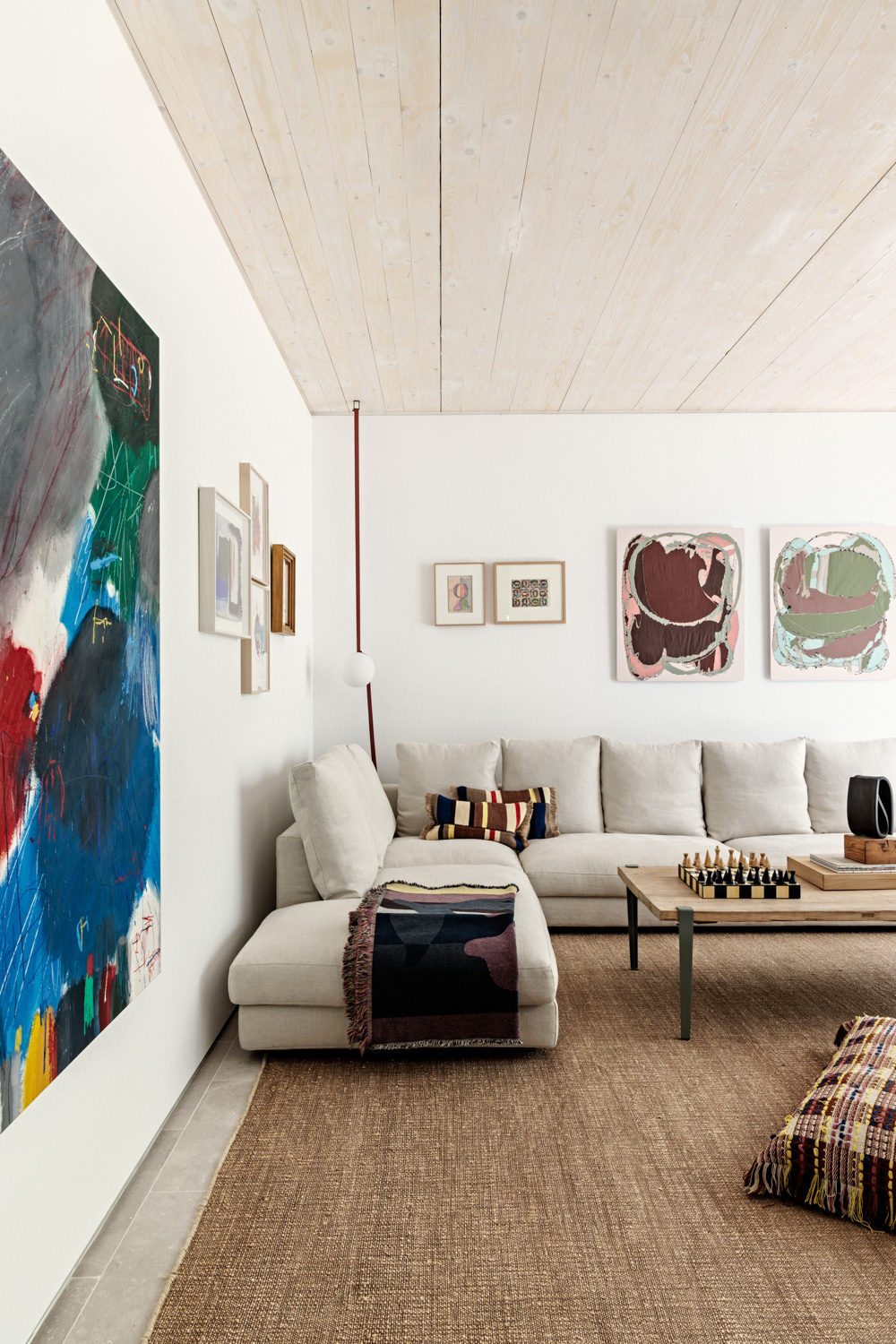
The living room is framed to the south and north by the color of the landscaping, a continuous dialogue with interior design pieces such as the Costela armchairs by Tacchini and works of art such as “Gemelares” by Luis Gordillo, which gain prominence in an architectural background marked by minimalism and exposed structural wood.
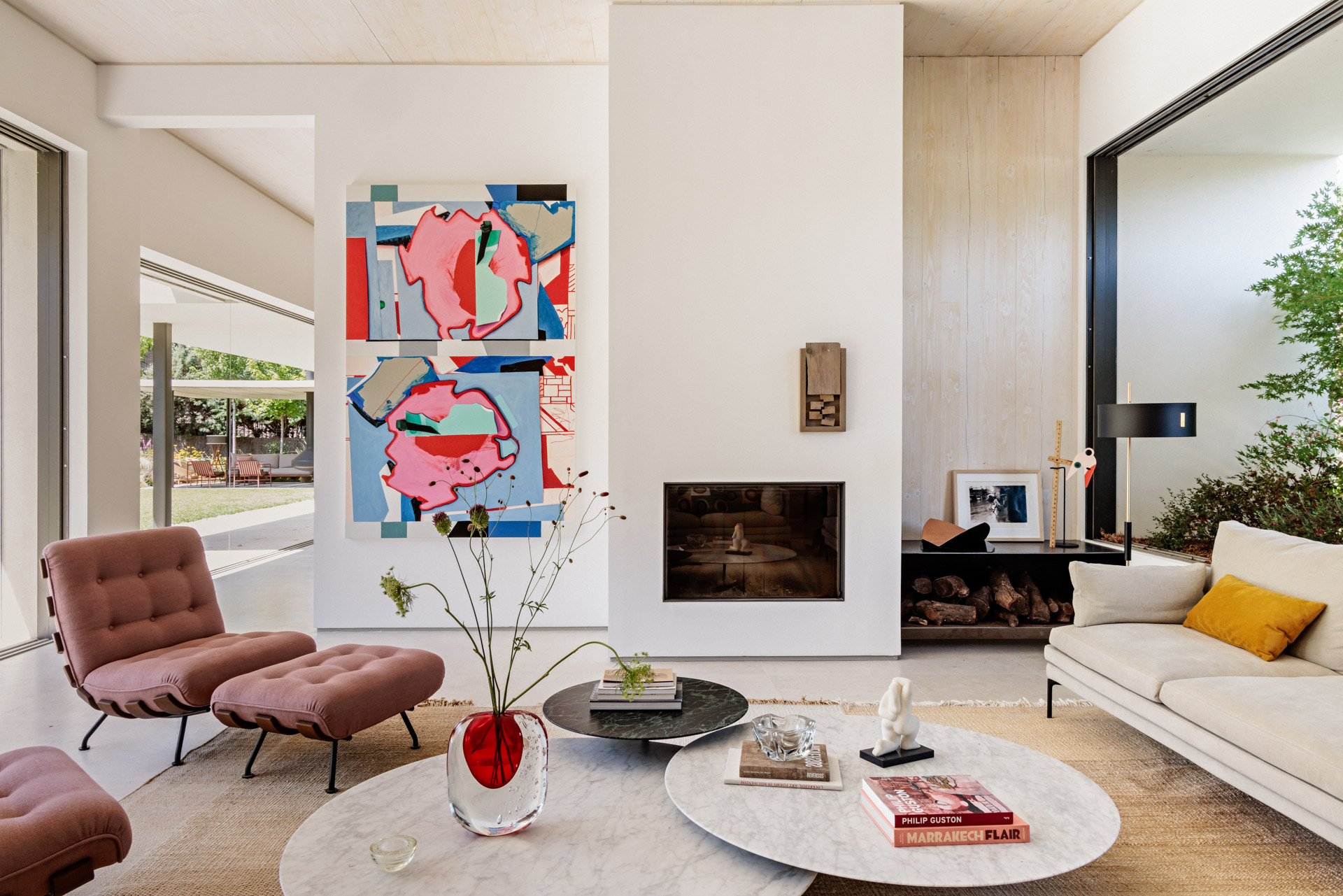
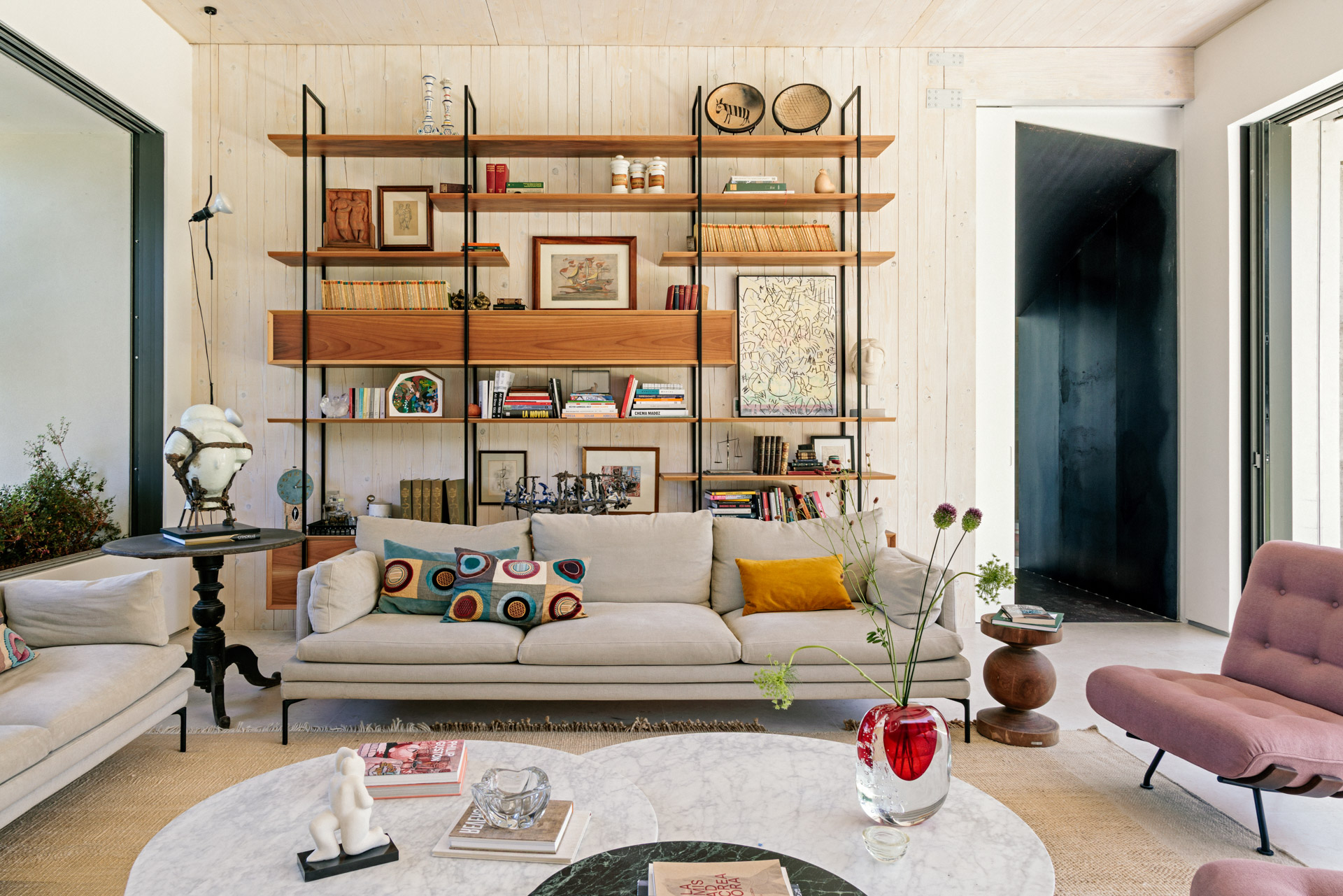
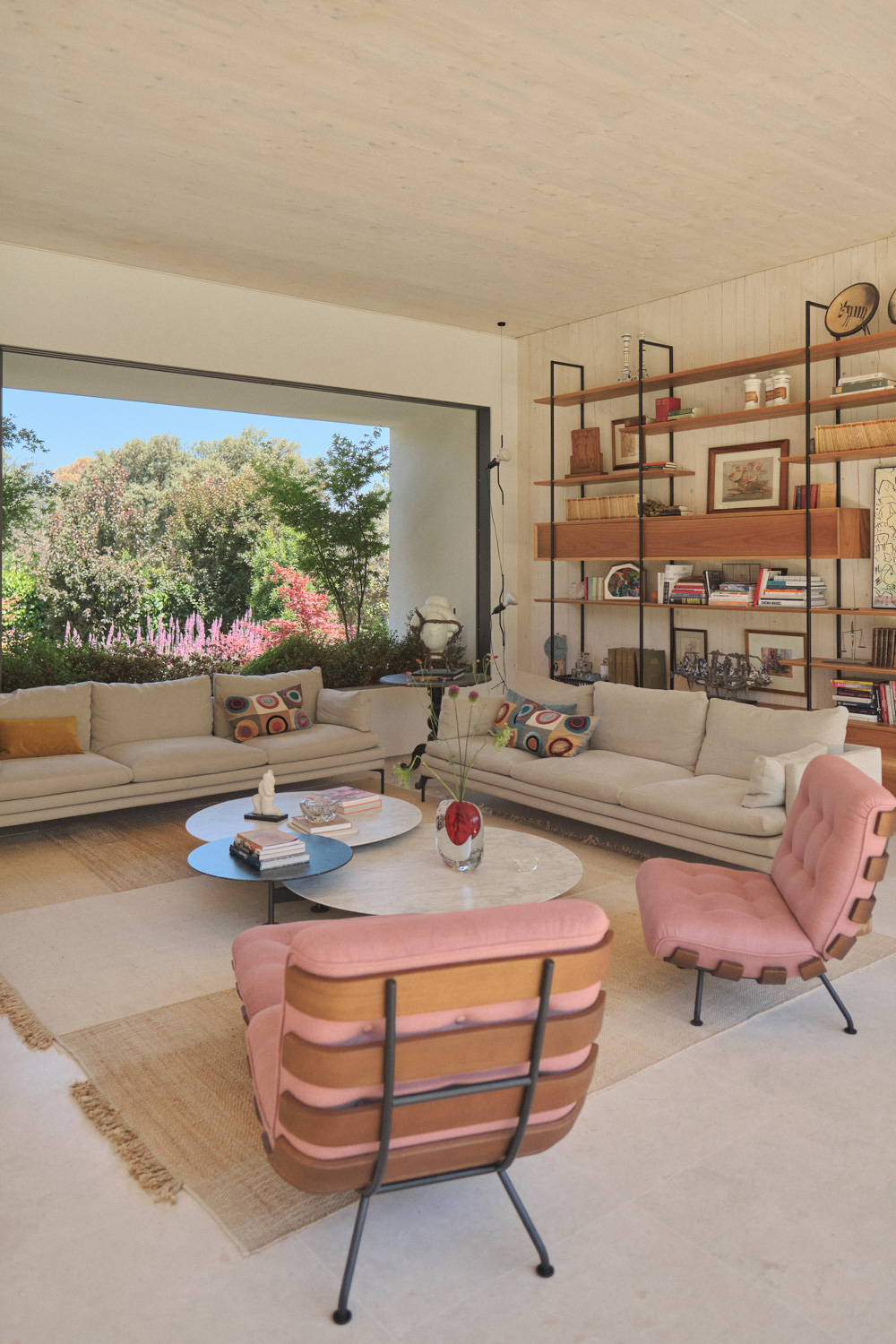
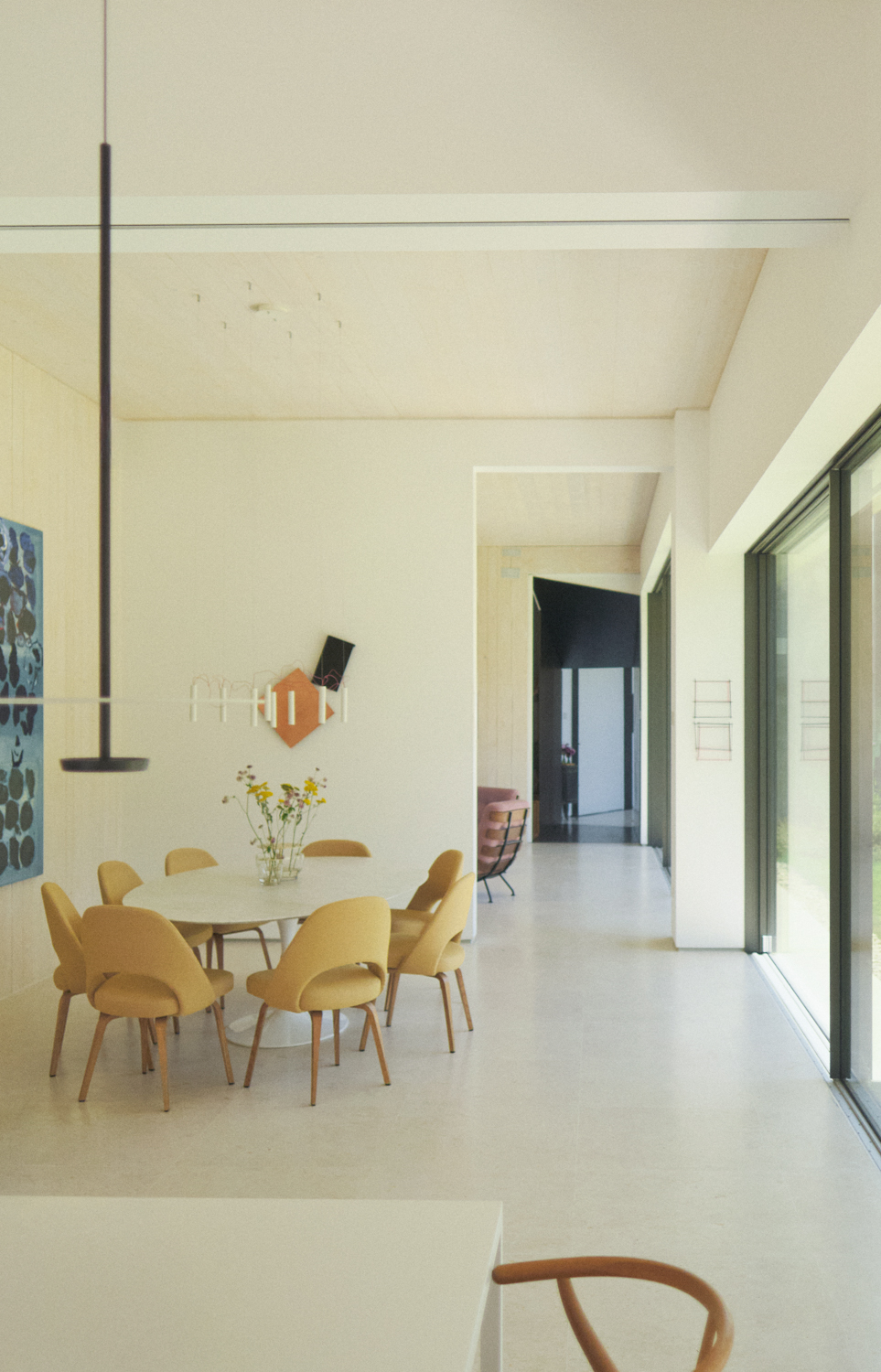
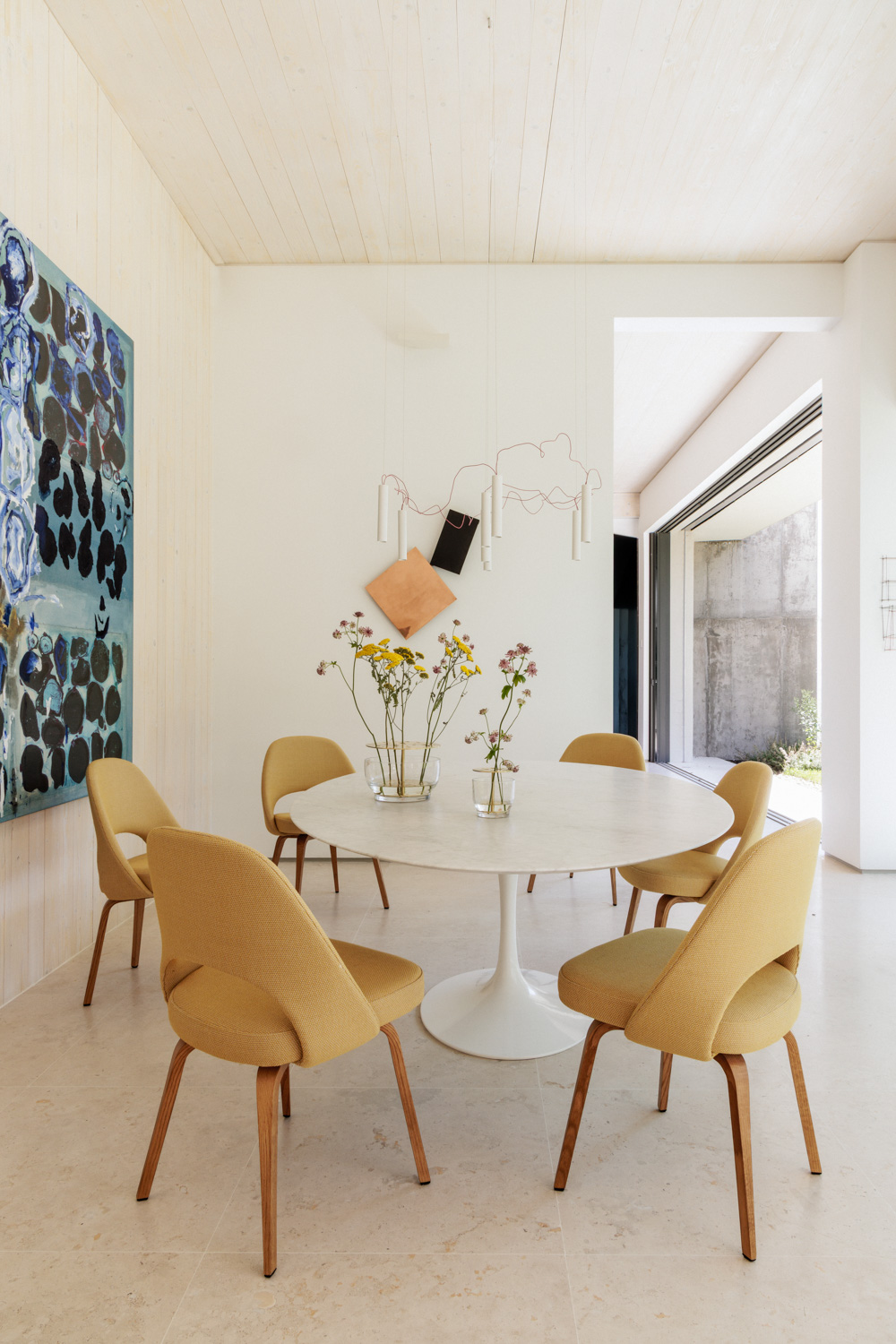
The dining room, conceived as an almost exhibition area, is presided over by a large format painting by Jose Luis Alexanco, a work with visual presence that is balanced by the lightness of Davide Groppi’s Simbiosi lamp.
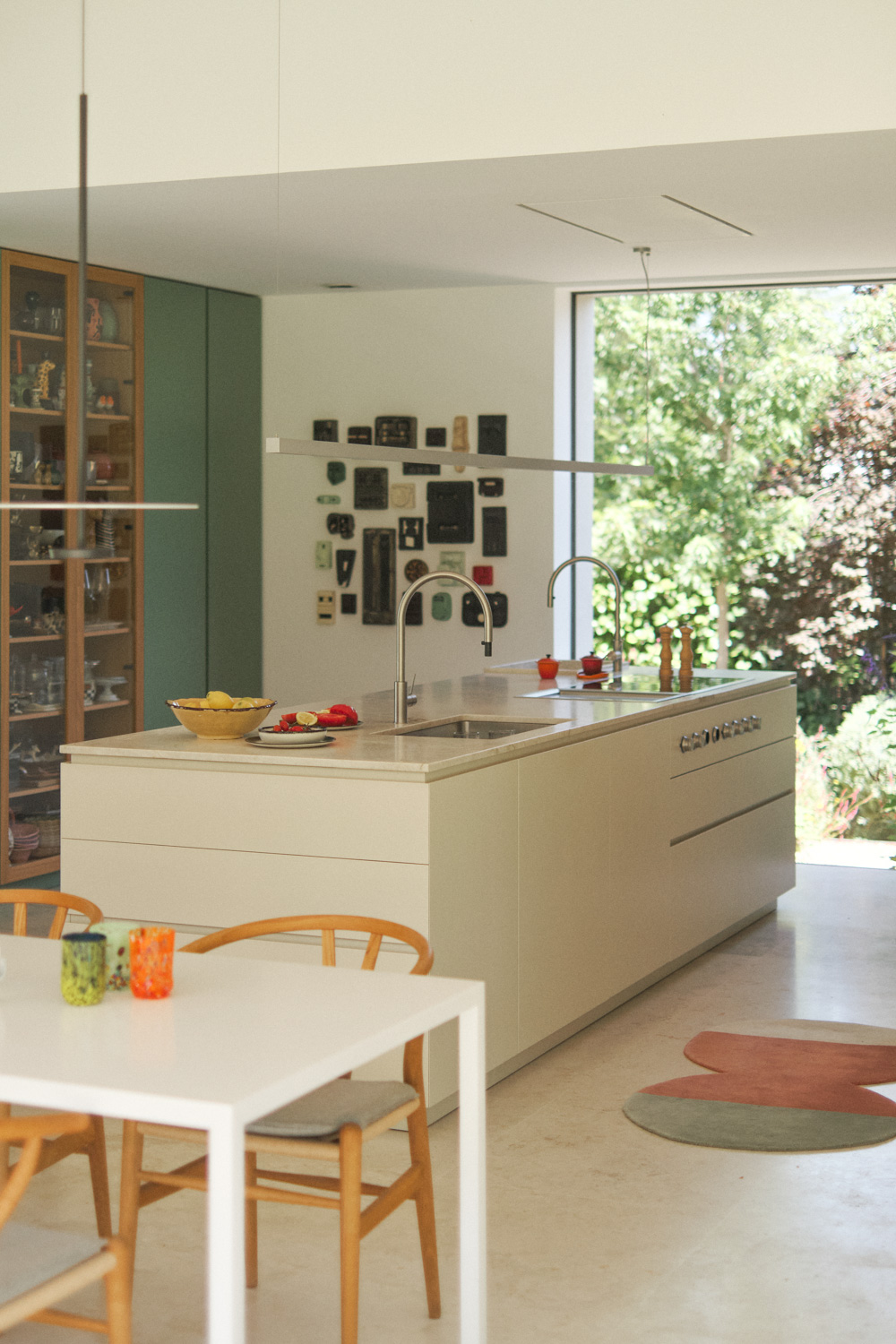
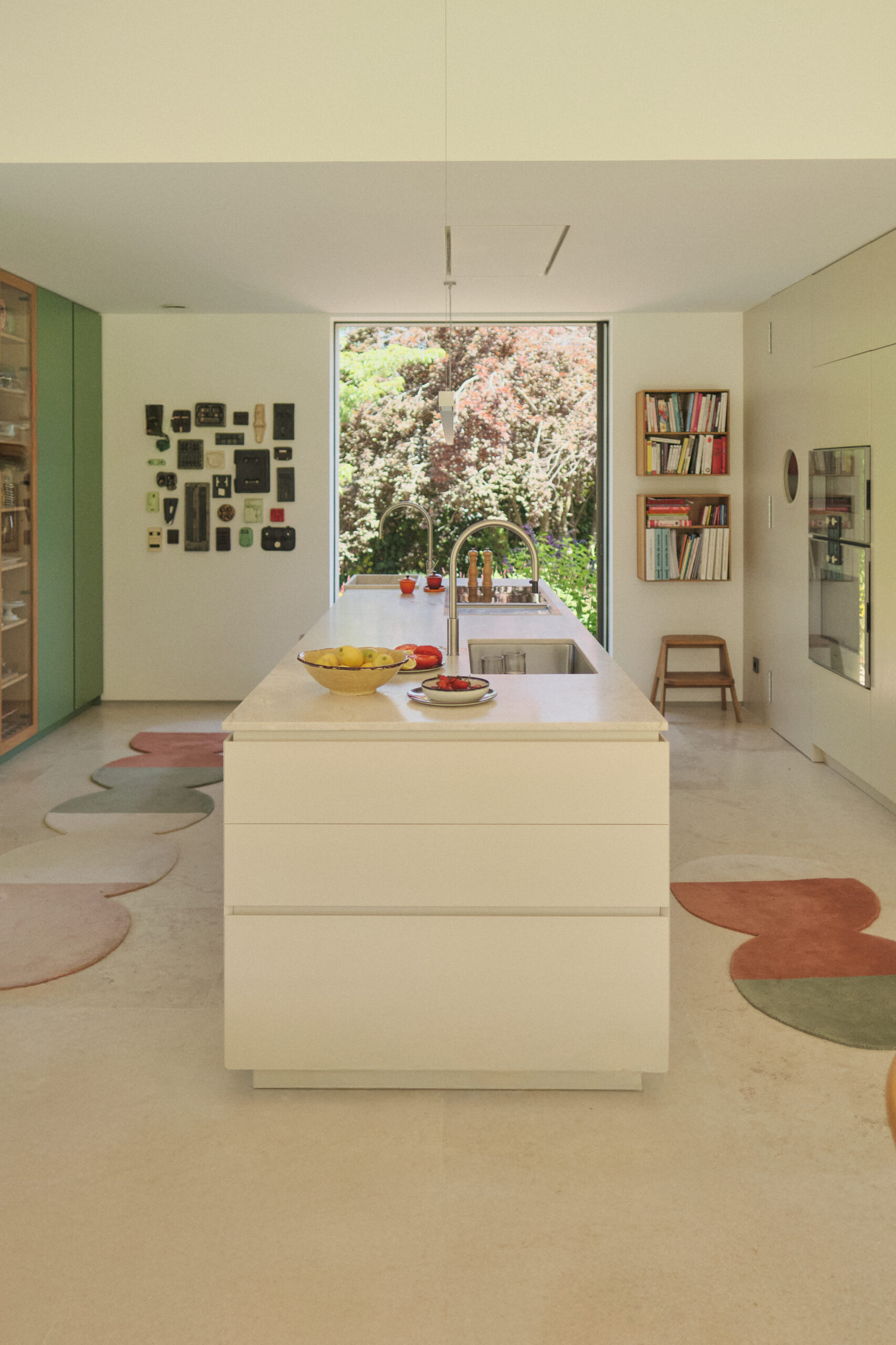
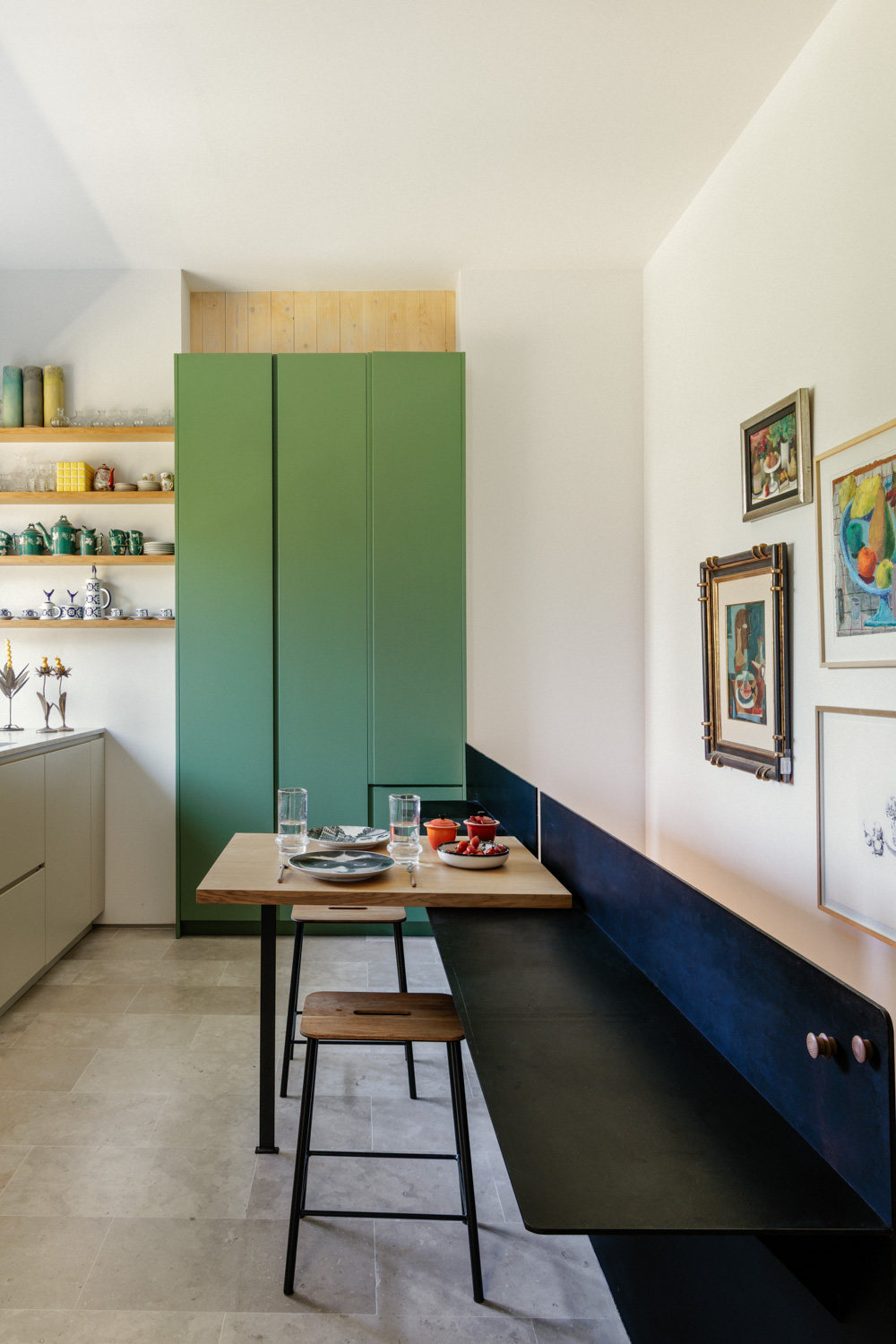
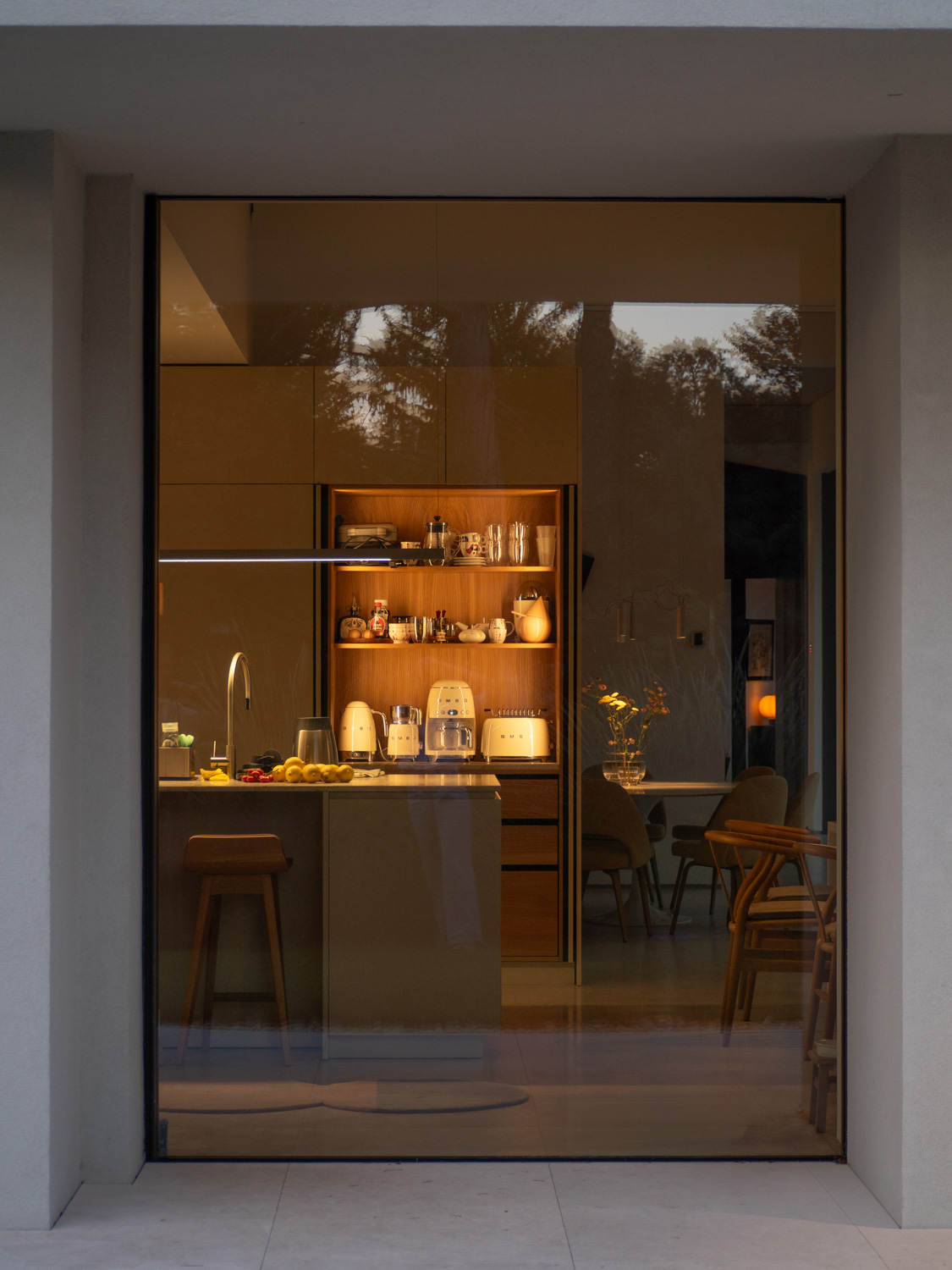
The kitchen, of ABATON design, also opts for color, with a distribution around a large island and access to a semi-hidden service kitchen.
Carpets from Nanimarquina together with exhibition pieces turn this space into an aesthetic and well cared for but very lively part of the house, in direct contact with the southern part of the garden. The large windows are hidden in the walls, generating a direct dialogue without visual interruptions.
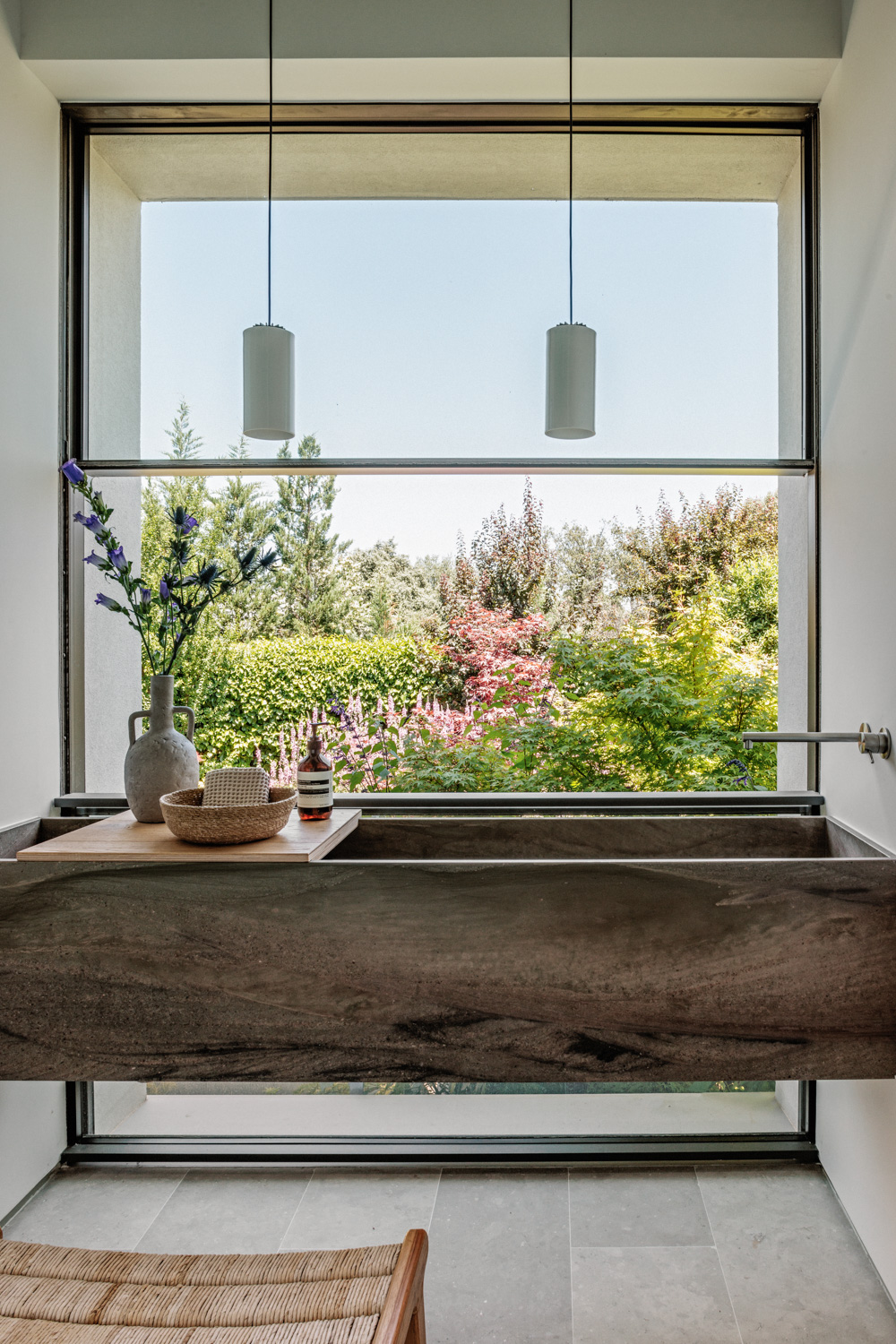
The passage to the most public wing of this custom-built house is formalized by a volume clad in sheet metal that leads to a minimalist toilet, where an overhanging natural stone washbasin is placed in front of a large window framing the landscaping. Even in these transit spaces, the architecture takes care of the relationship between matter, light and nature.
Family zones
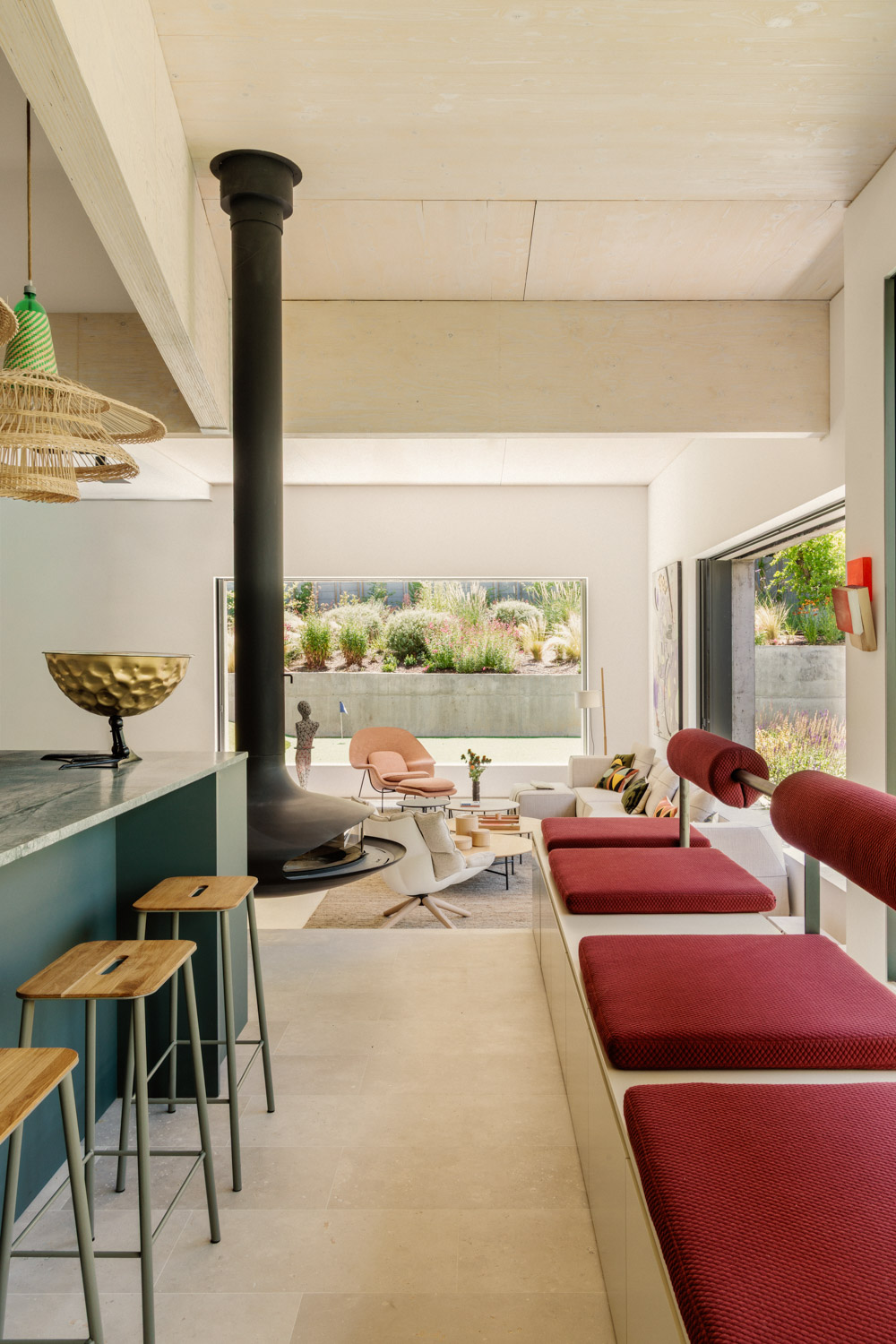
In the west area are located the spaces for family use. Here a large continuous area is articulated by differences in levels that organize the kitchen, living room and a unique space: a golf simulator, a reflection of another of the owners’ passions. From this area there is direct access to the garden, where a miniature golf course is naturally integrated into the landscaping project.
The living room sinks slightly into the terrain, surrounded by staggered masses of vegetation that offer an enveloping perspective of color and nature. Works such as the sculpture by Xavier Mascaró or “Axuk” by Juanjo Maillo establish a contemporary language with timeless interior design pieces such as the Bend-Sofa designed by Patricia Urquiola or the TMM by Miguel Milá. At a slightly higher level is an open kitchen with a marble countertop and a more informal and relaxed space for the family.
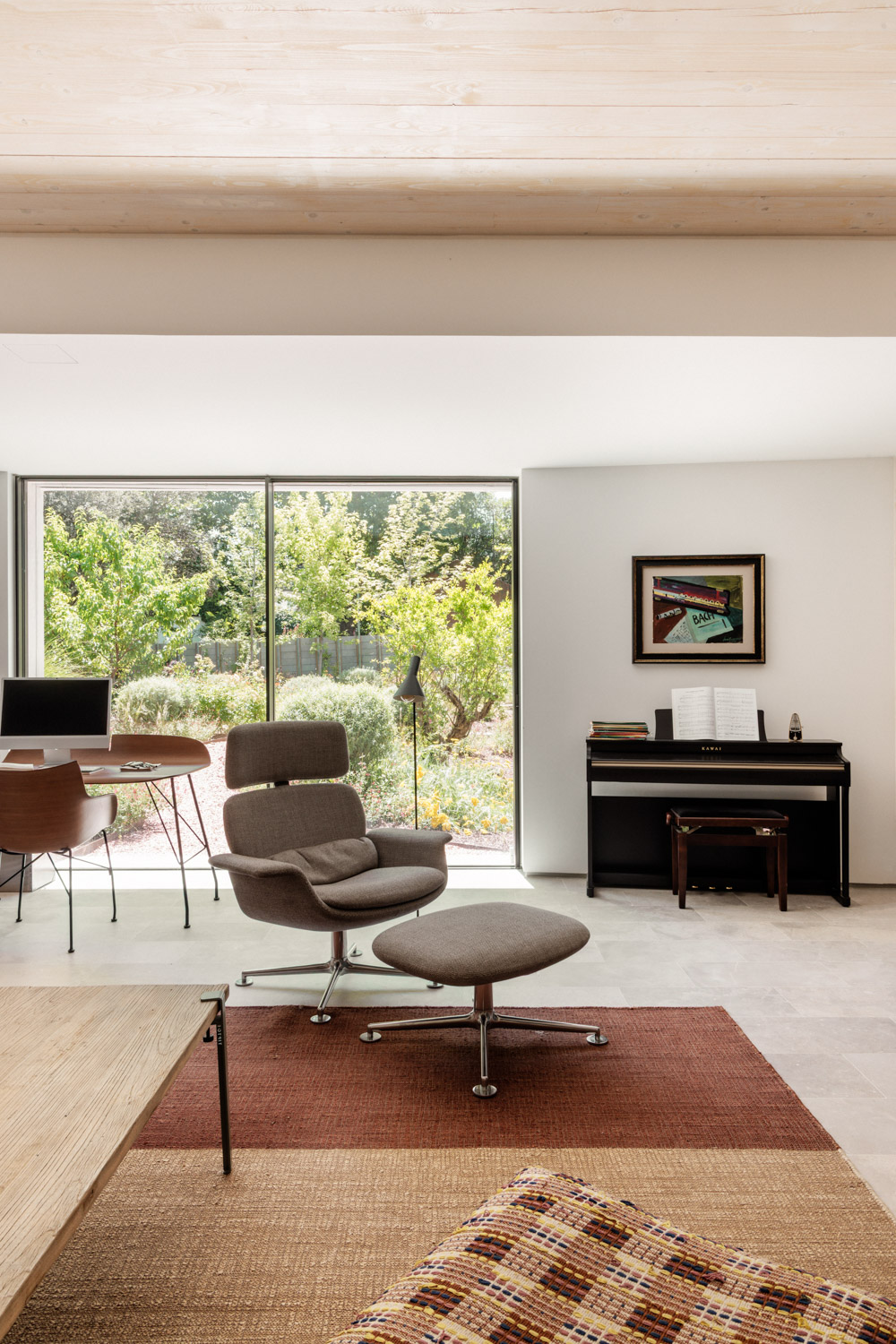
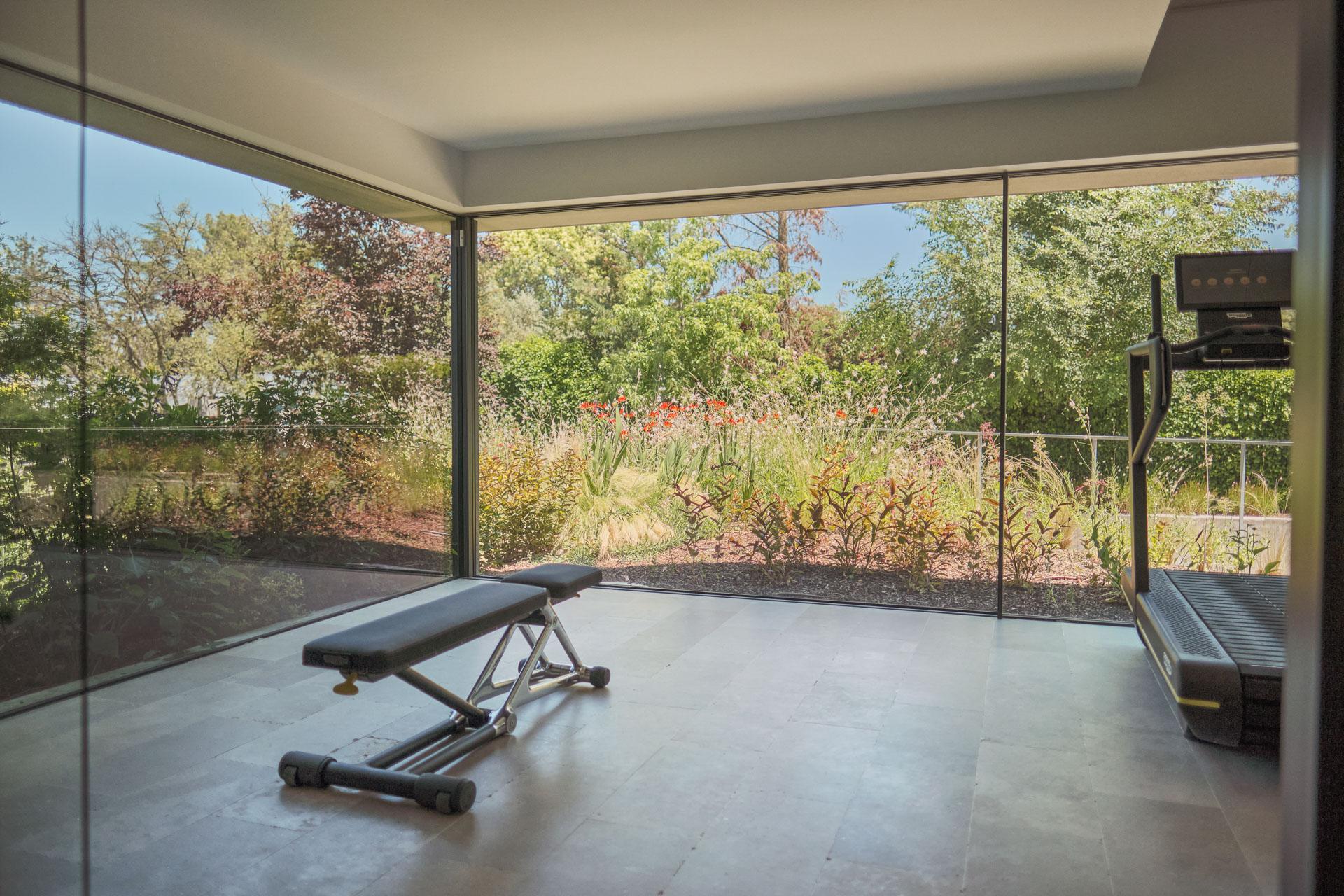
This sector of the house also incorporates an office, a toilet and a glazed gym, as a corner in the middle of the vegetation, forming a more intimate area but equally open to the outside.
Independence and privacy in the master suite
On the mezzanine between the main level and the children’s level, a more reserved area, the master suite and a second office are separated.
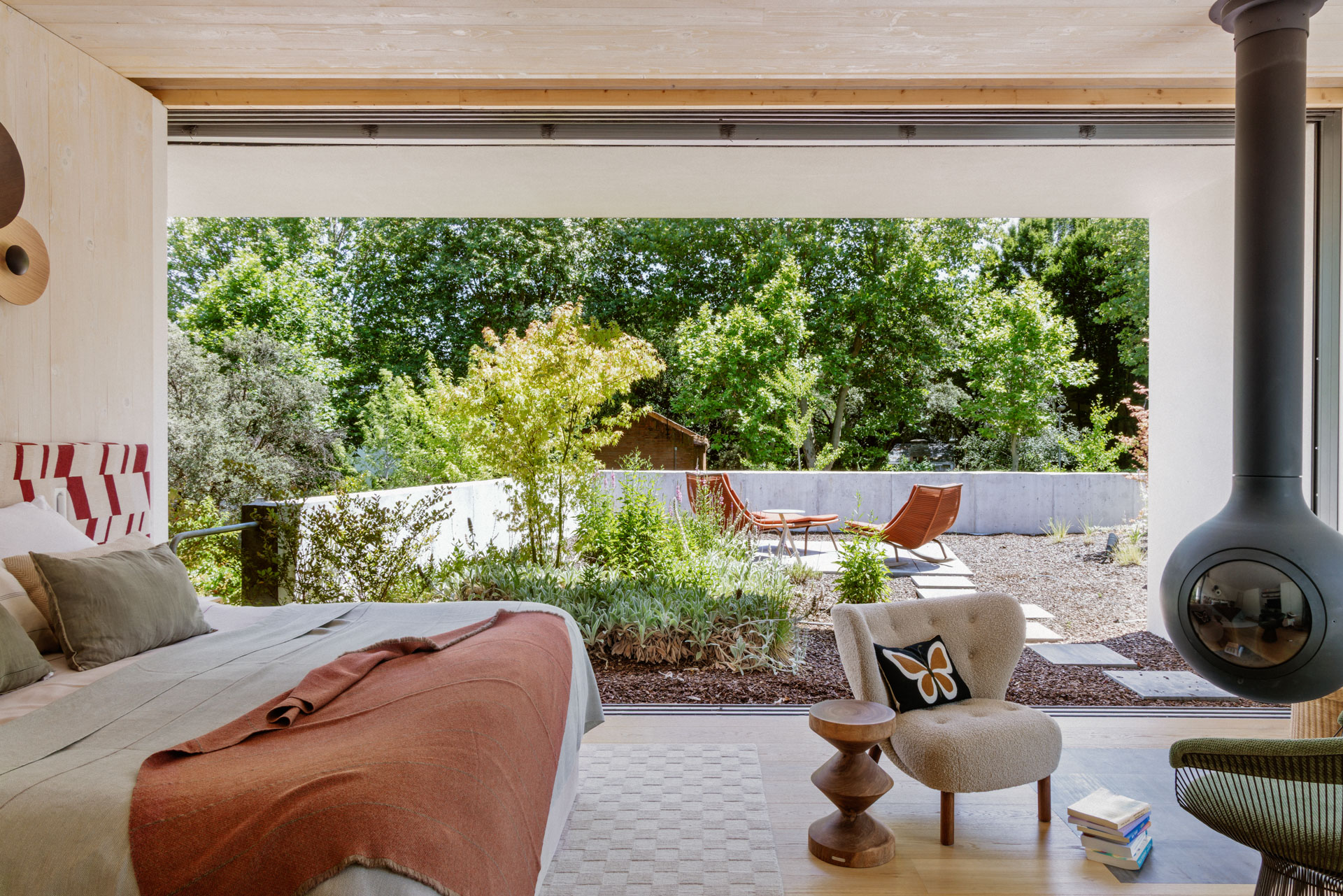
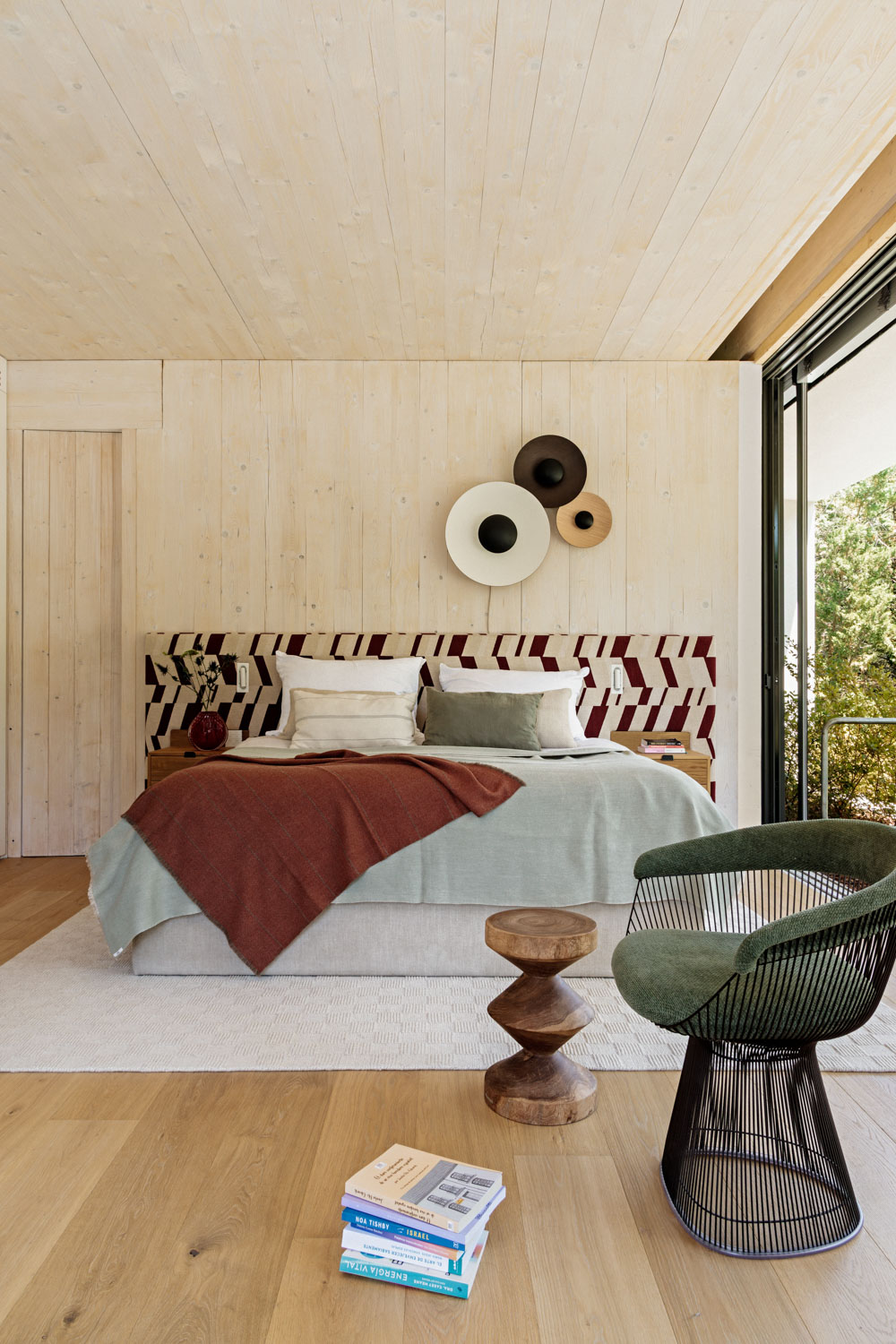
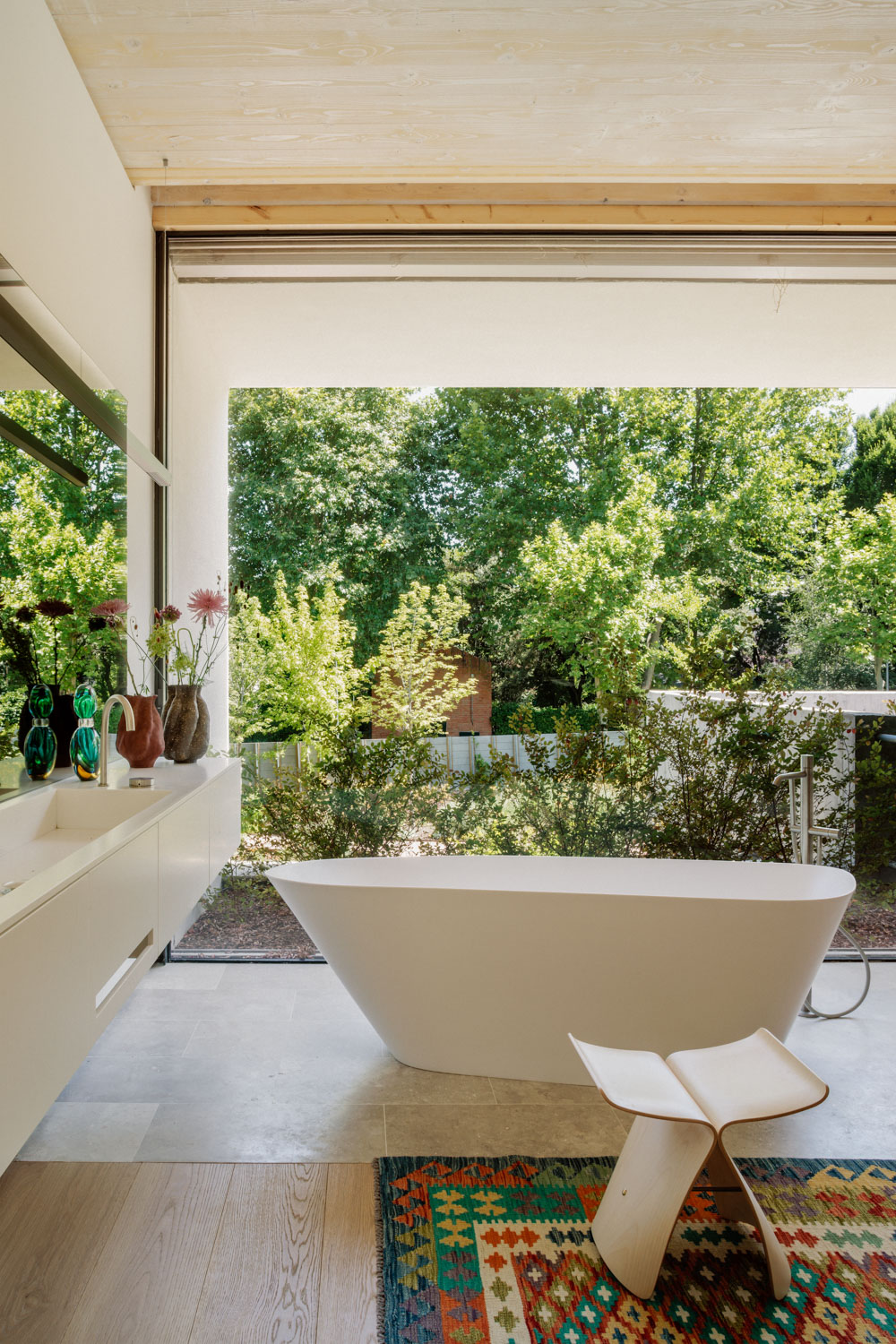
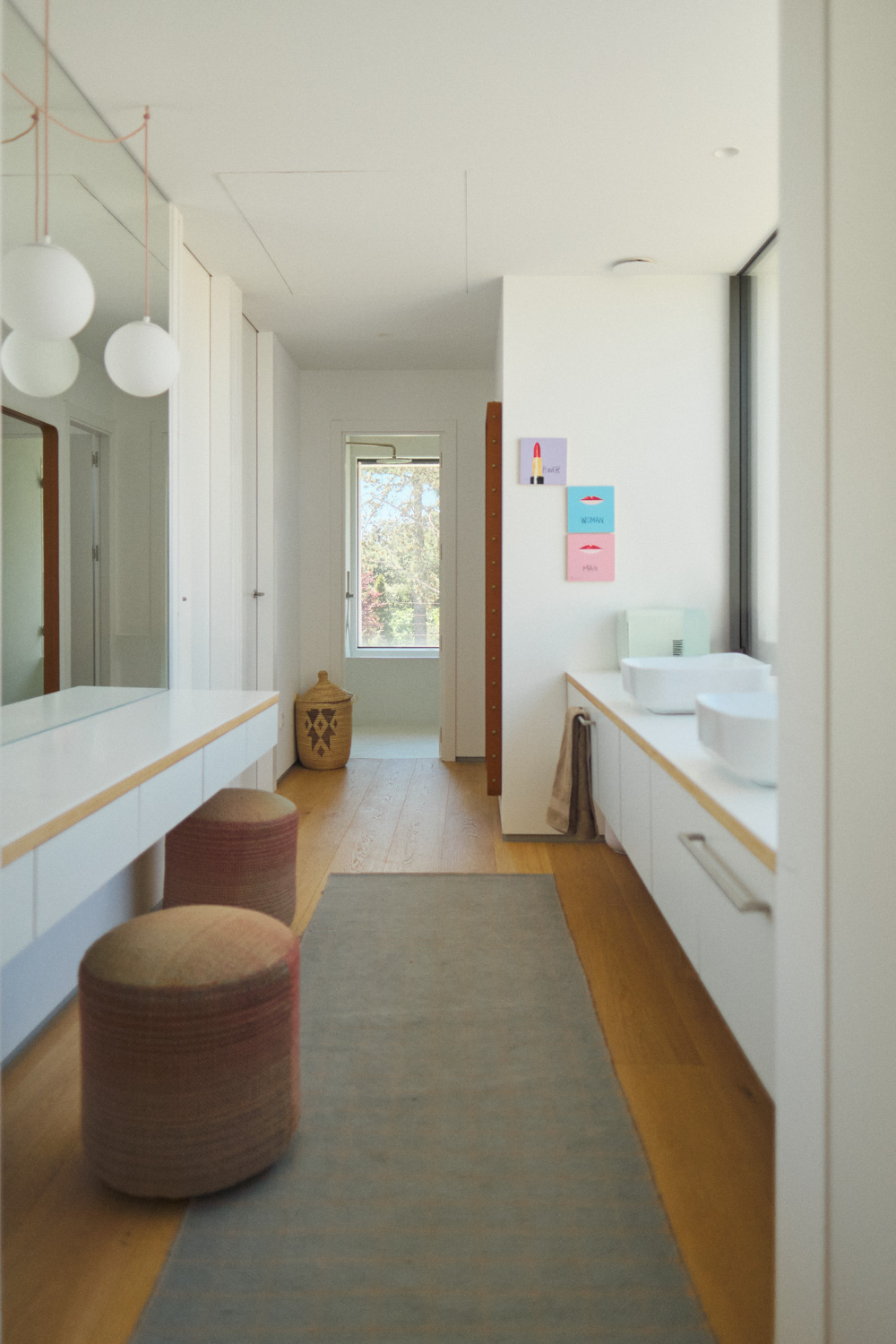
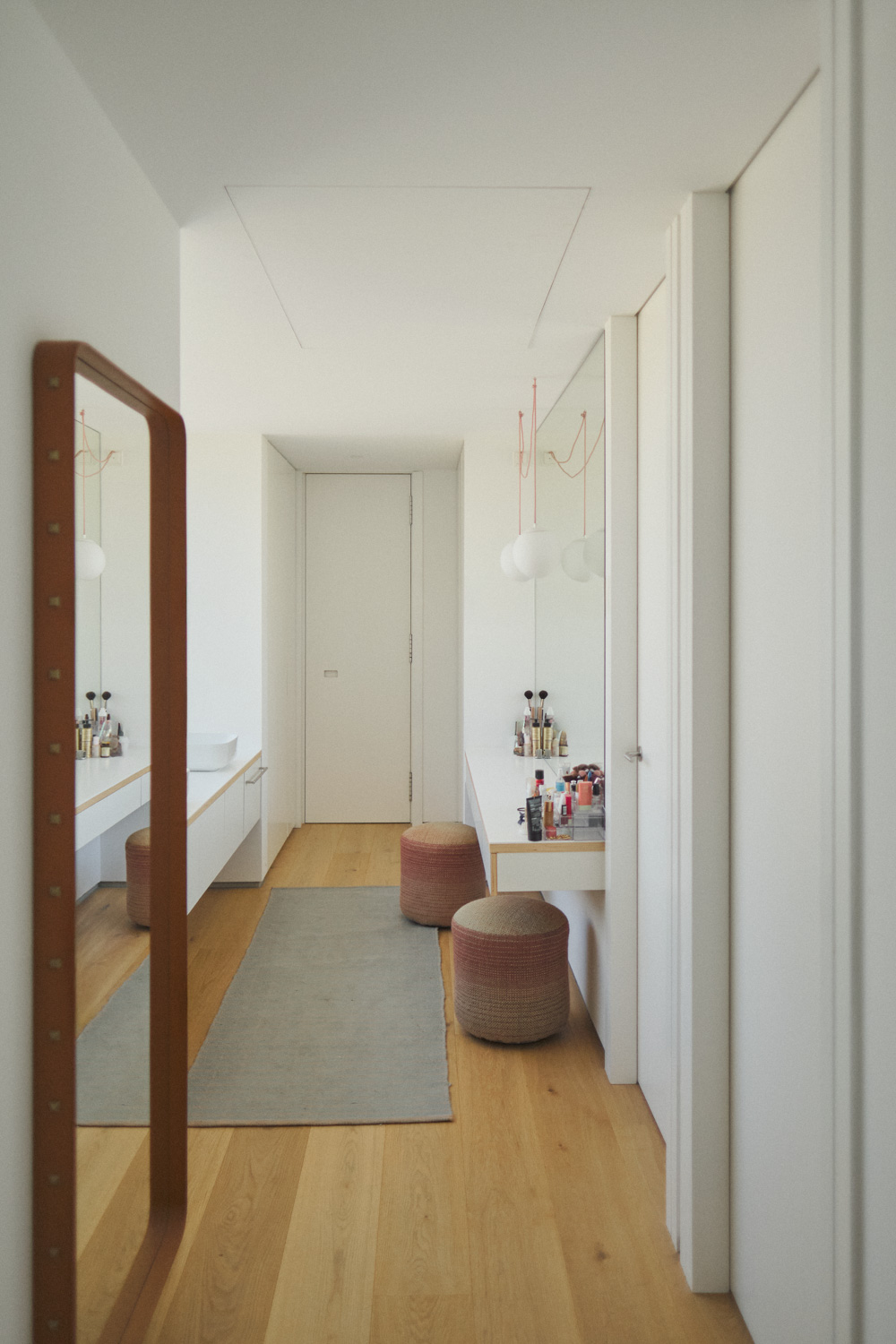
The bedroom opens onto a large garden terrace that extends the room to the outside. The bathroom, conceived as an open and luminous space, integrates shower and bathtub facing the garden, reinforcing the experience of intimacy in contact with nature. Dressing room, bedroom and terrace are linked as a continuous sequence of spaces.
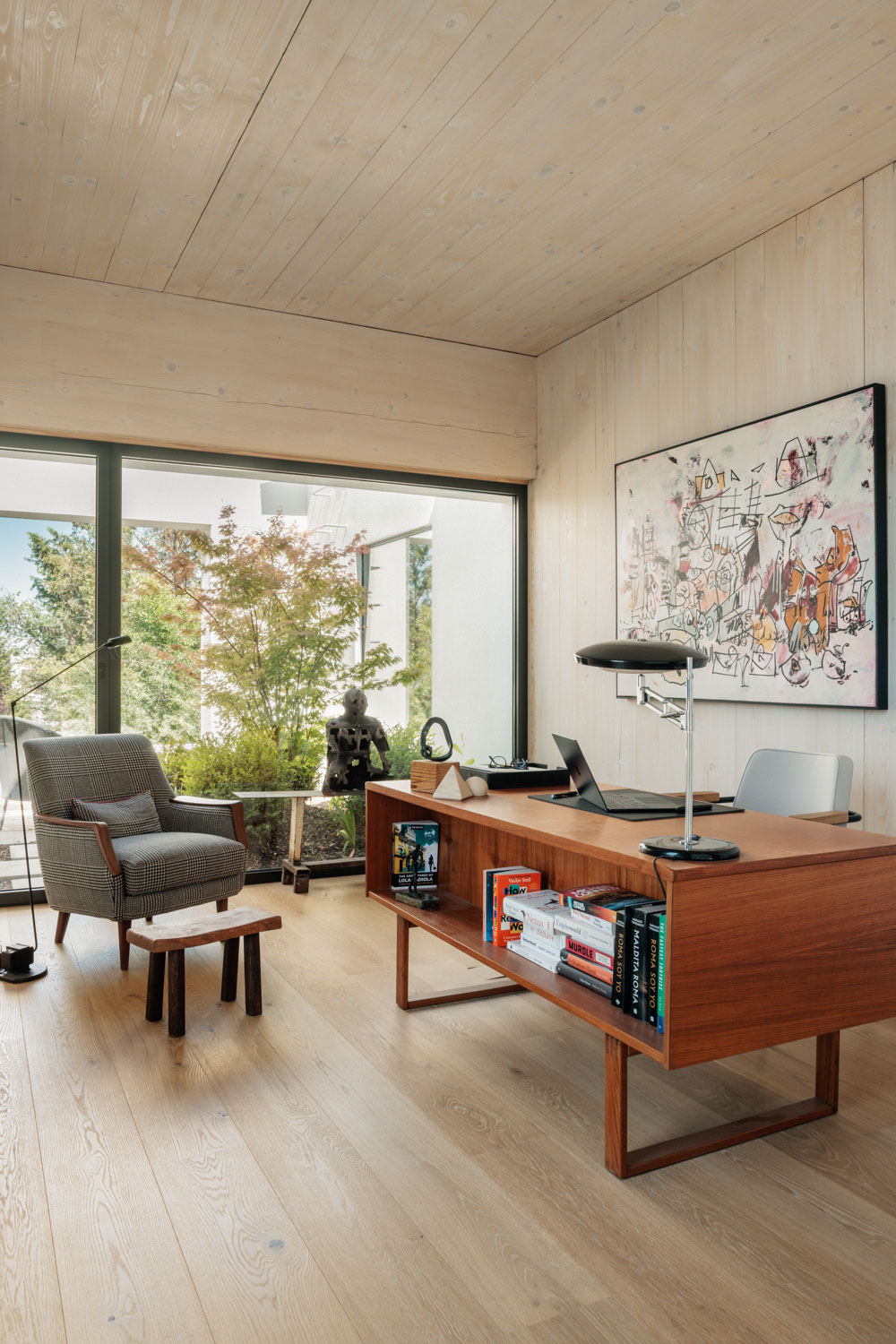
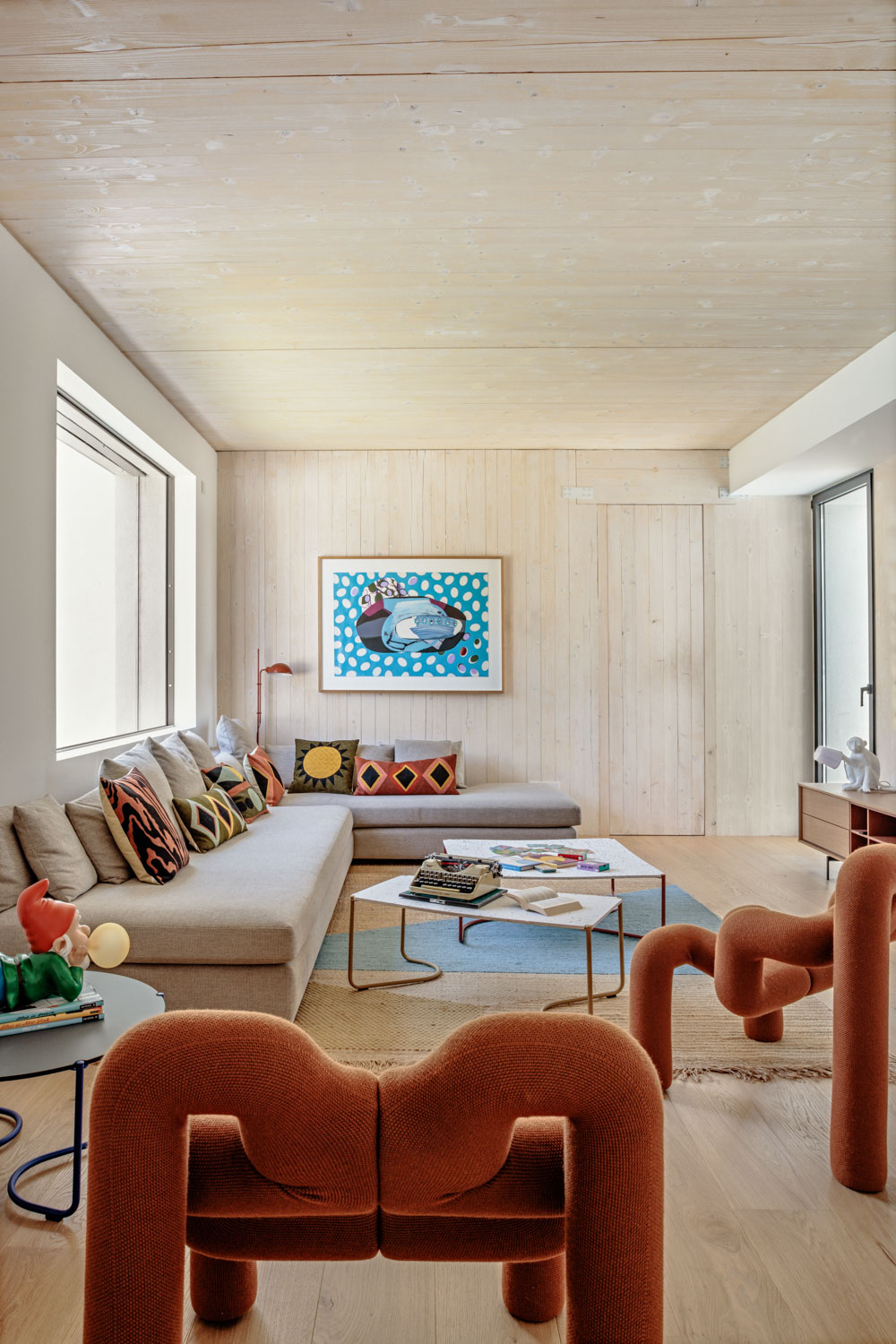
On the upper floor, two children’s bedrooms are accessed through a common living room for the children, conceived as a flexible space where art also has a presence.
The garden pavilion
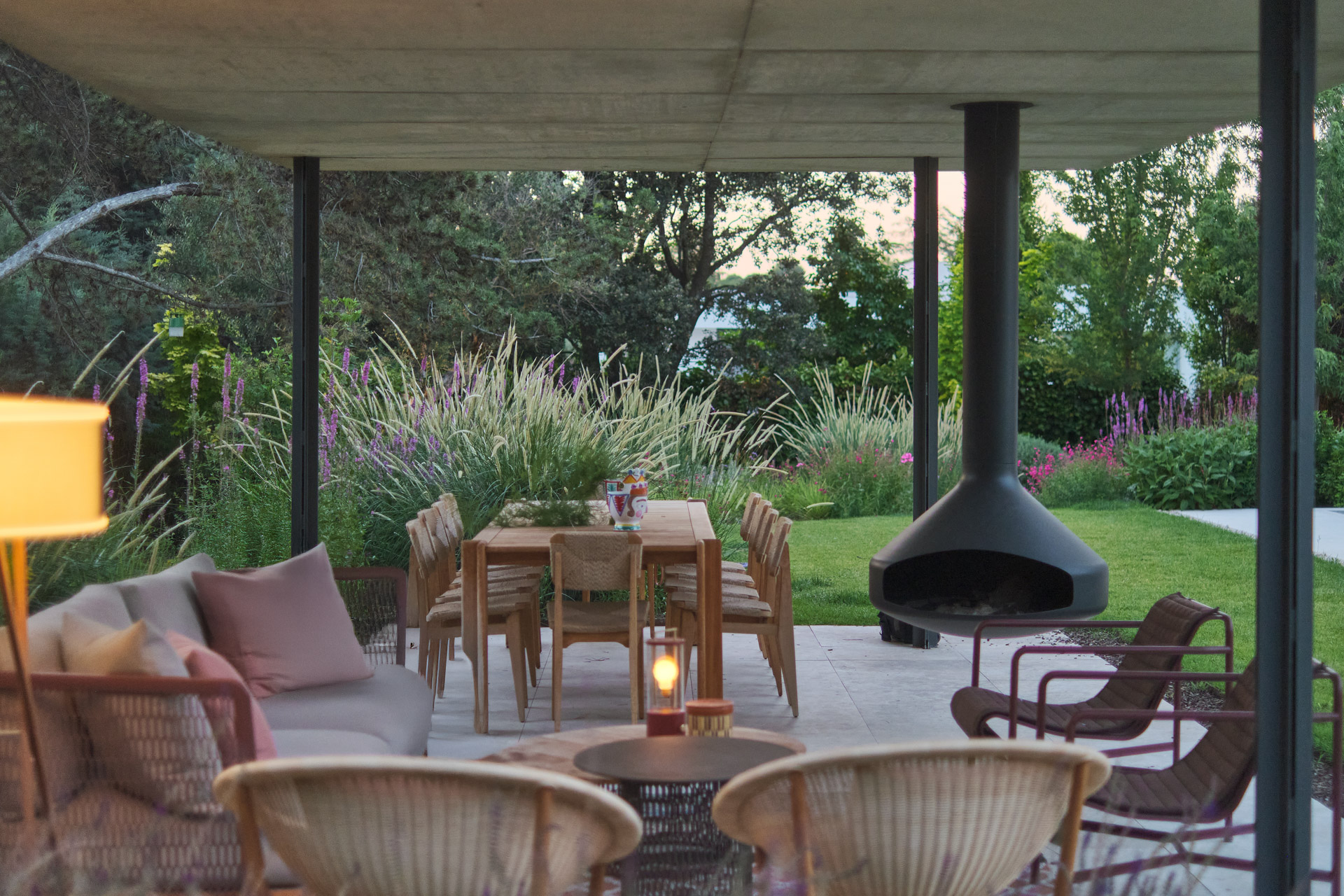
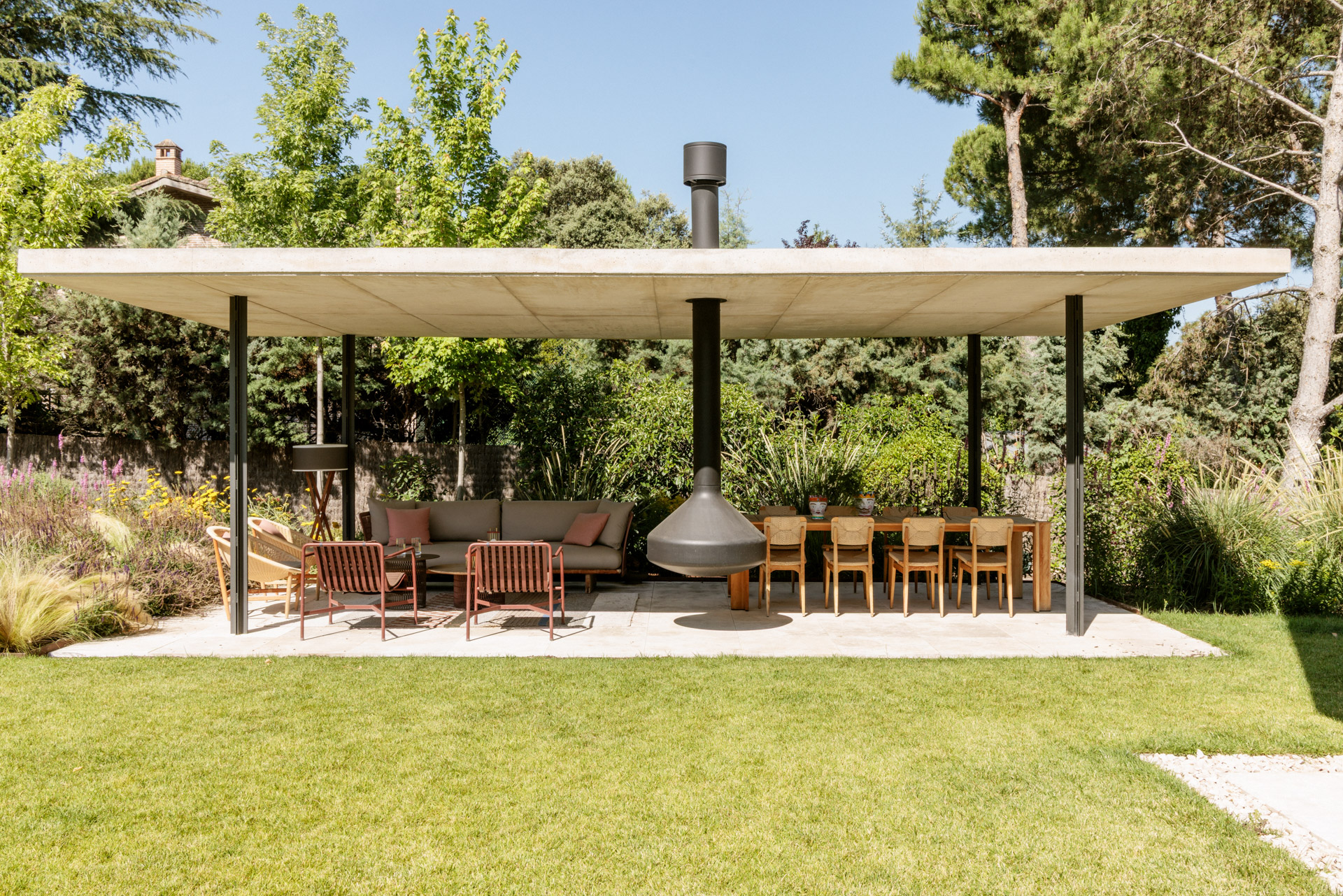
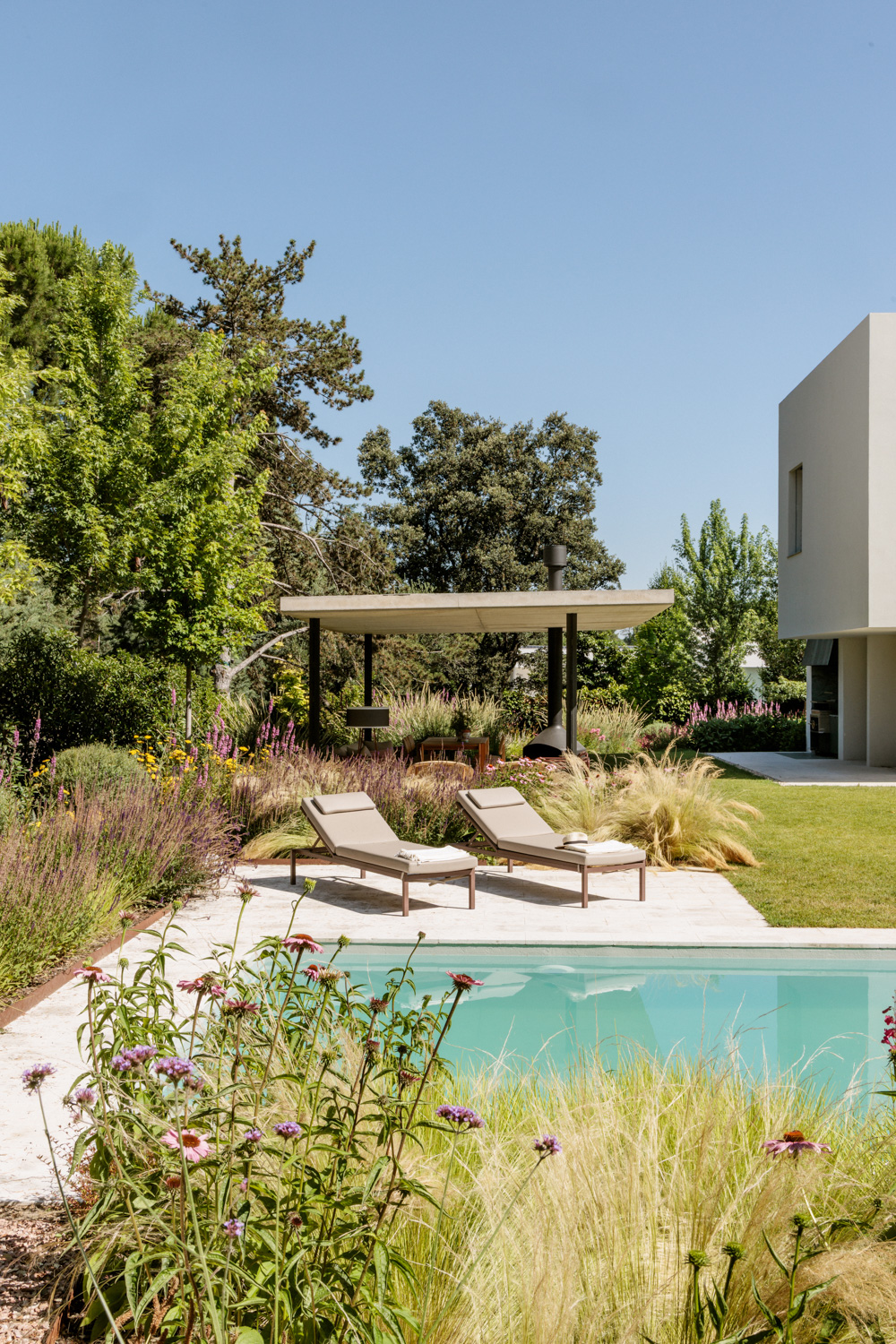
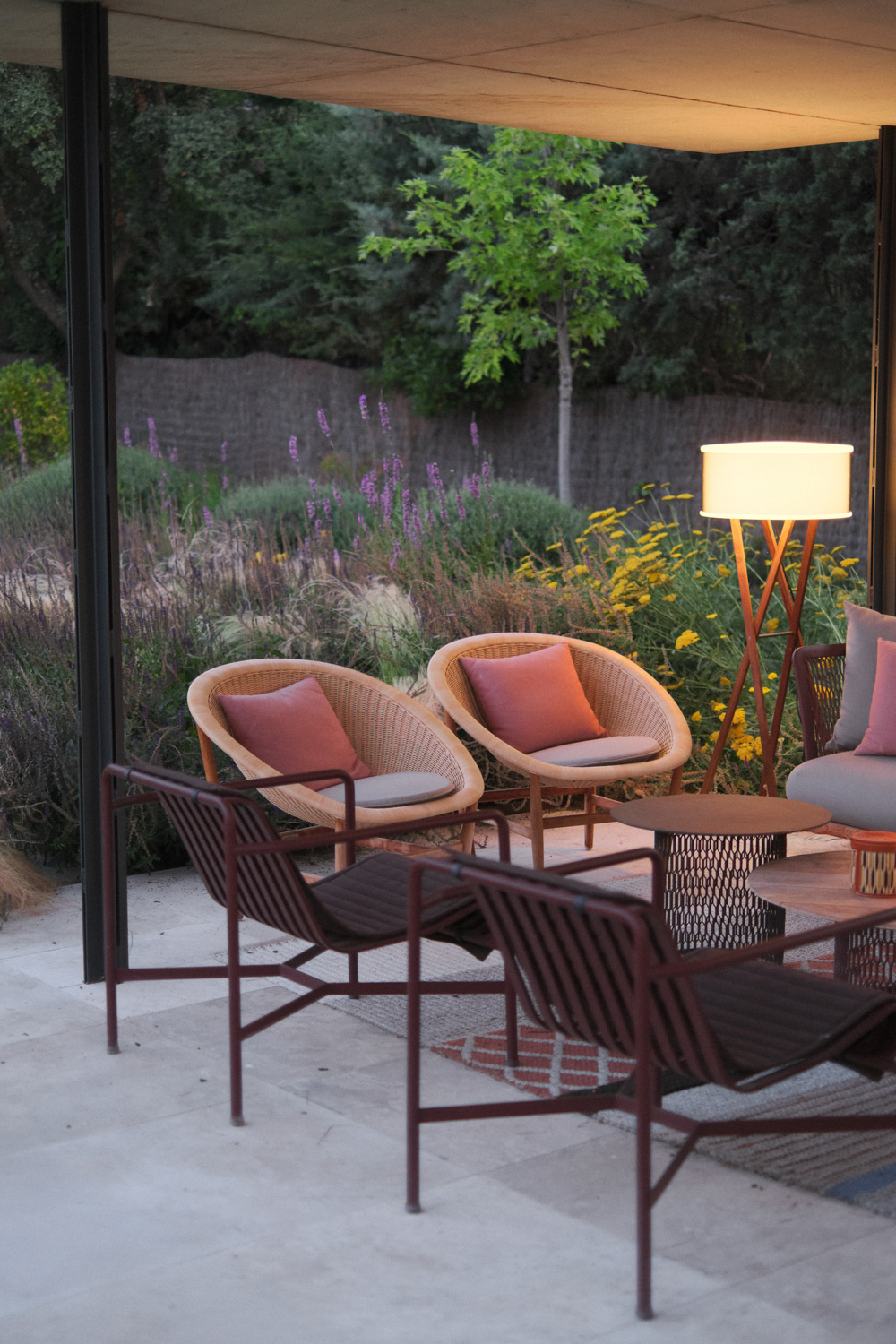
We designed an outdoor space to enjoy the garden at all times of the year: a pavilion with a fireplace and a dining room to enjoy the outdoors without sacrificing comfort in all seasons.
New Perennial Landscaping: a garden that sets the pace
The garden project is developed under New Perennial criteria, with a naturalistic composition based on grasses and perennials that evolve with the seasons. The main meadow dialogues with masses of freer vegetation that provide texture, movement and biodiversity; a perfect ecosystem for birds and pollinating insects.
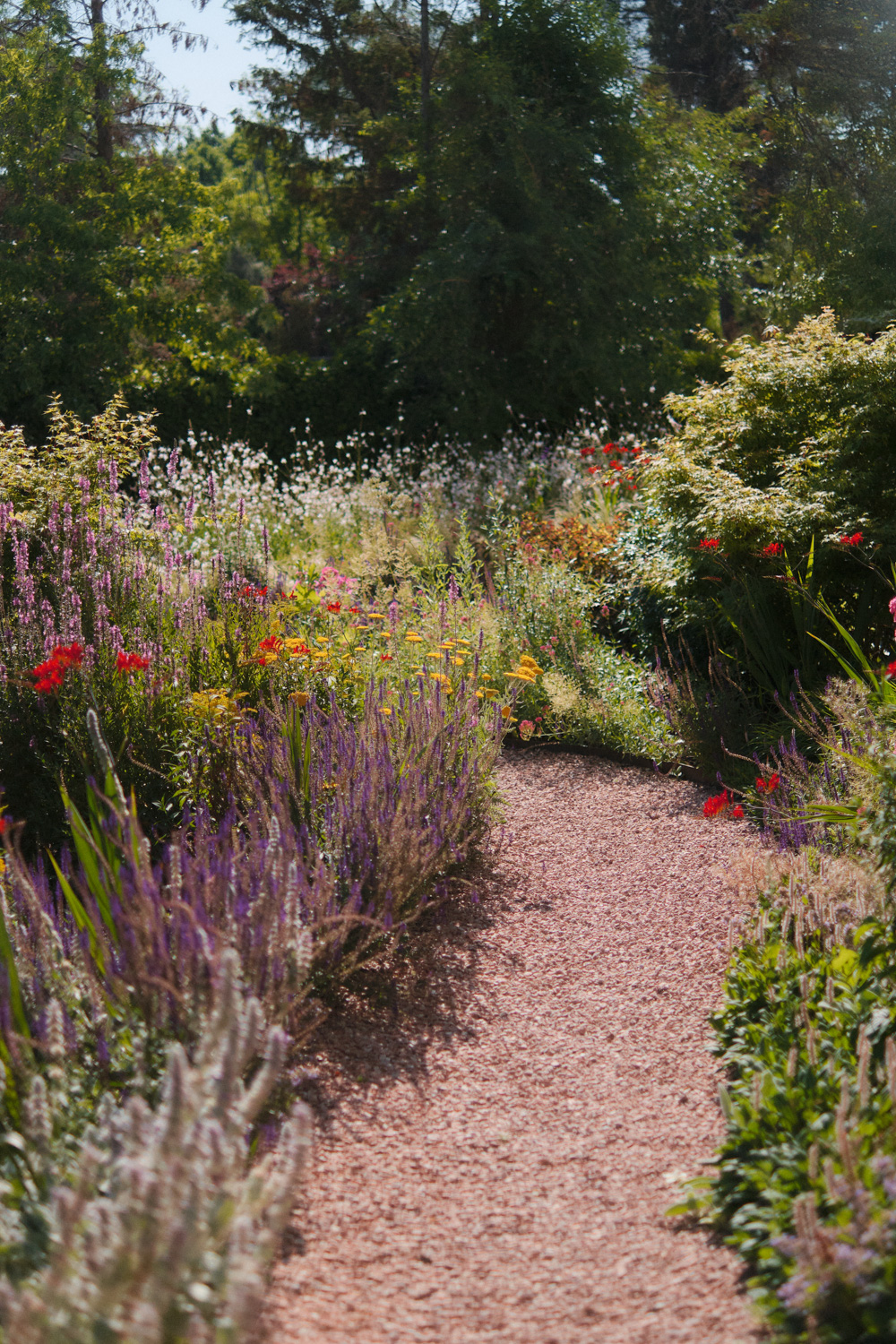
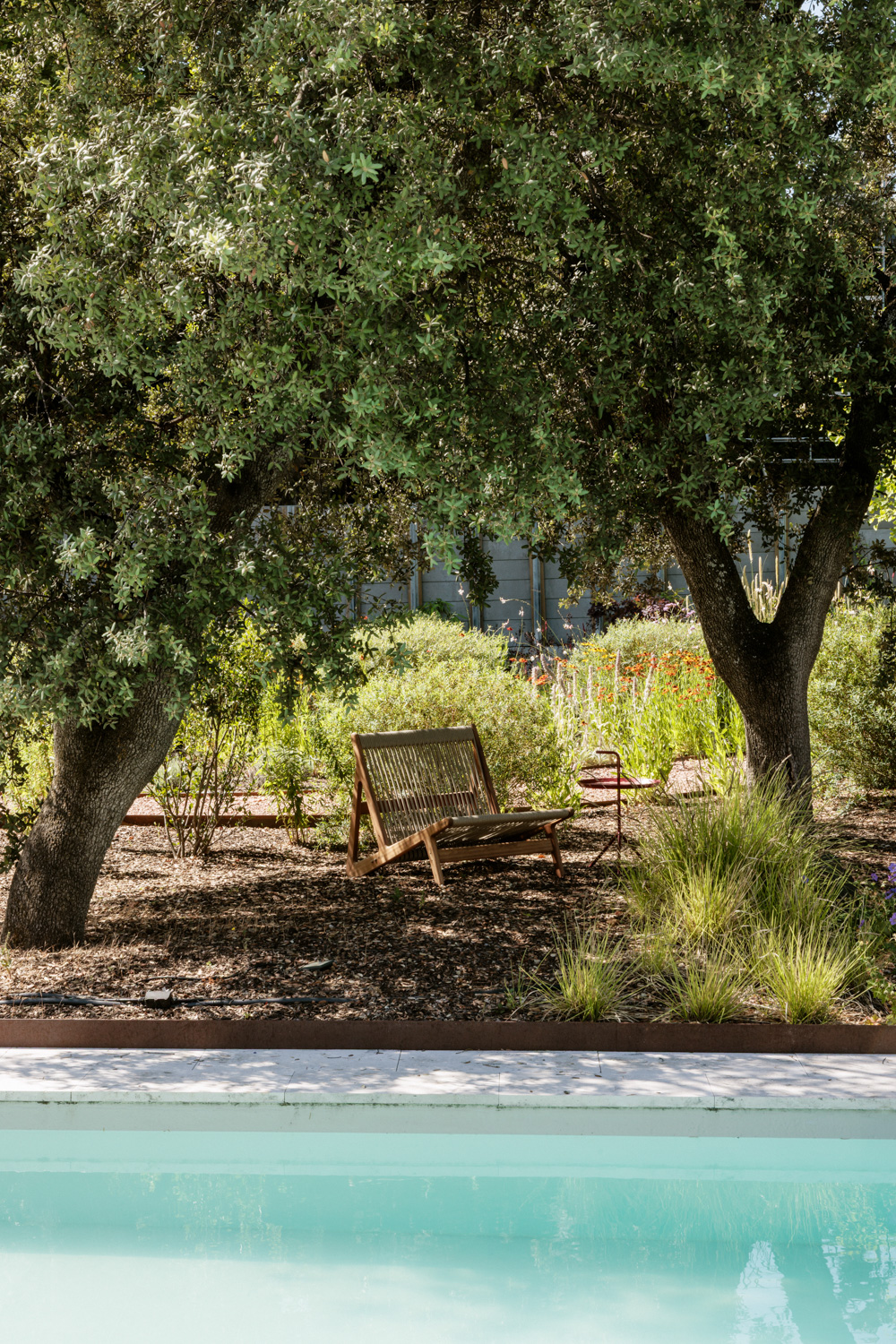
Among the vegetation, paths invite visitors to walk through the garden and discover different areas: a pavilion with an outdoor dining area, conceived as an open space in direct contact with the landscape; a reading area under the shade of a tree; and rest areas that blend naturally into the environment.
Landscaping is not a background, but a living extension of the architecture. The house is opened, protected and framed by the garden.
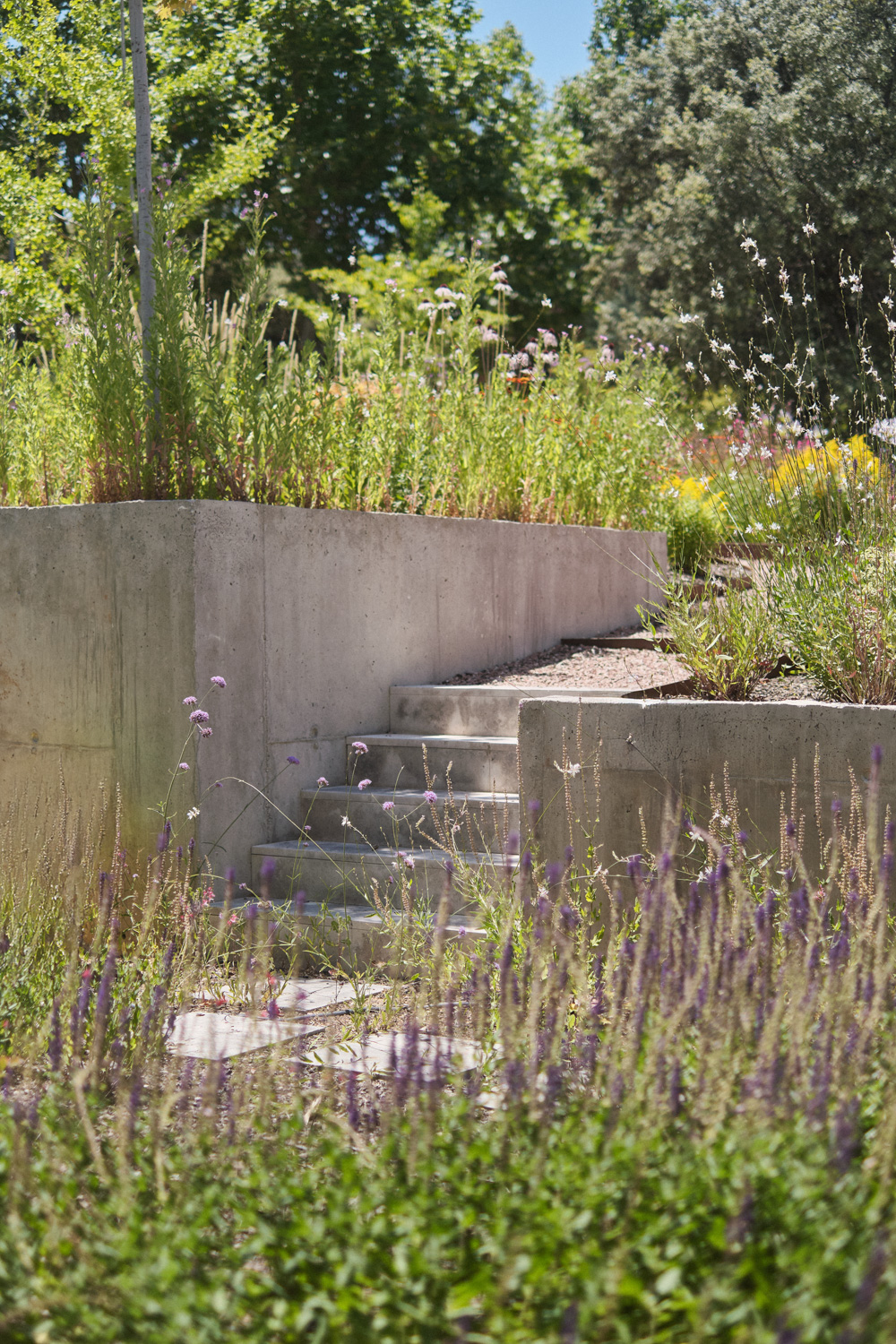
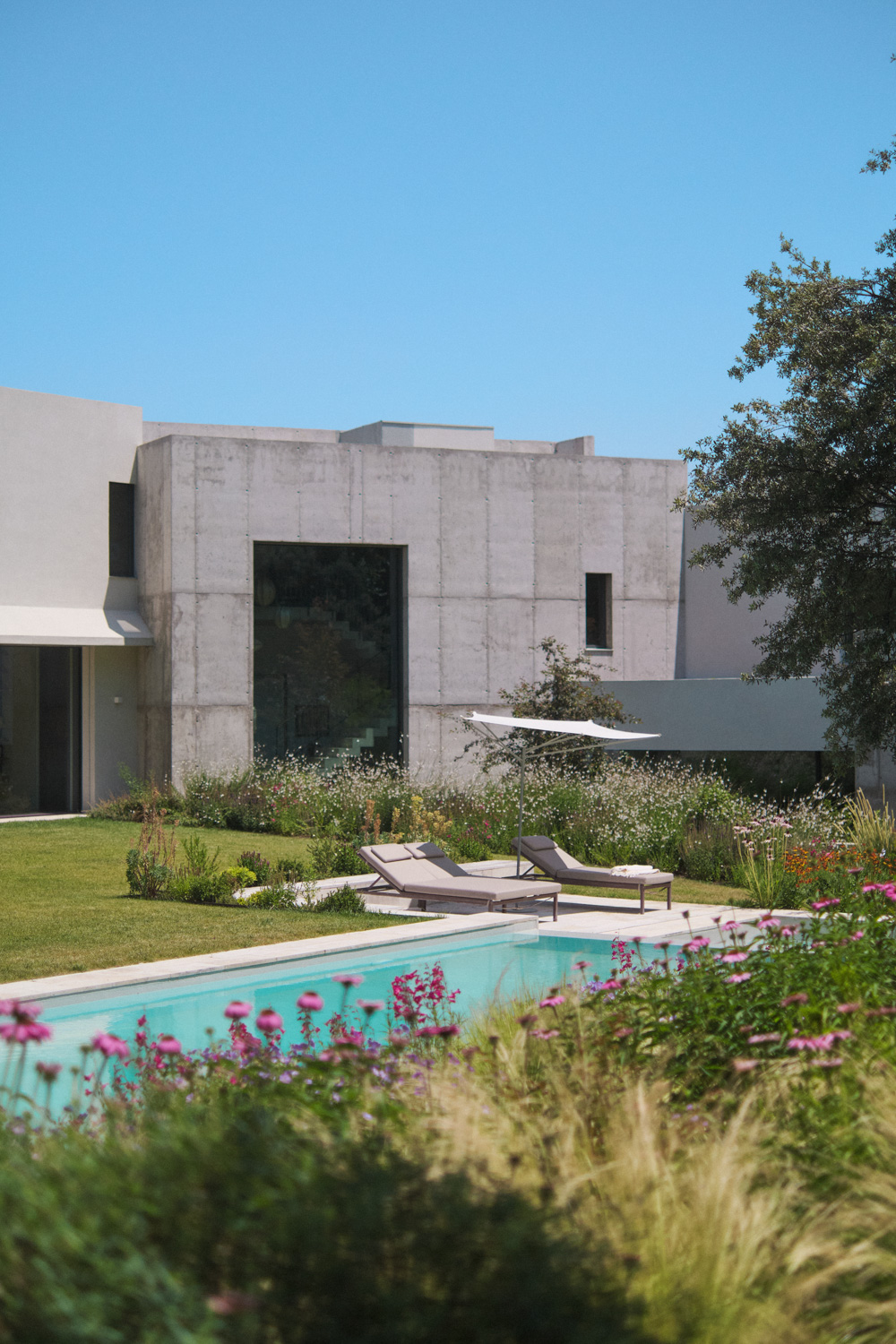
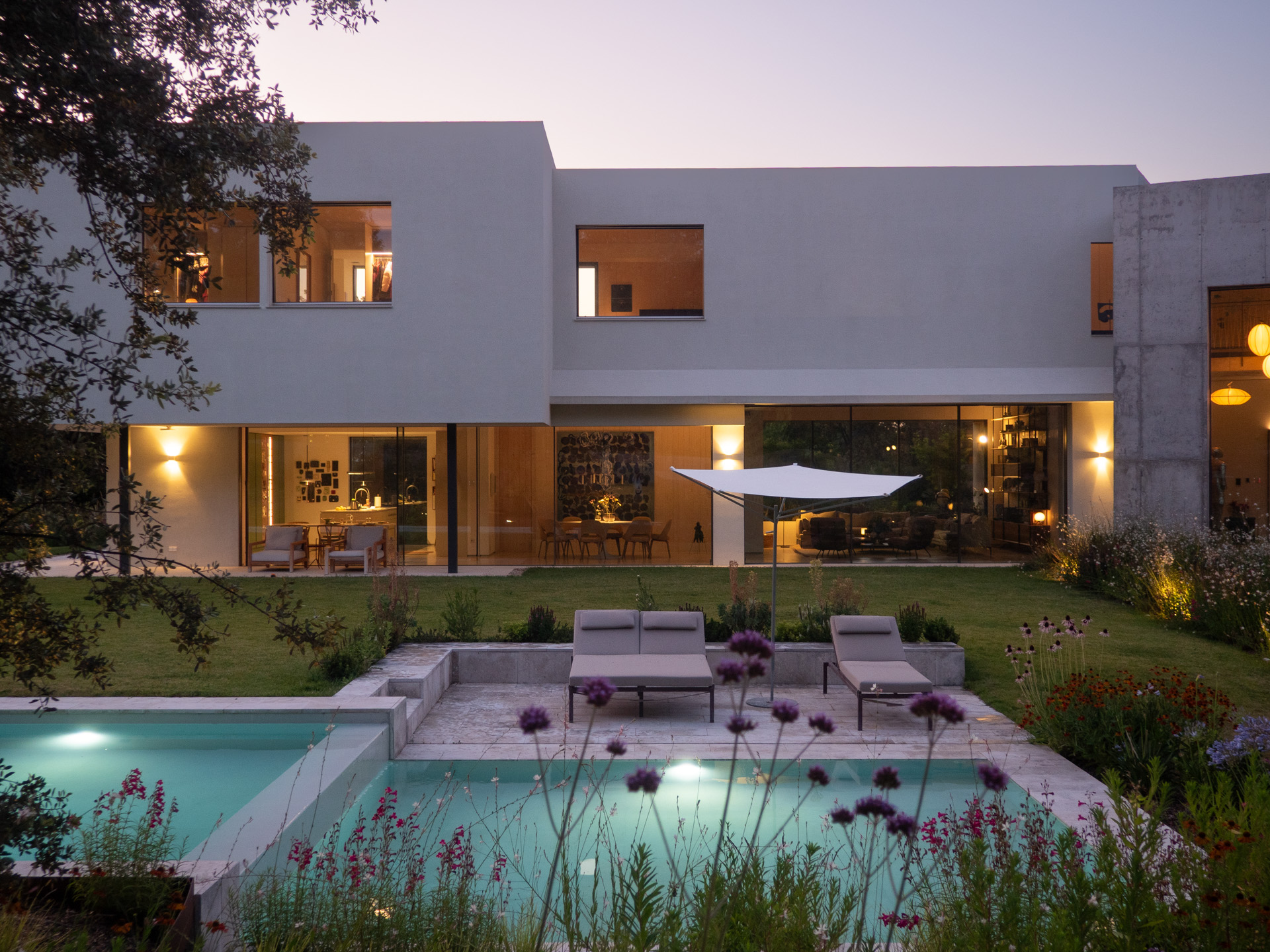
ÁRCO House is the result of an integral work where architecture, interior design and landscape build a silent but expressive support for life and art. A home designed to inhabit, contemplate and share from sustainable, conscious and empathetic premises.