Maitland Bay House: a refuge between forest and sea
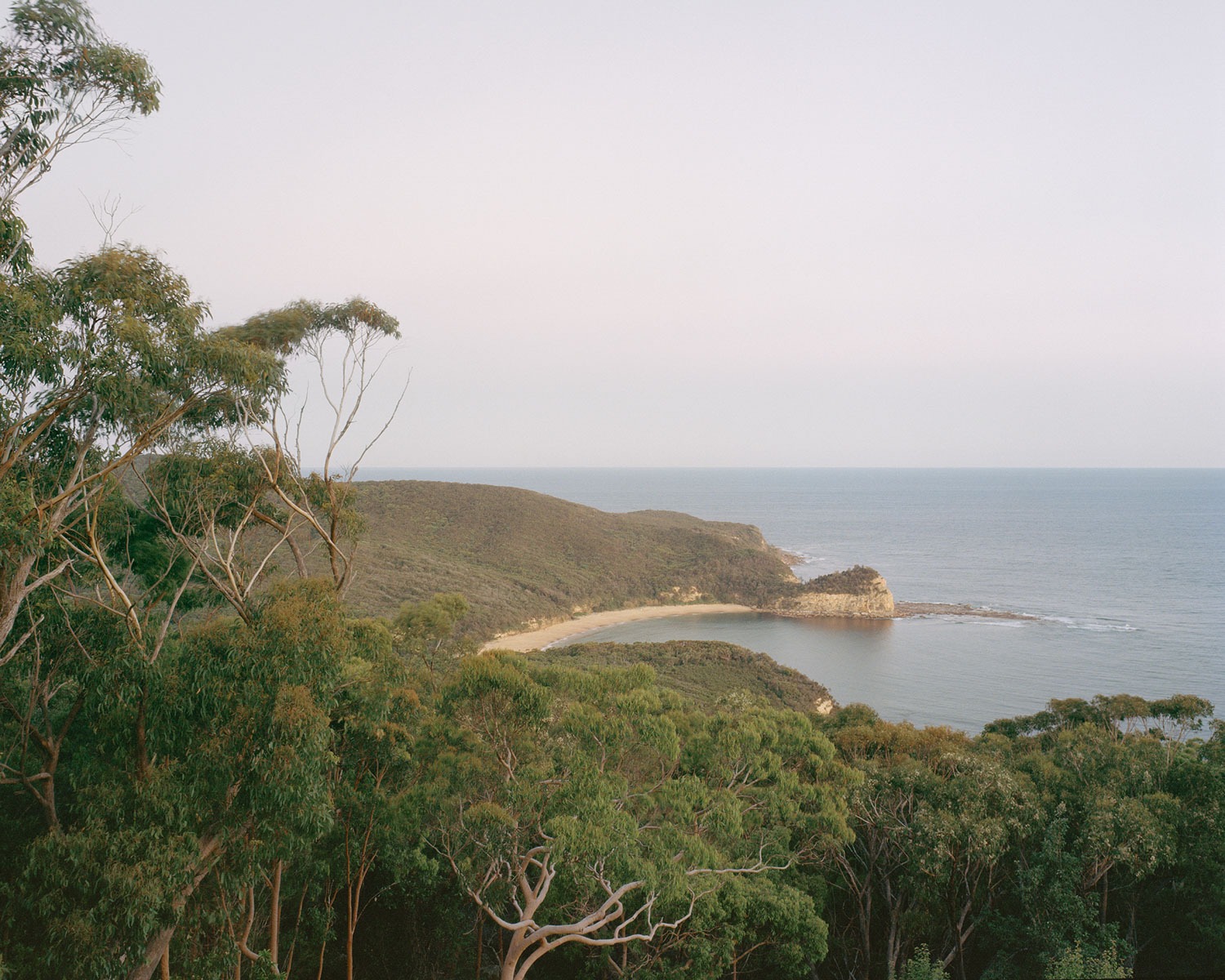
Maitland Bay House, designed by Studio Bright, is located on the central coast of New South Wales, adjacent to Bouddi National Park, with views extending to Maitland Bay. The terrain is steep, squeezed between neighboring properties and subject to extreme bushfire risk regulations. In this context, the project must not only solve internal programs, but respond to the environment, climate and topography with precision.
Volumetry and architectural strategy
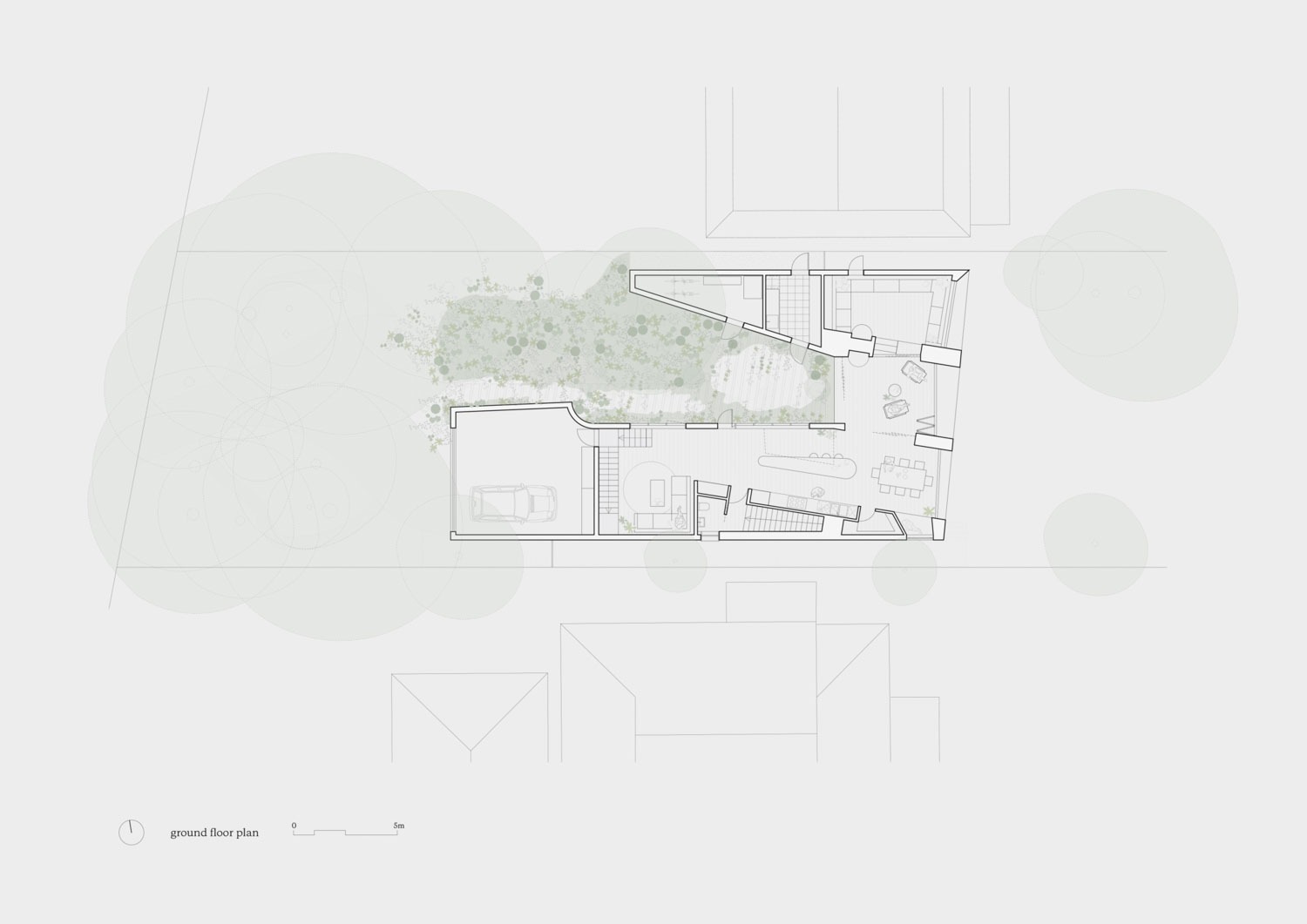
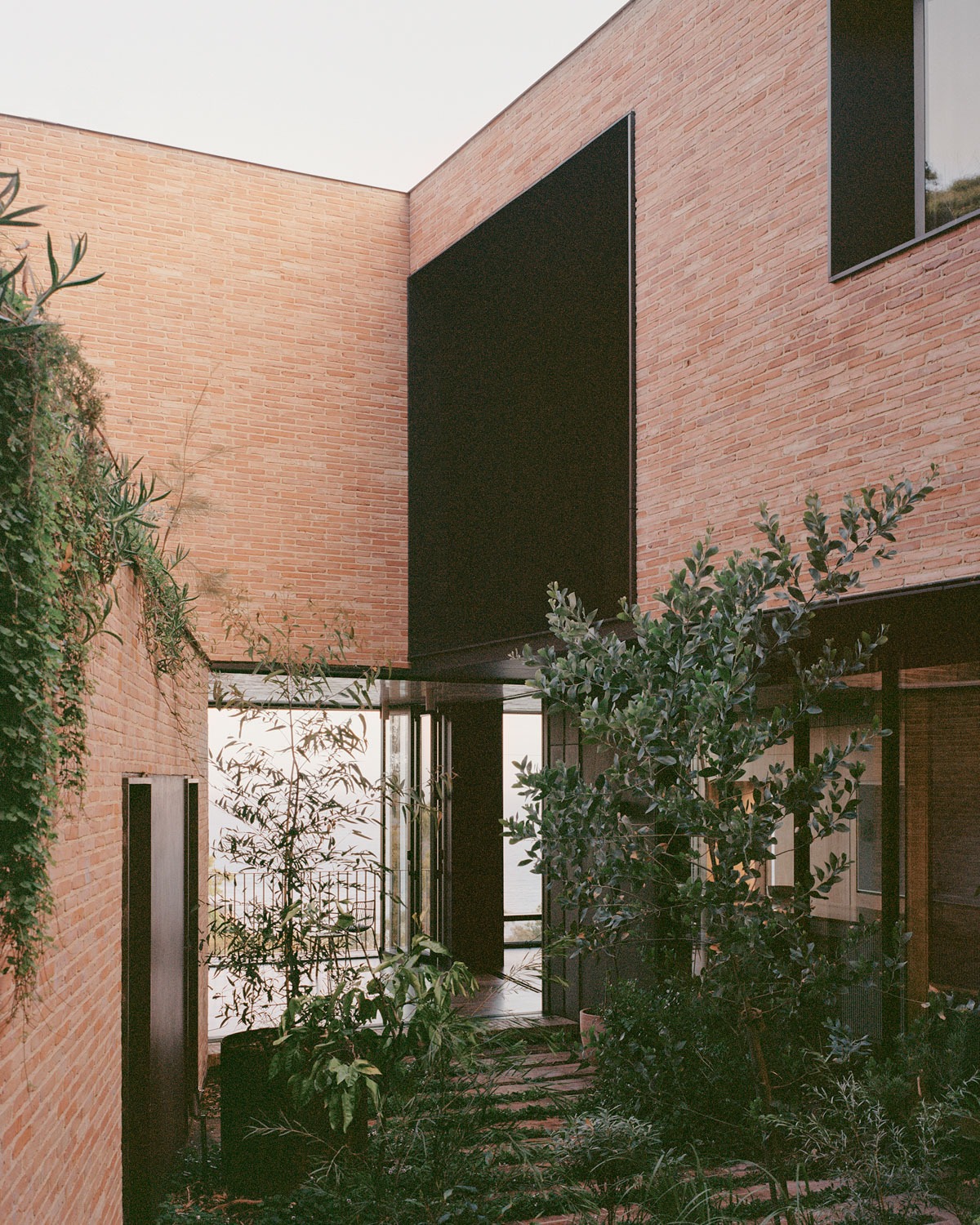
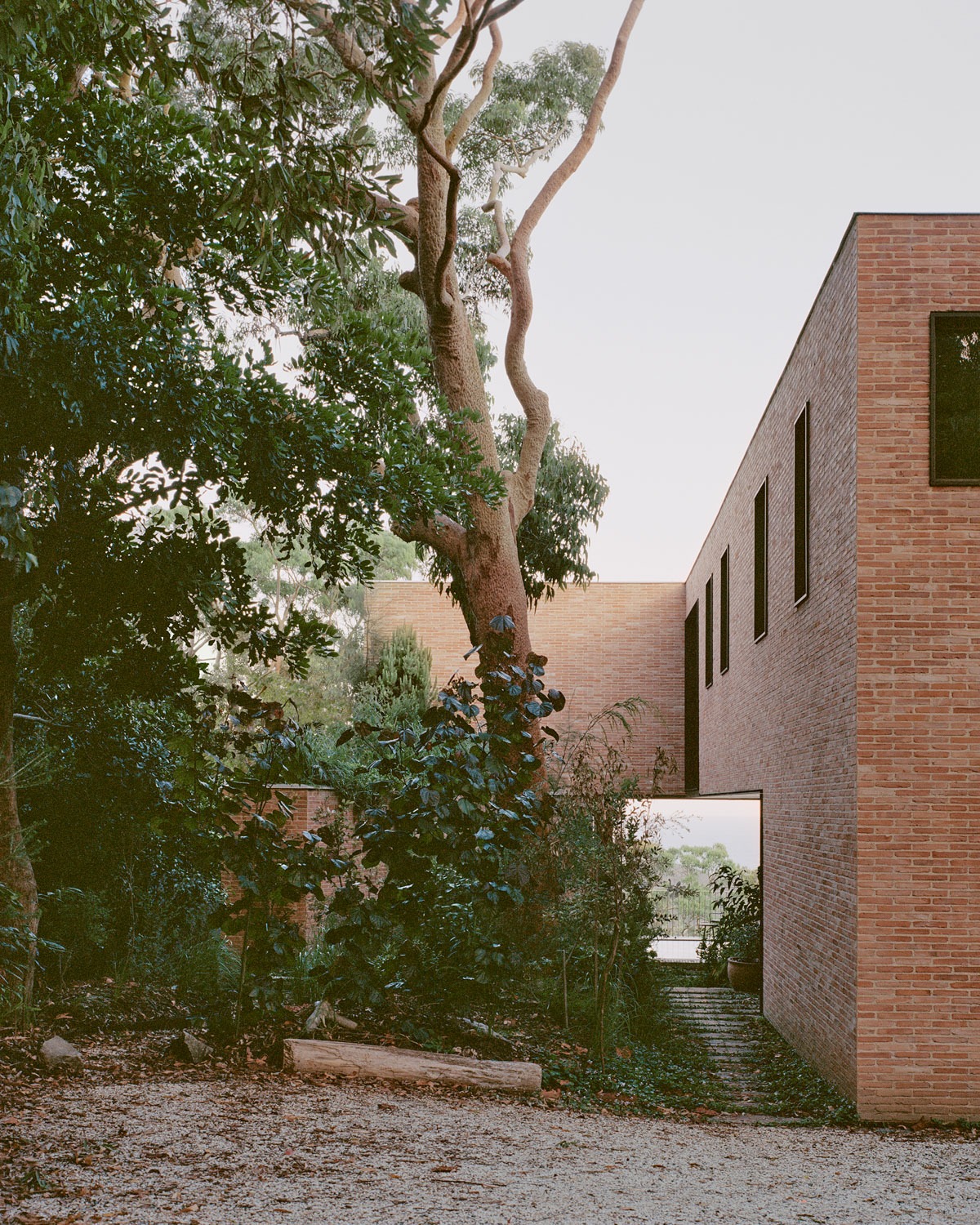
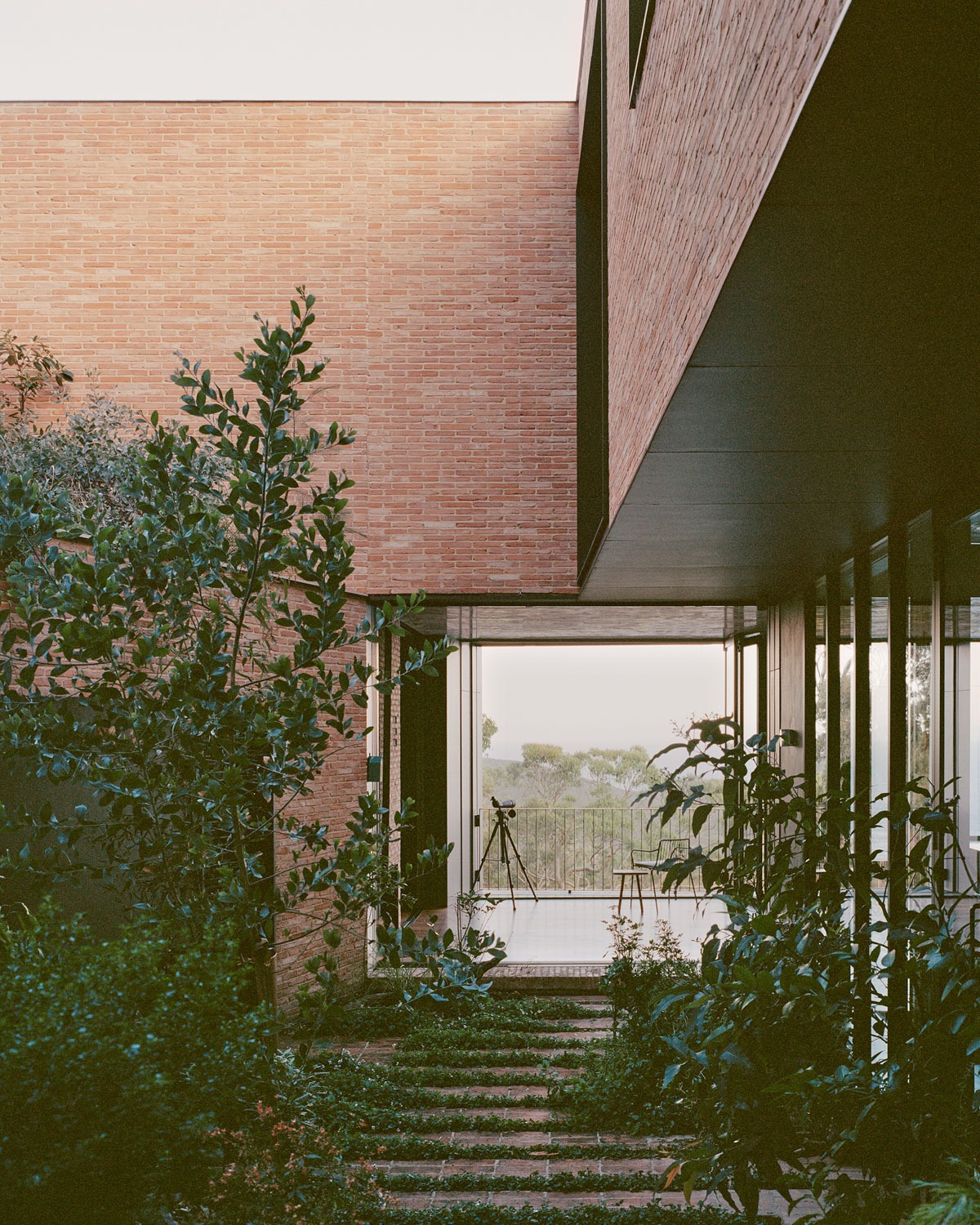
The house adopts an organization in two wings that frame the access sequence, protecting the mature Angophora trees and generating a semi-exterior courtyard as a threshold to the exterior views.
An operable breezeway opens between the two volumes, acting as a passage, porch, spatial filter and visual connector.
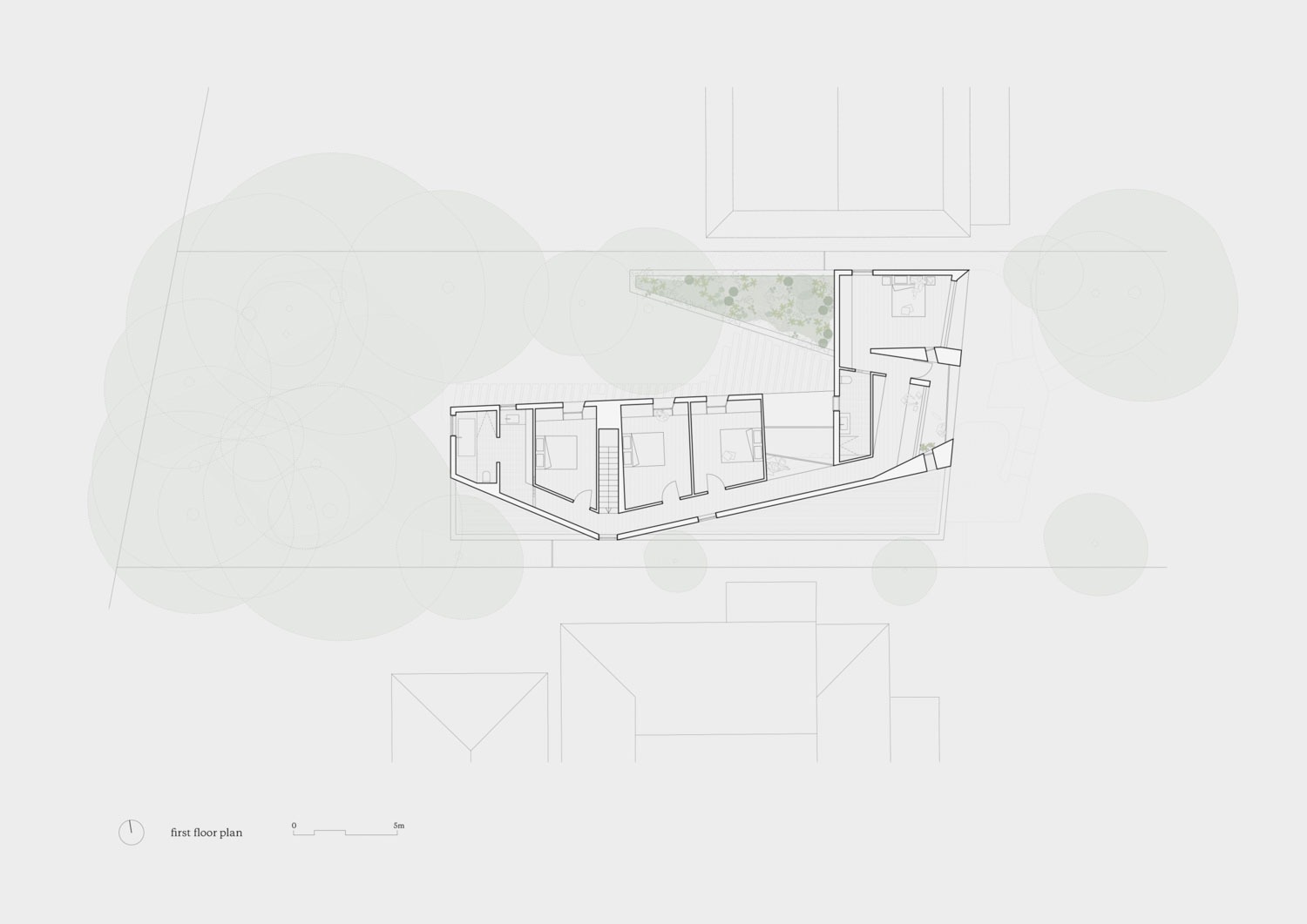
On the upper floor, the volume is slightly displaced with respect to the lower level, housing bedrooms and a study.
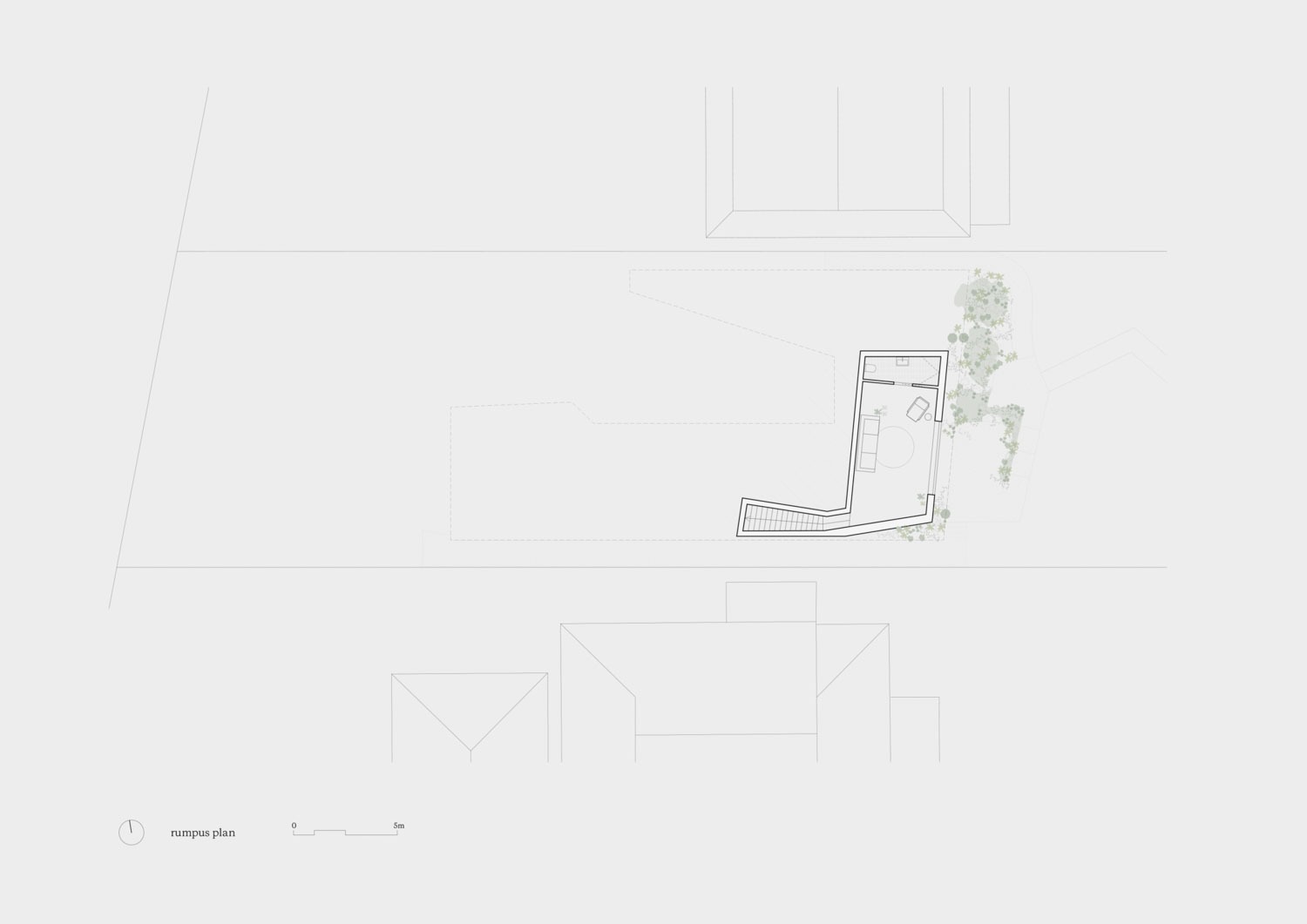
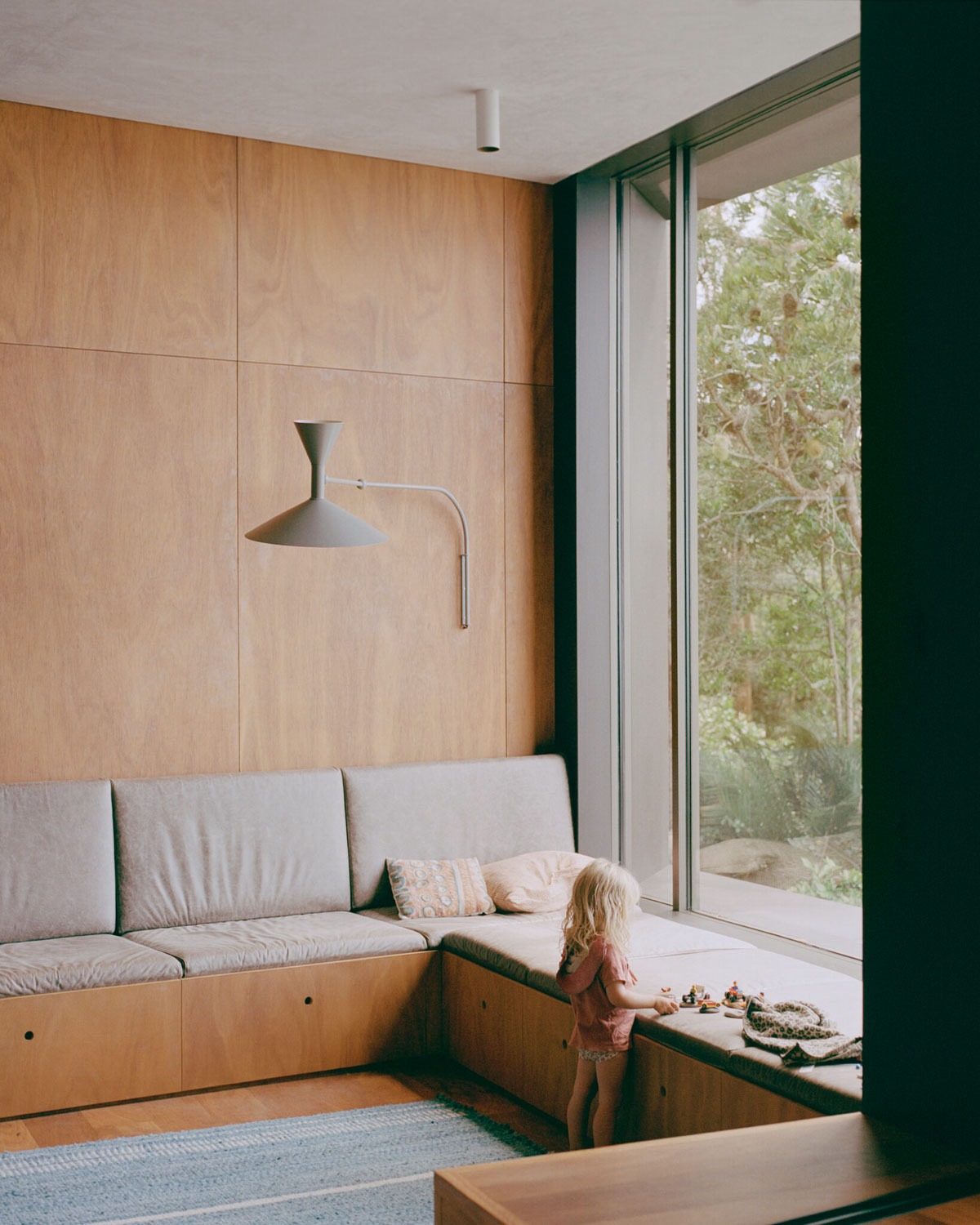
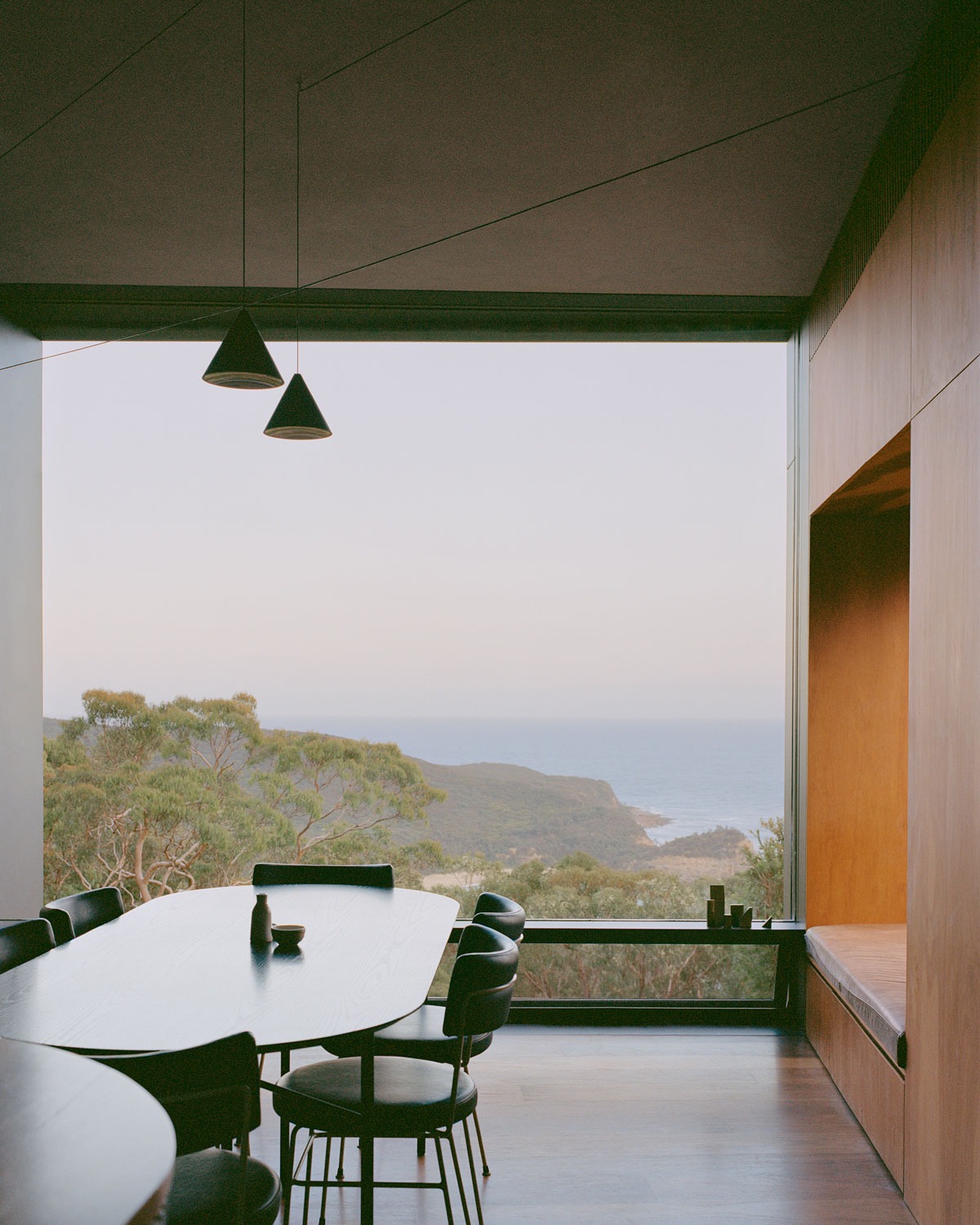
In the north wing, a half-buried living room is conceived as a shelter with a direct relationship to the landscape; to the south, the daytime spaces – living room, kitchen, dining room – are arranged linearly with a north orientation to capture light and views. In summer, large folding doors can open the house completely, while mosquito nets are extended according to weather conditions.
Materiality, landscape and fire safety
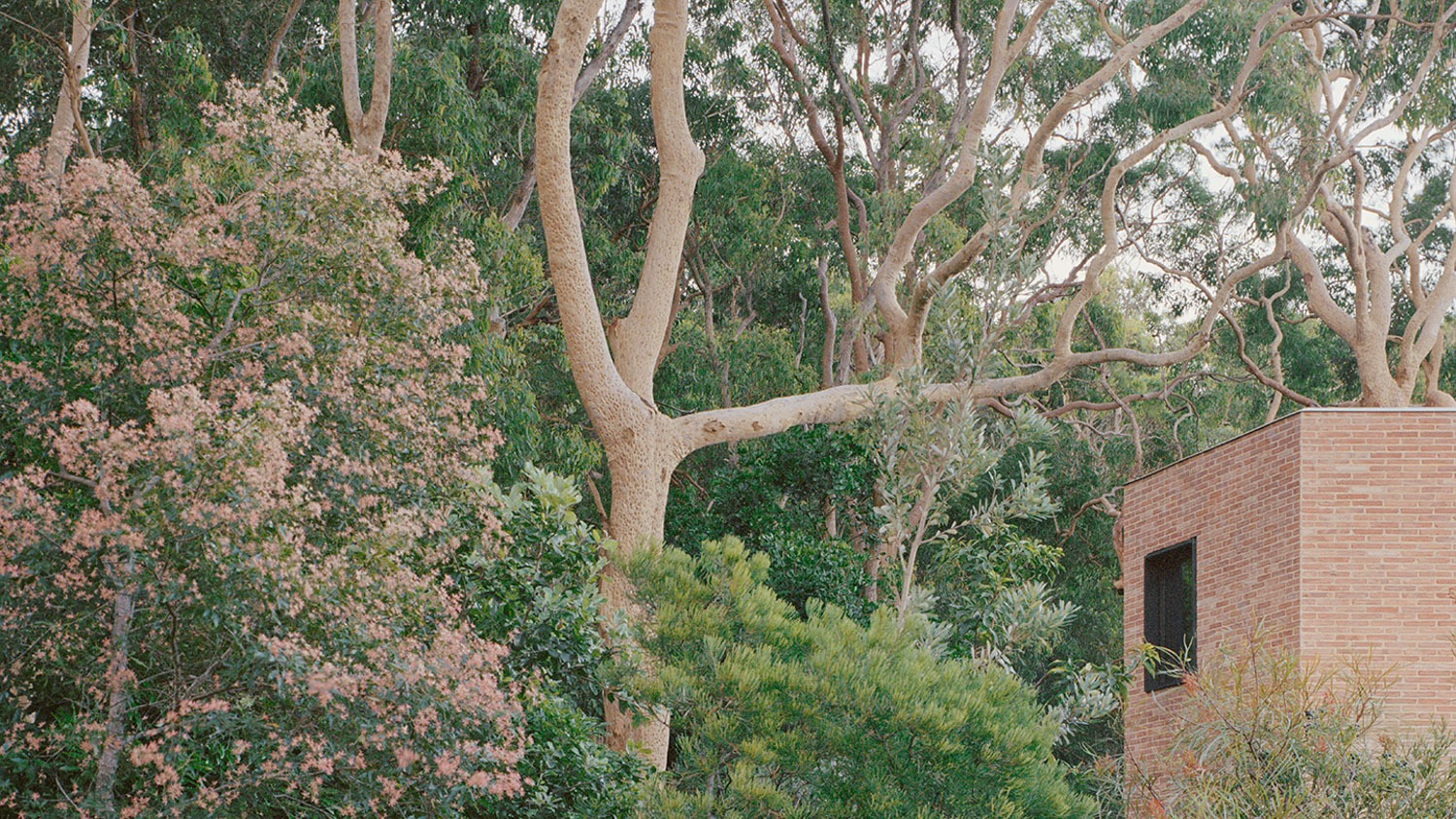
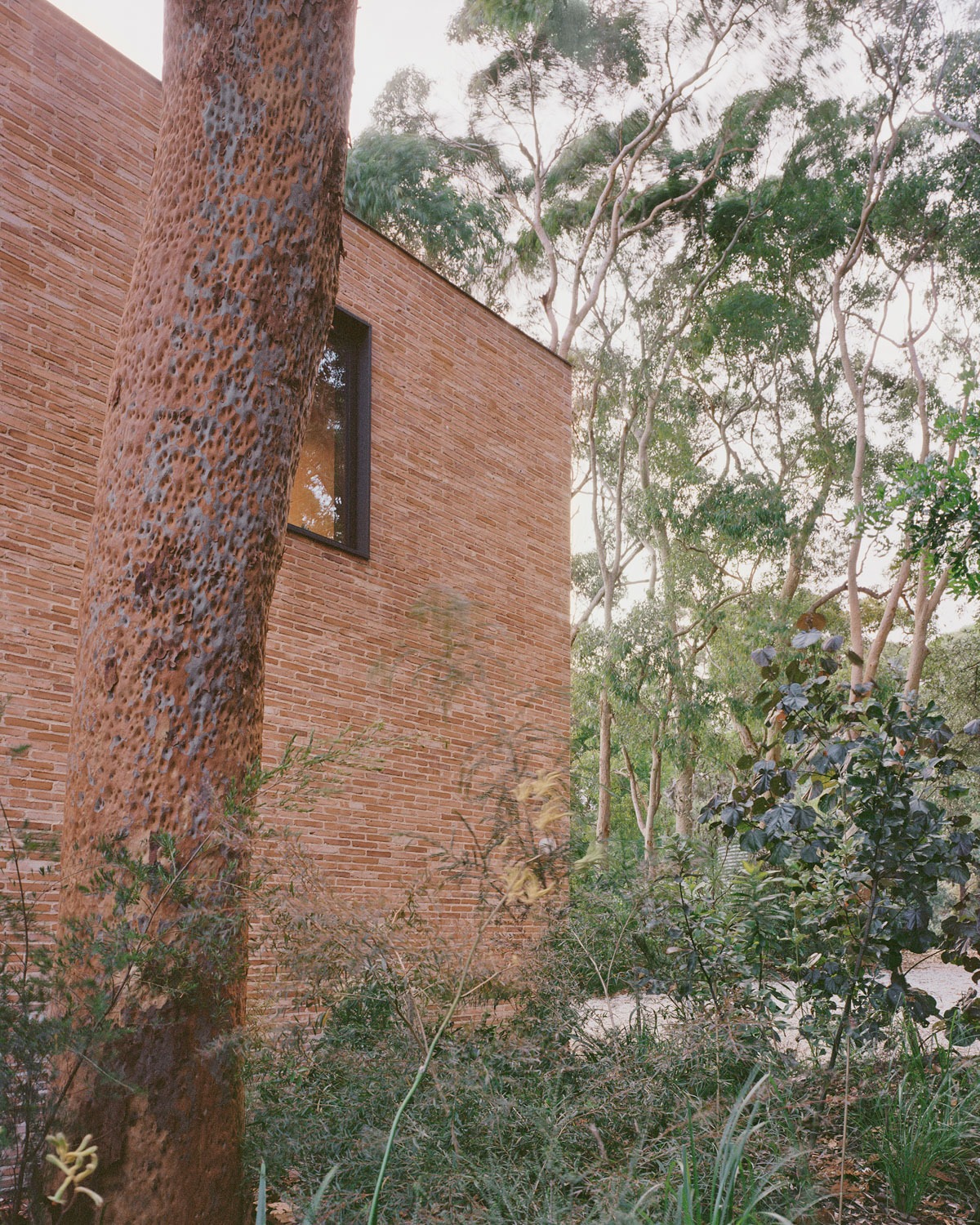
Given the “flame zone” fire hazard classification, the material choice is not only aesthetically pleasing but a must. Studio Bright uses Roman bricks as a robust, non-combustible envelope, with carefully modulated joints to allow for subtle variations and to harmonize with the surrounding tree texture.
The openings have deep caissons that conceal fire shutters, integrating structural protection without sacrificing aesthetics.
Inside, the finishes aim for a sober tactile configuration: Blackbutt wood flooring and cladding, plaster walls and polished ceilings that let in soft light.
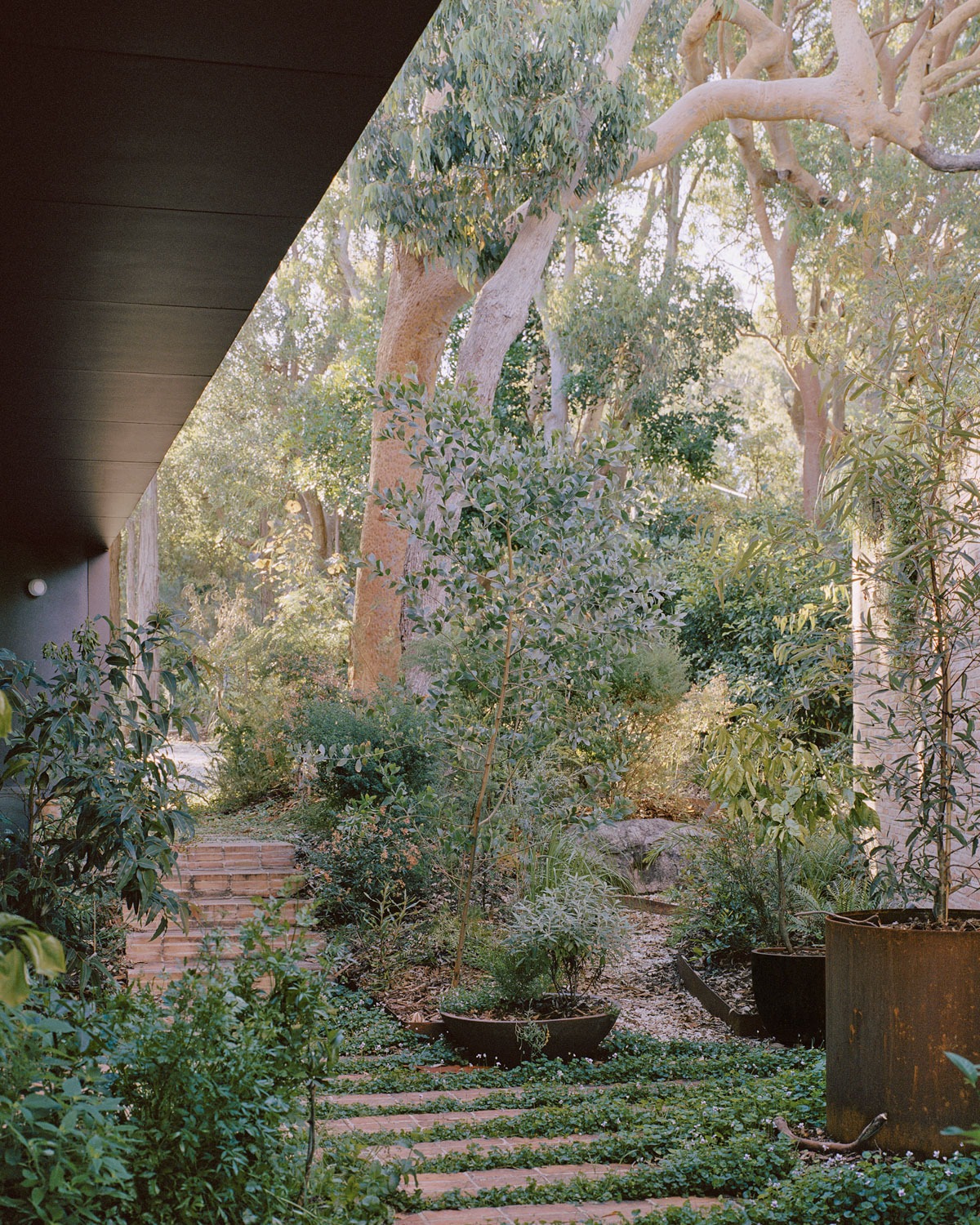
As for the landscape, the house sits among vegetable terraces and native gardens, which help mitigate visual and climatic impacts.
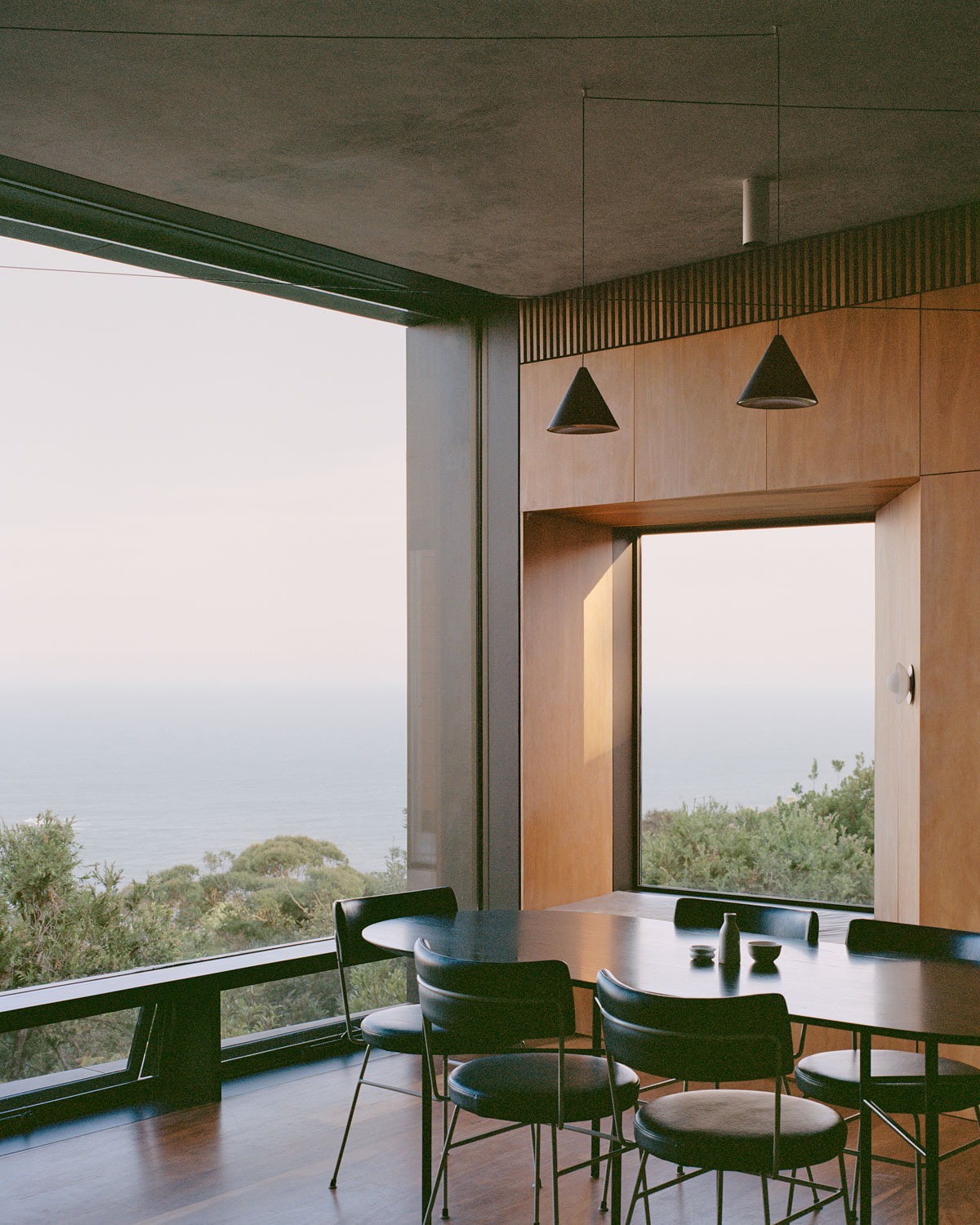
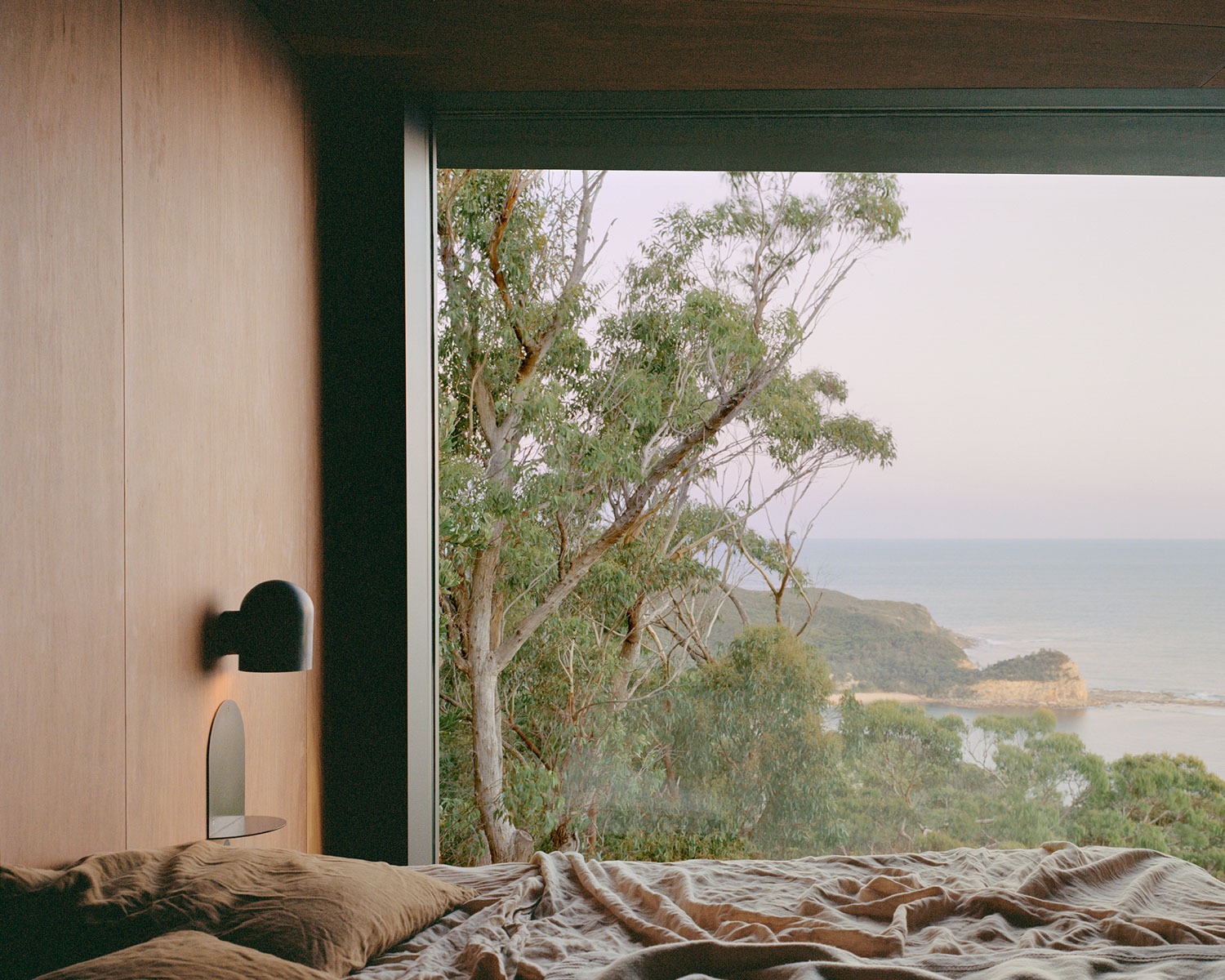
An architecture of limits and generosity
From its arrival, the intention of the project stands out: to break the building to allow a “look back” to the landscape. In the access sequence, the sea horizon is justly glimpsed. While many neighboring houses erect barriers, Maitland Bay House opens a generous gesture towards its surroundings.
The form is simultaneously protective and permeable. It does not seek to subtract from the context, but to integrate it. It does not hide; it questions how a volume can respond to multiple pressures -sight, climate, neighborhood, fire- without collapsing.