House of Hedges and Dining Huts
- Project: Hedge and gazebo house
- Architecture: Estudio Bright
- Landscaping: Sarah Hicks
- Photographs: Rory Gardiner
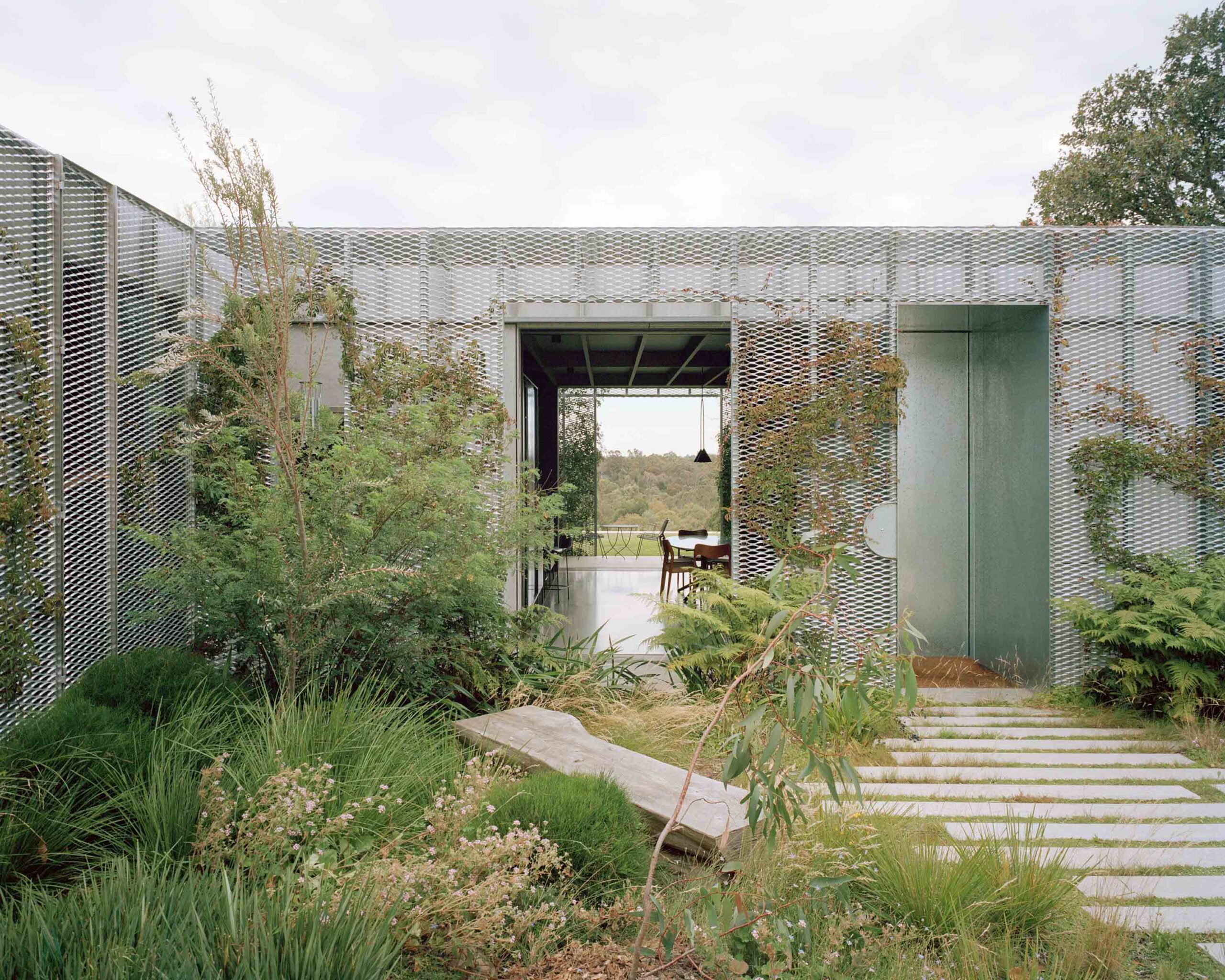
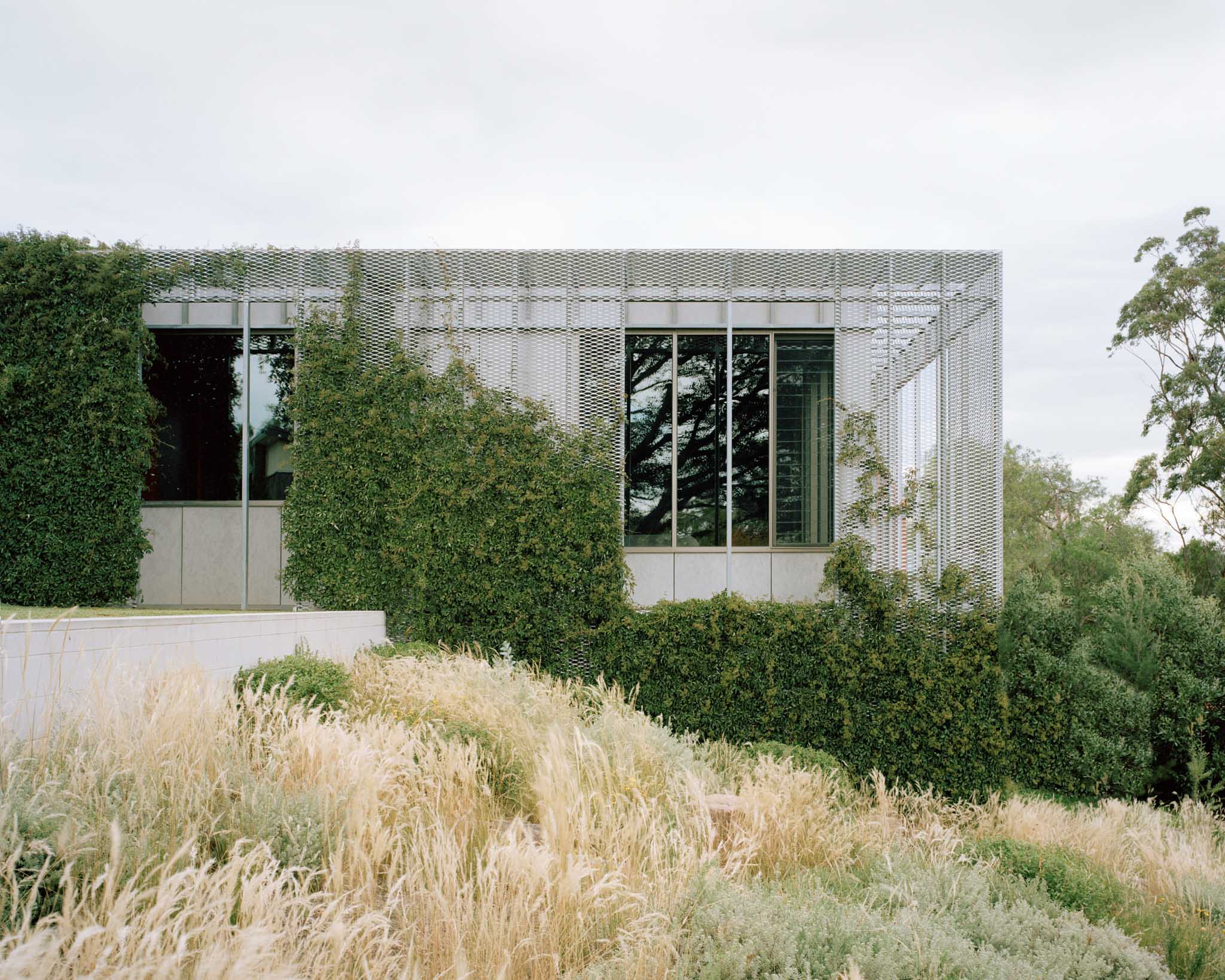
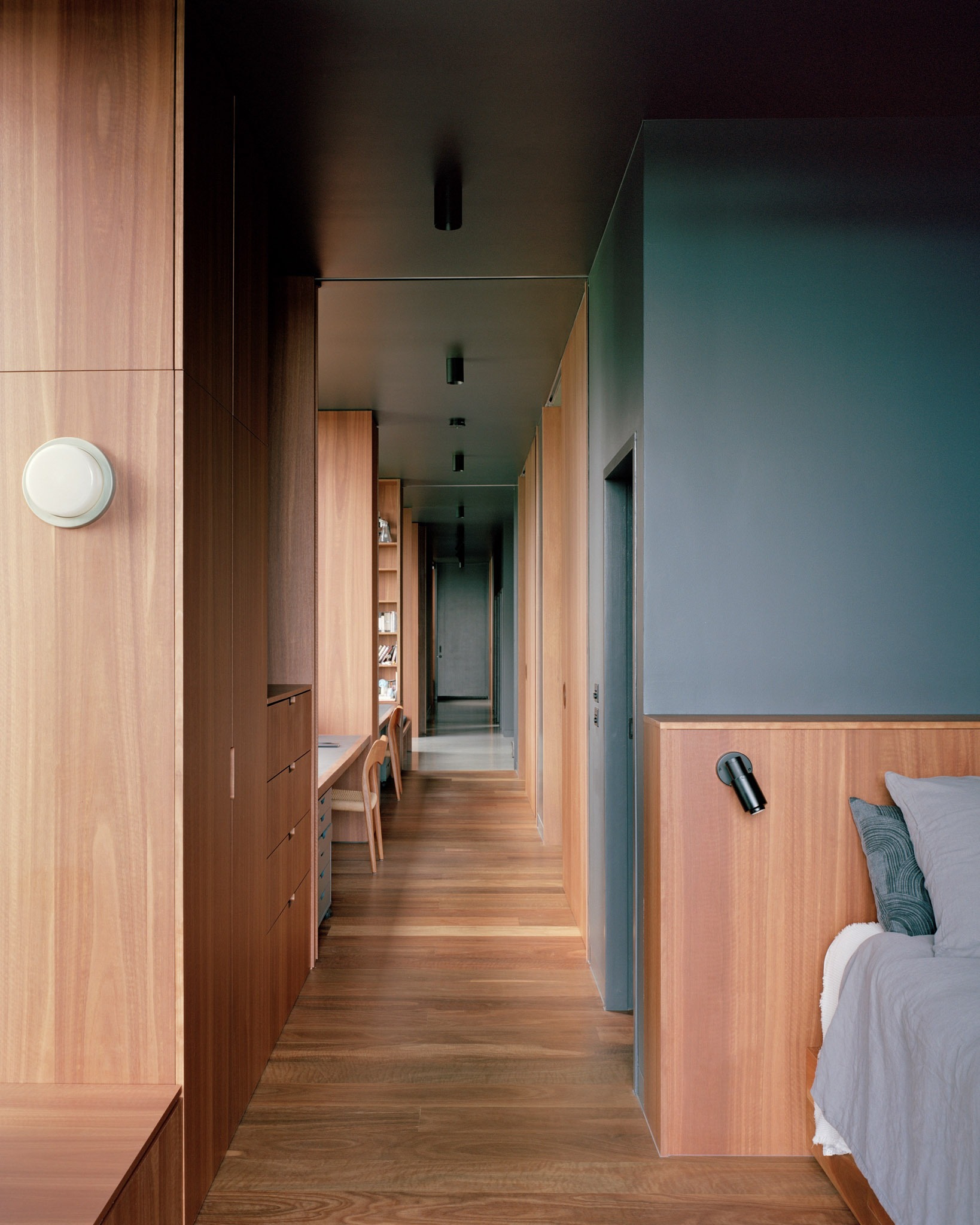
Located on a residential street in Melbourne, the Hedge and Gazebo House proposes an alternative reading of the suburban environment through a design that prioritizes landscape over form. Estudio Bright proposes a house that does not seek to impose itself, but to integrate, camouflaging itself between layers of vegetation, garden walls and light structures that protect and organize. It is a project that values architecture as an intermediary between nature and domesticity.
A hedge as a facade
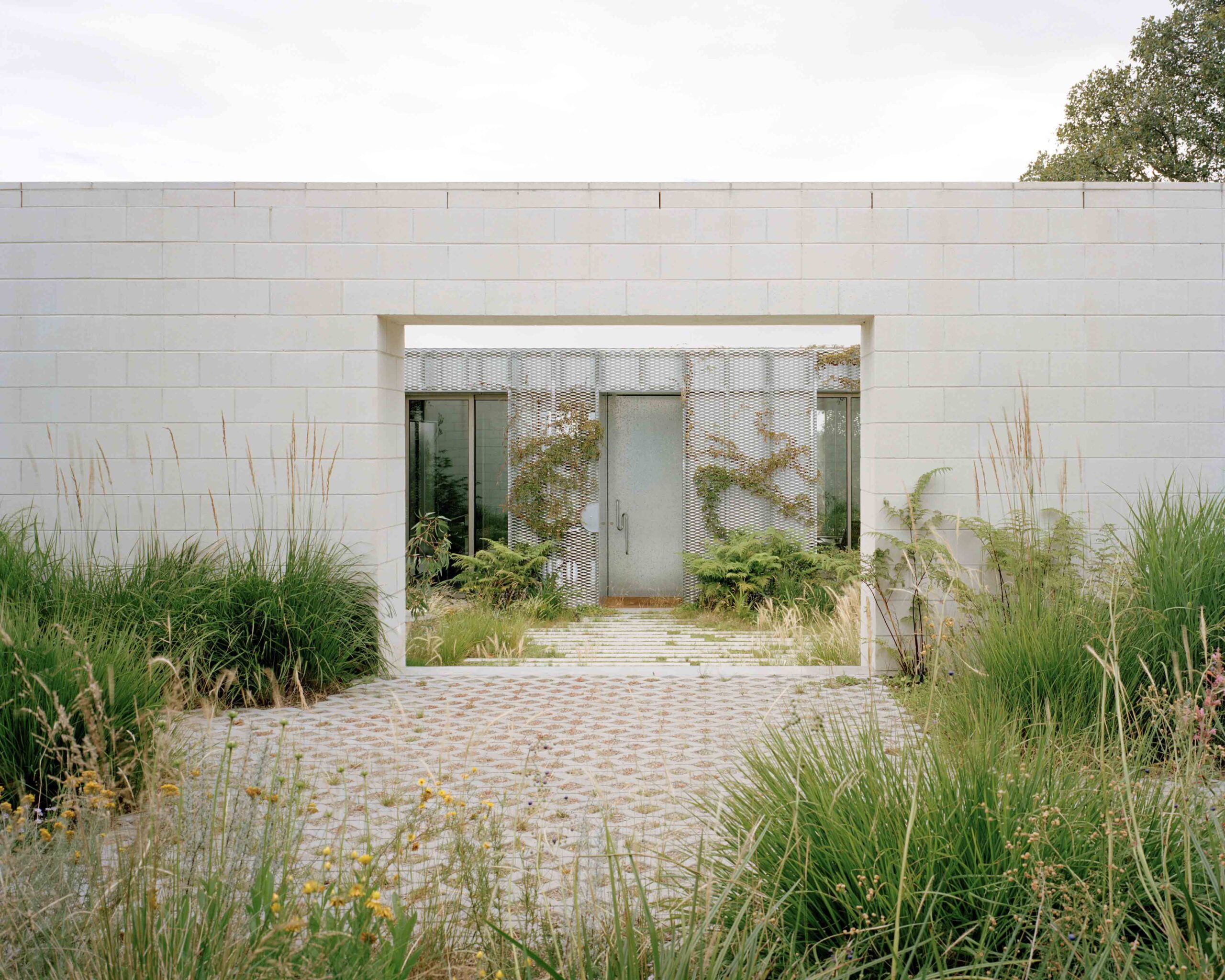
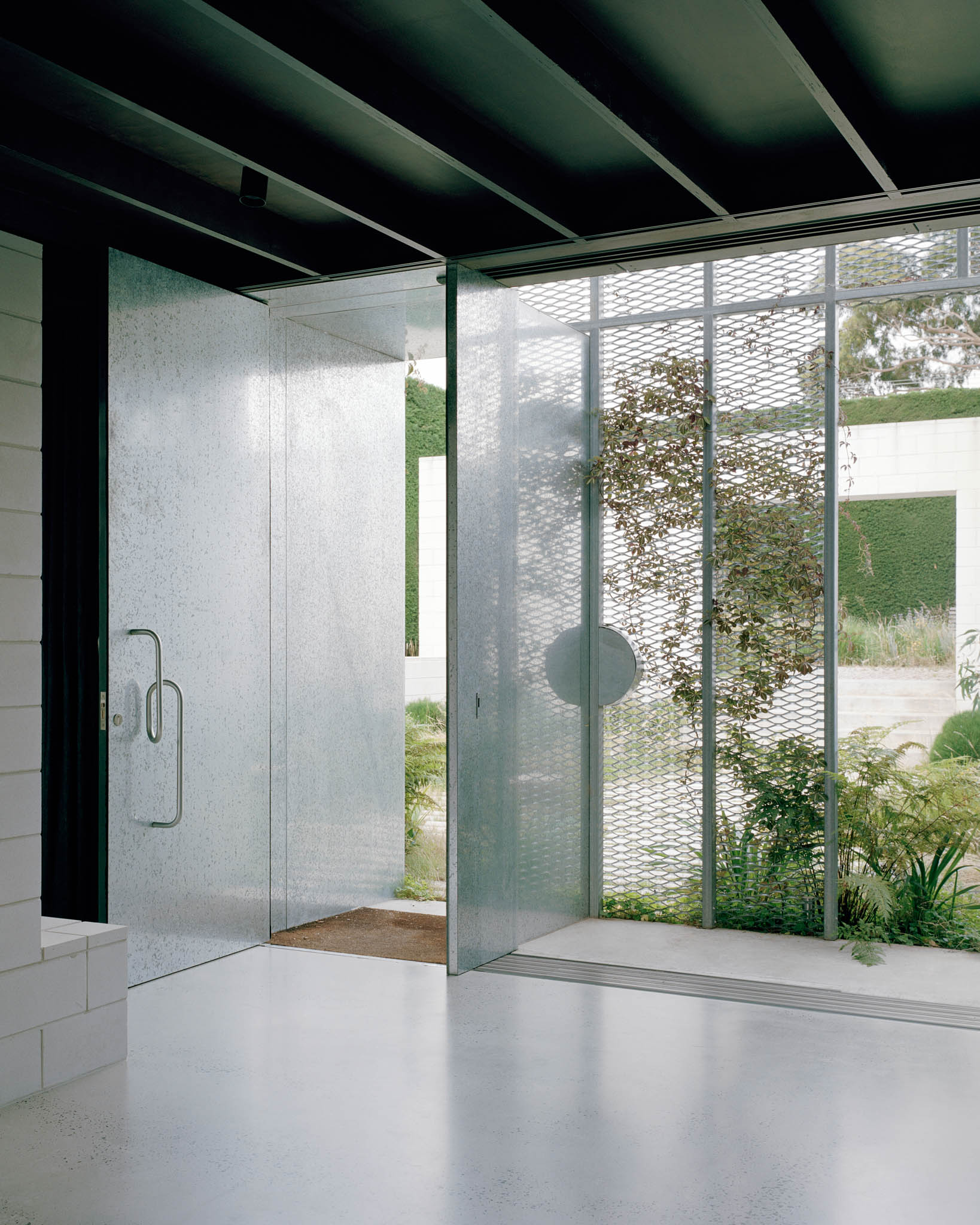
Instead of a traditional facade, the house is hidden behind a tall hedge that acts as boundary, threshold and filter. Carved with precision, the entrance arch in the foliage marks the access and replaces the usual formality of the built front. This operation frees the house from its representative status and allows its volumetry to respond, first and foremost, to the conditions of the terrain and climate.
Structuring gardens
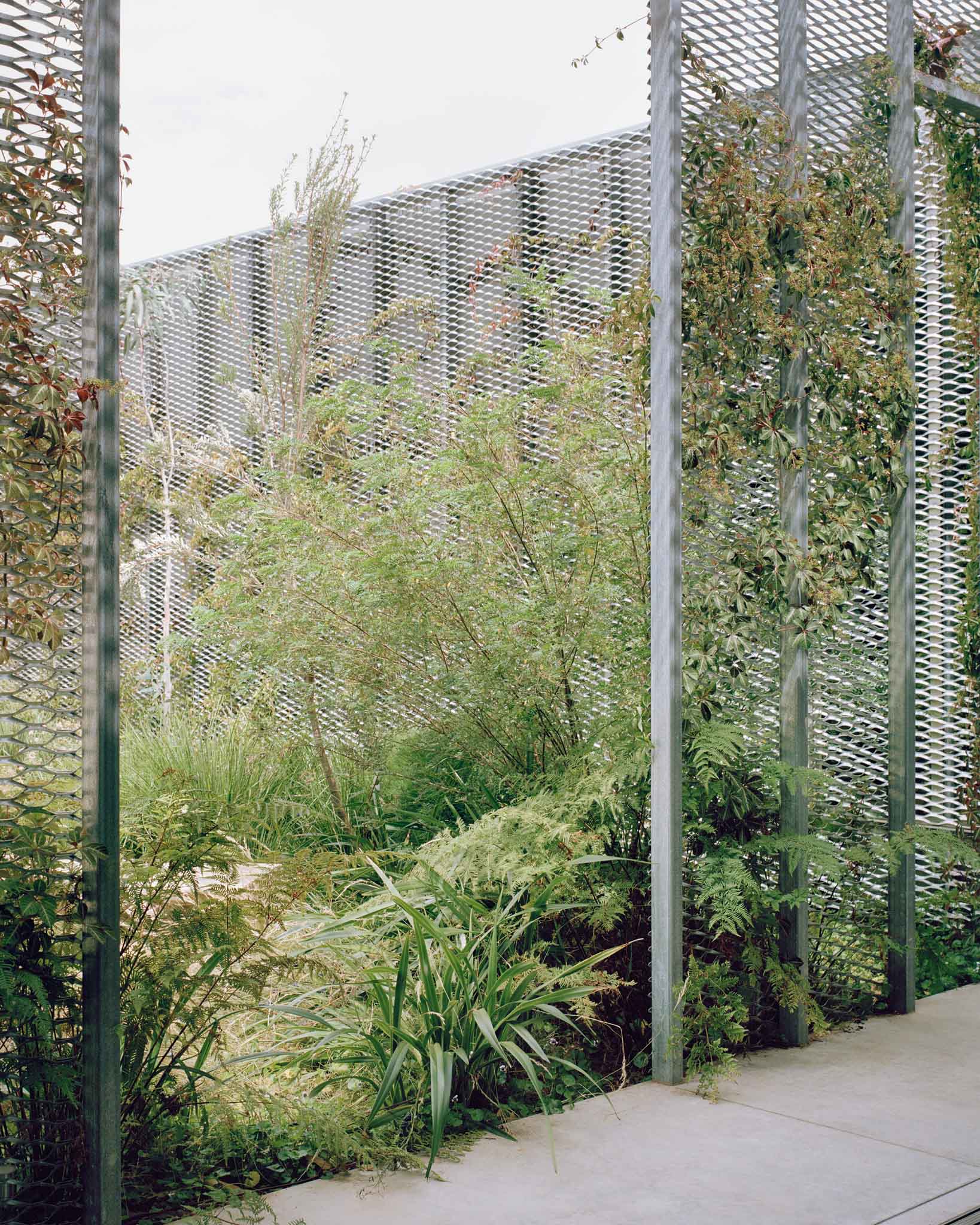
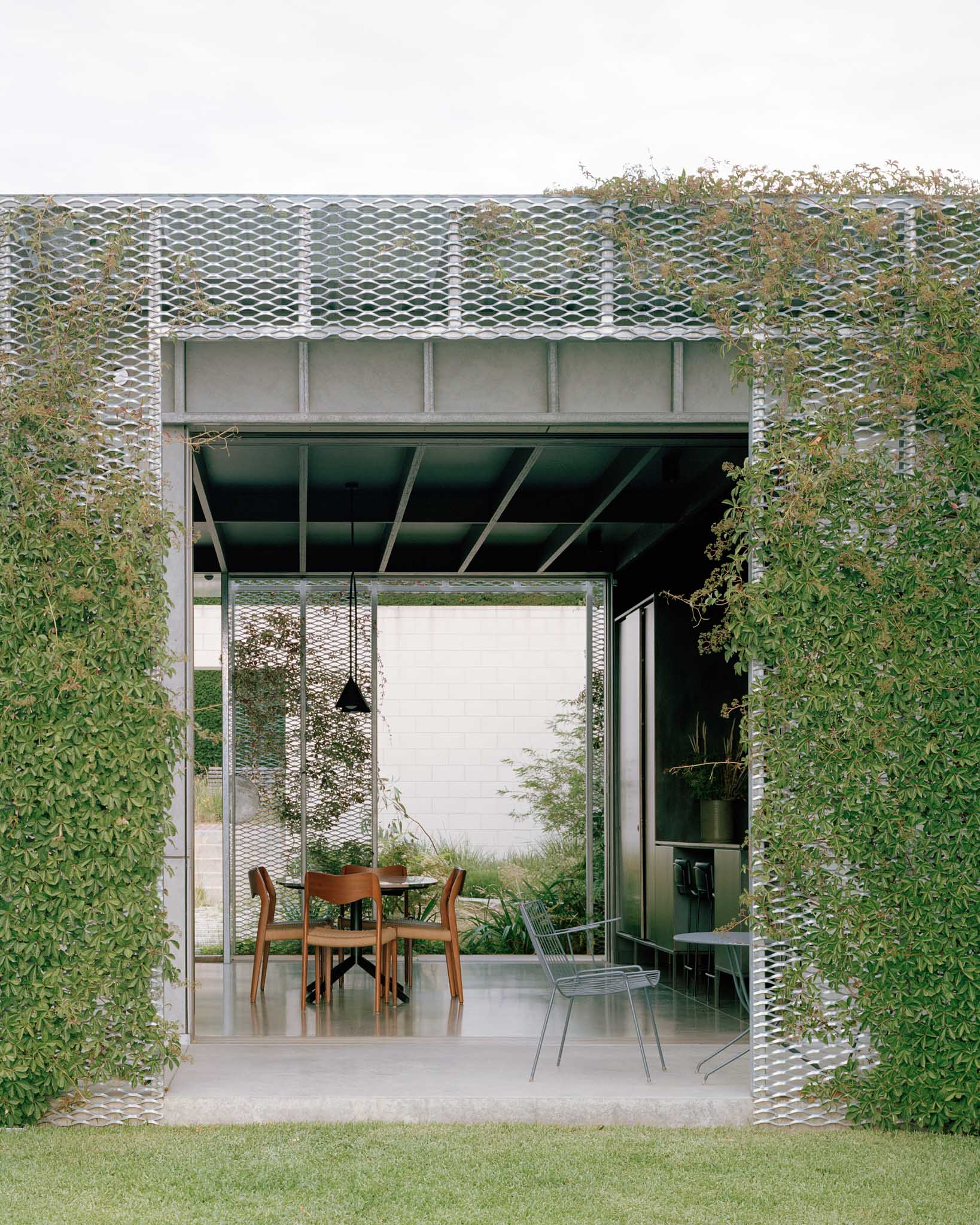
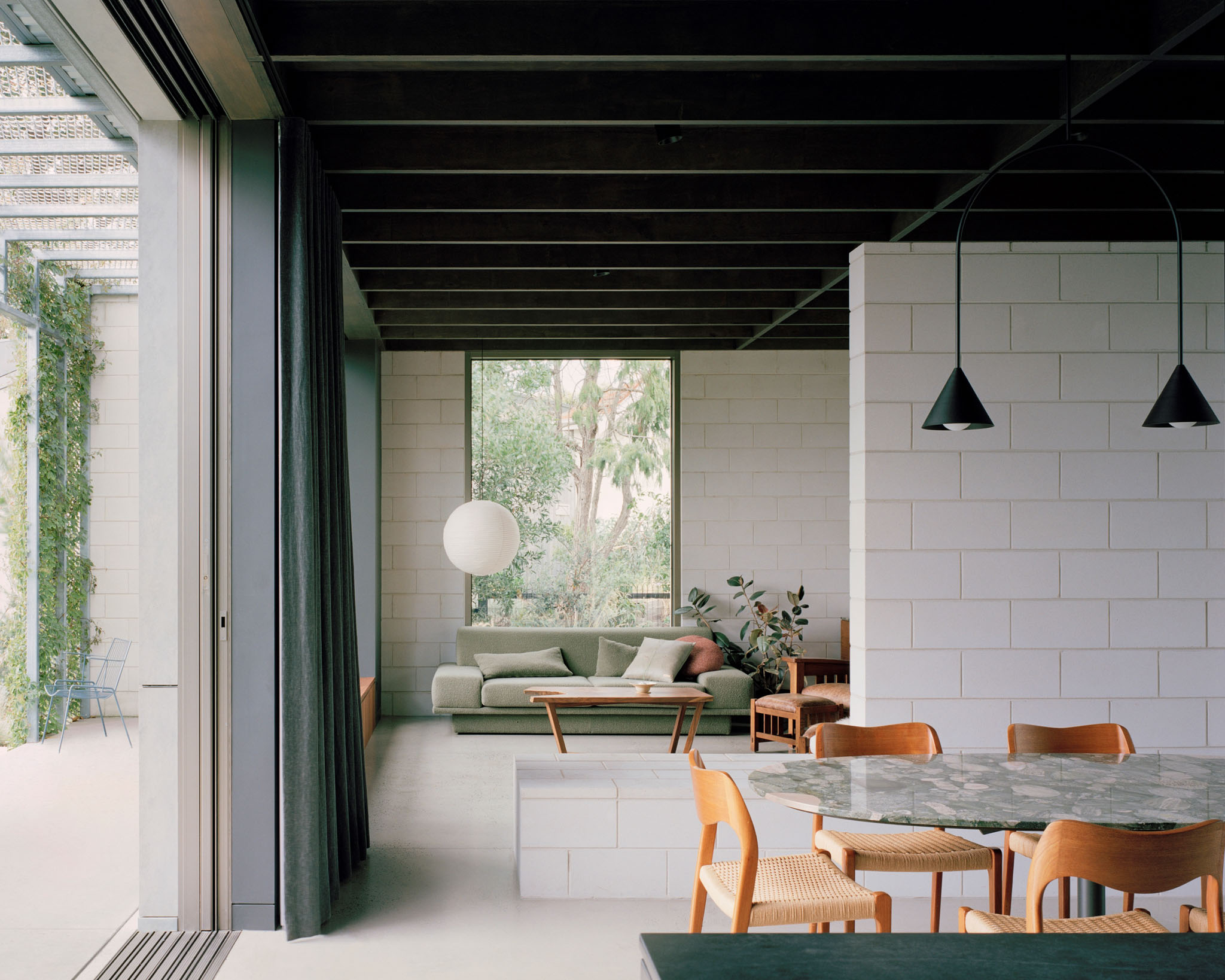
The floor plan is organized in layers. Two garden walls – solid and robust – define the boundaries between indoors and outdoors. These structures construct not only privacy, but also a compartmentalized domestic landscape, in which each garden has its own character. The house is thus suspended between the public and the private, between the natural and the built.
A pergola as an outer skin
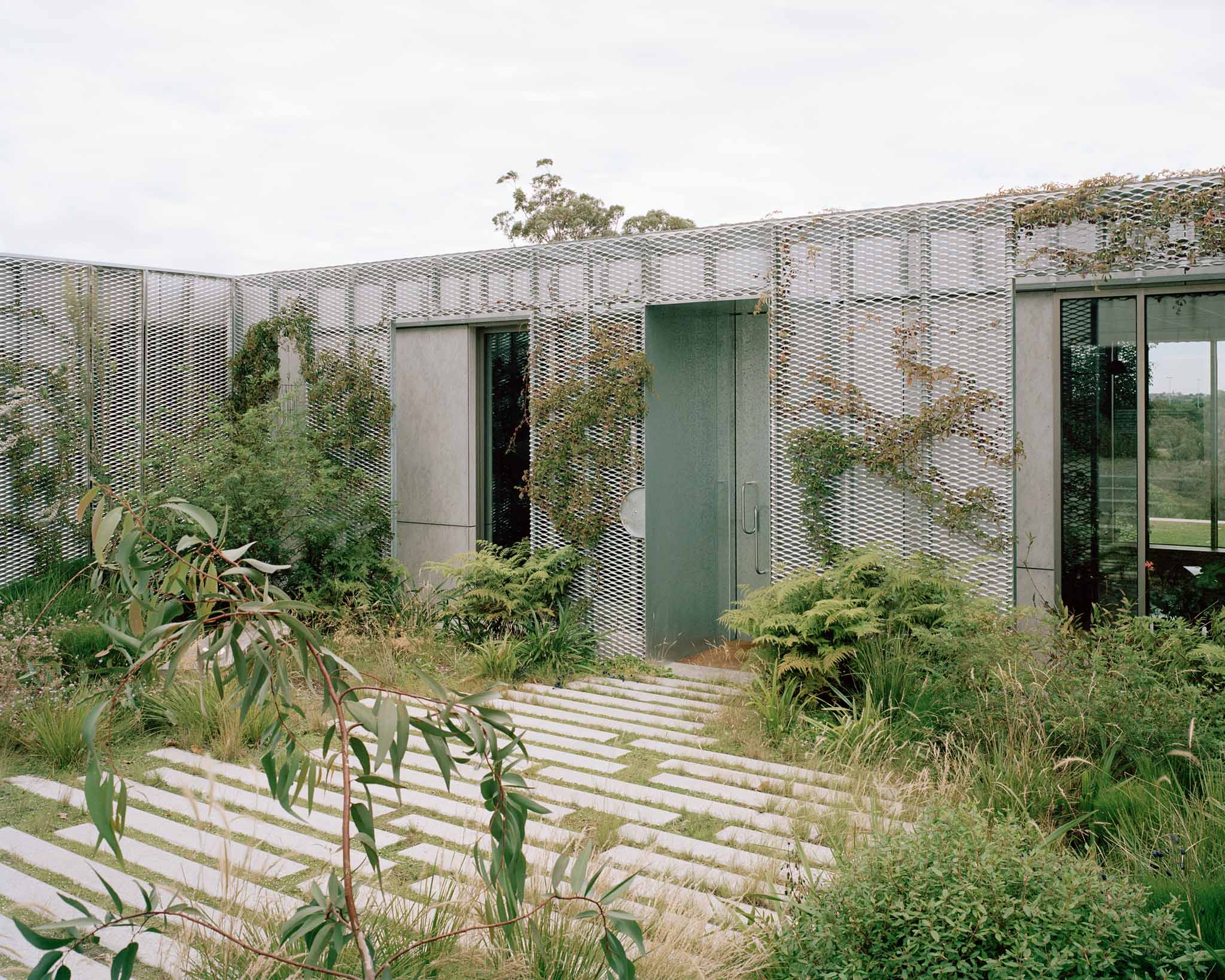
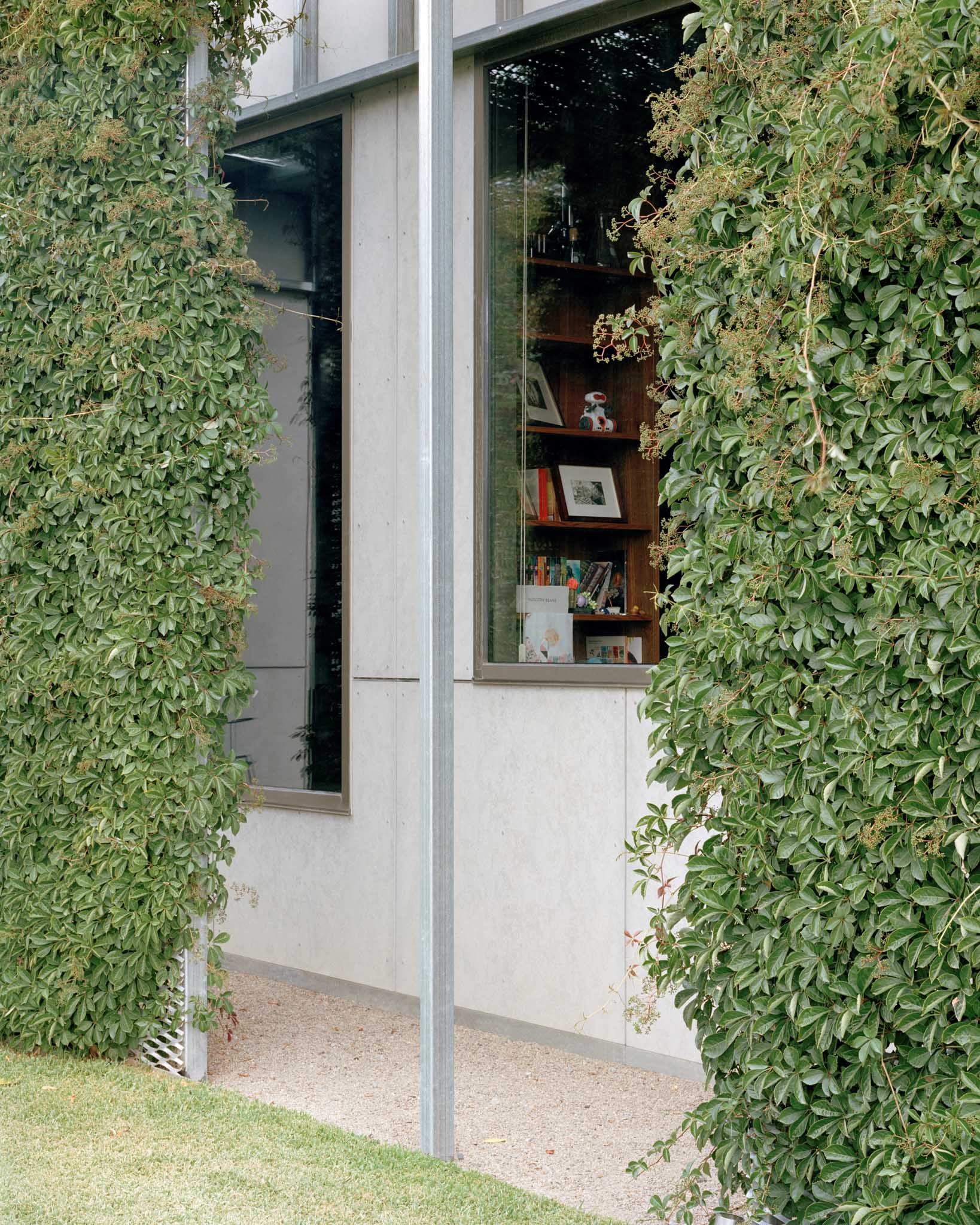
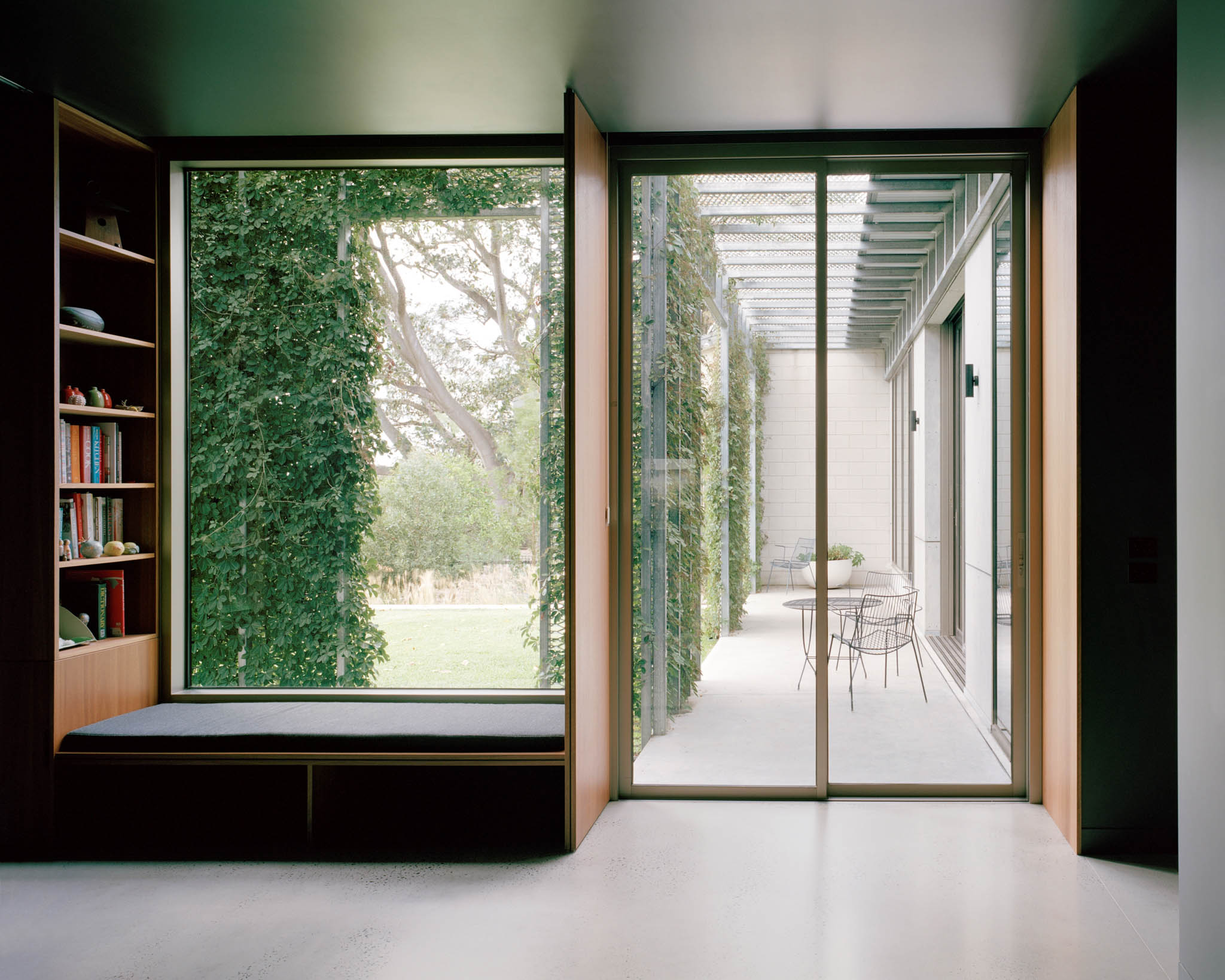
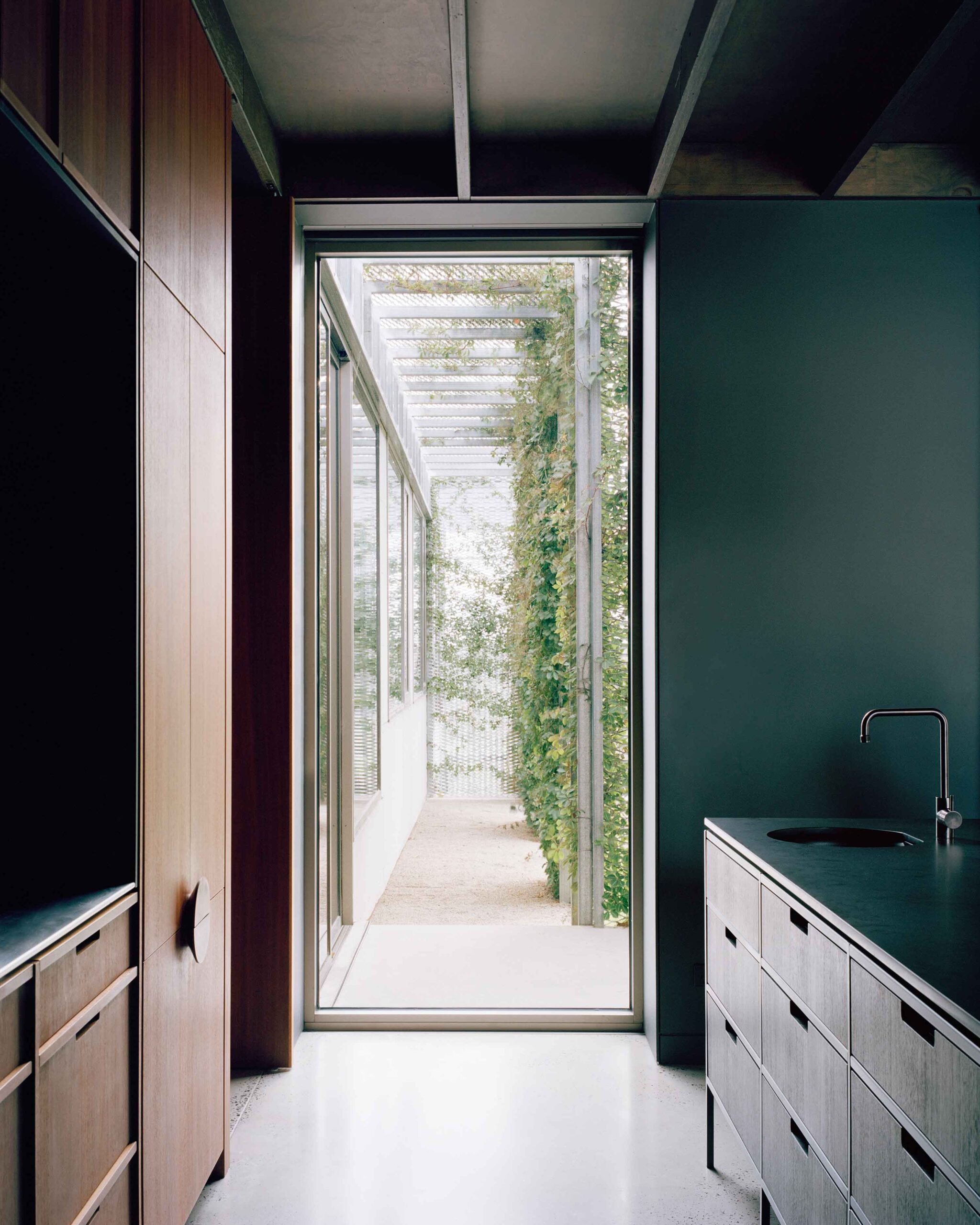
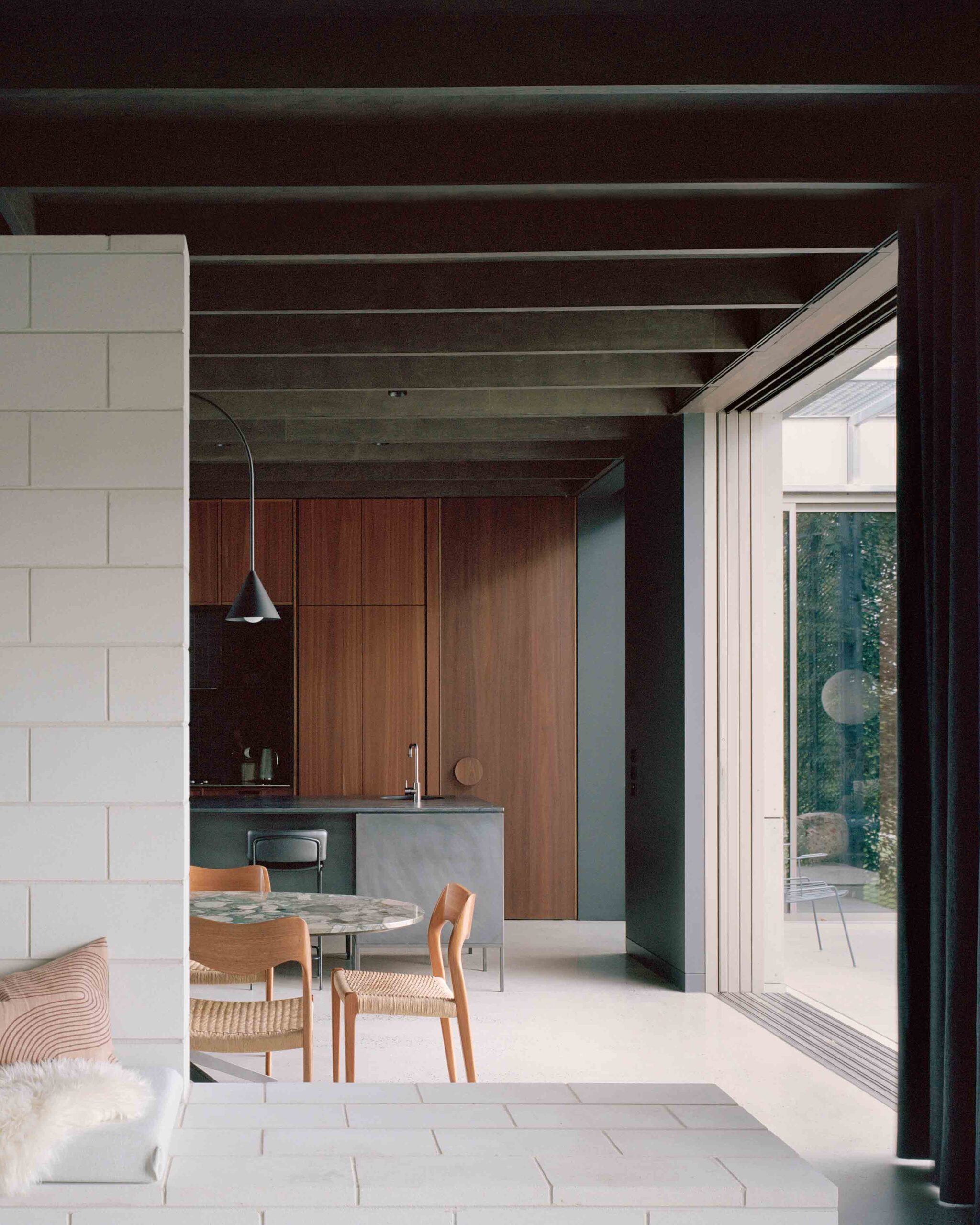
Surrounding the house, a light pergola offers shade and protection from the wind. Over time, vines will colonize it, further diluting the architectural presence. This element adds a vegetal texture to the envelope and functions as a passive climate control strategy, as do the cross ventilation and orientation of the main volume, which eliminate the need for mechanical systems.
Landscape architecture
The joint work with landscape architect Sarah Hicks reinforces the intention of the project: to integrate nature and architecture. While the entrance welcomes the visitor with native species and low water demand, a lawn in the rear area acts as a viewpoint to the nearby forest. Instead of imposing itself on the terrain, the building descends with it, touching the ground gently, as if it had always been there.