Casa Puerto Nuevo: wood and landscape in wild dialogue
- Photography: Federico Cairoli
- Architects: Lezaeta Lavanchy and Tomás Tironi
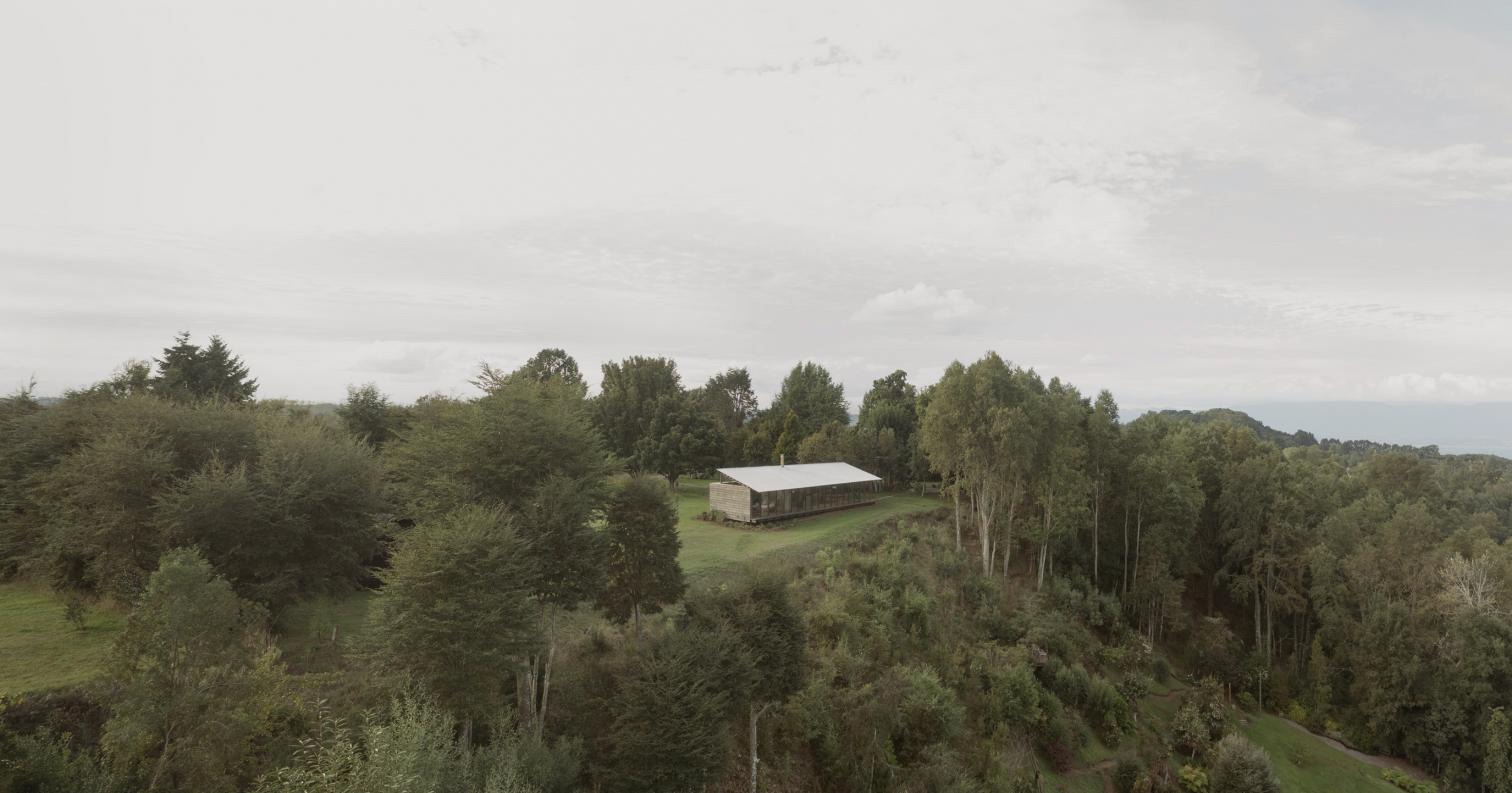
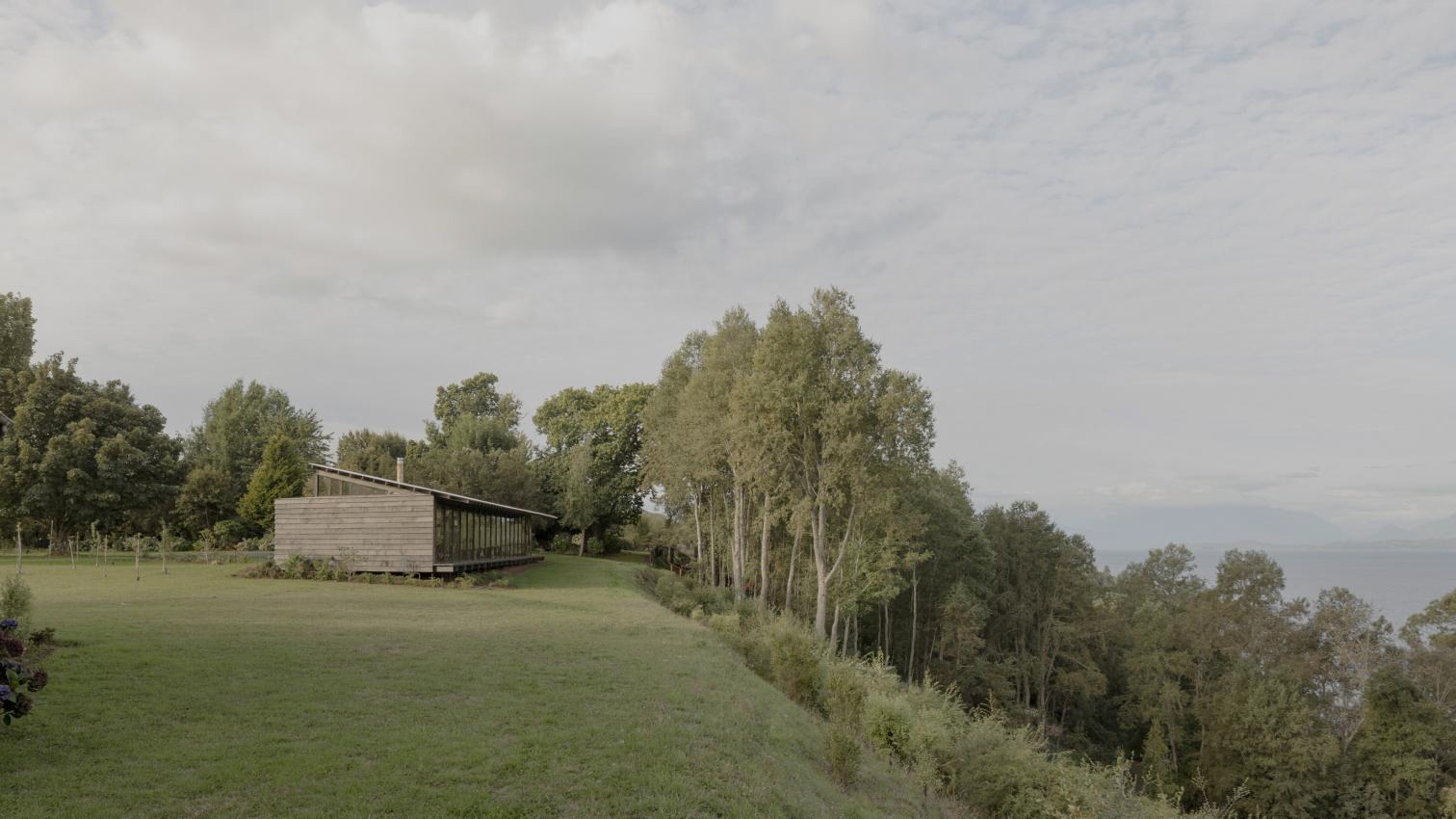
The Puerto Nuevo House sits on the green plateau that descends to the coigües forest and the serene mirror of Lago Ranco, in southern Chile. The project, designed by Lezaeta Lavanchy and Tomás Tironi, responds with simplicity to the desire to merge housing and nature.
The 147 m² floor plan occupies a plot with defined boundaries, but the house does not fold into a straight plot: its rectangular floor plan stretches parallel to the edge of the terrain, maximizing the views of the forest or the lake from every room.
Linear distribution, continuous views
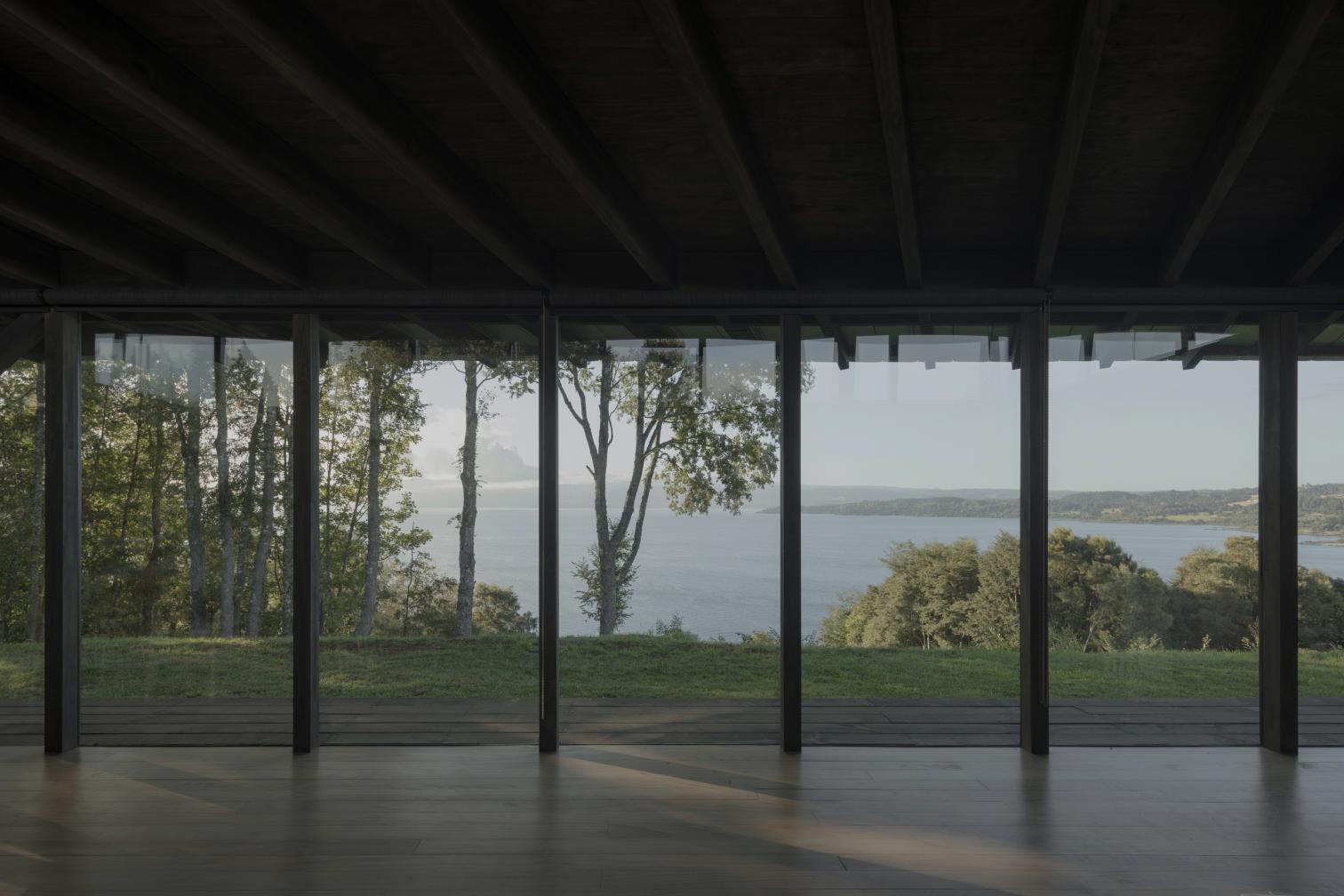
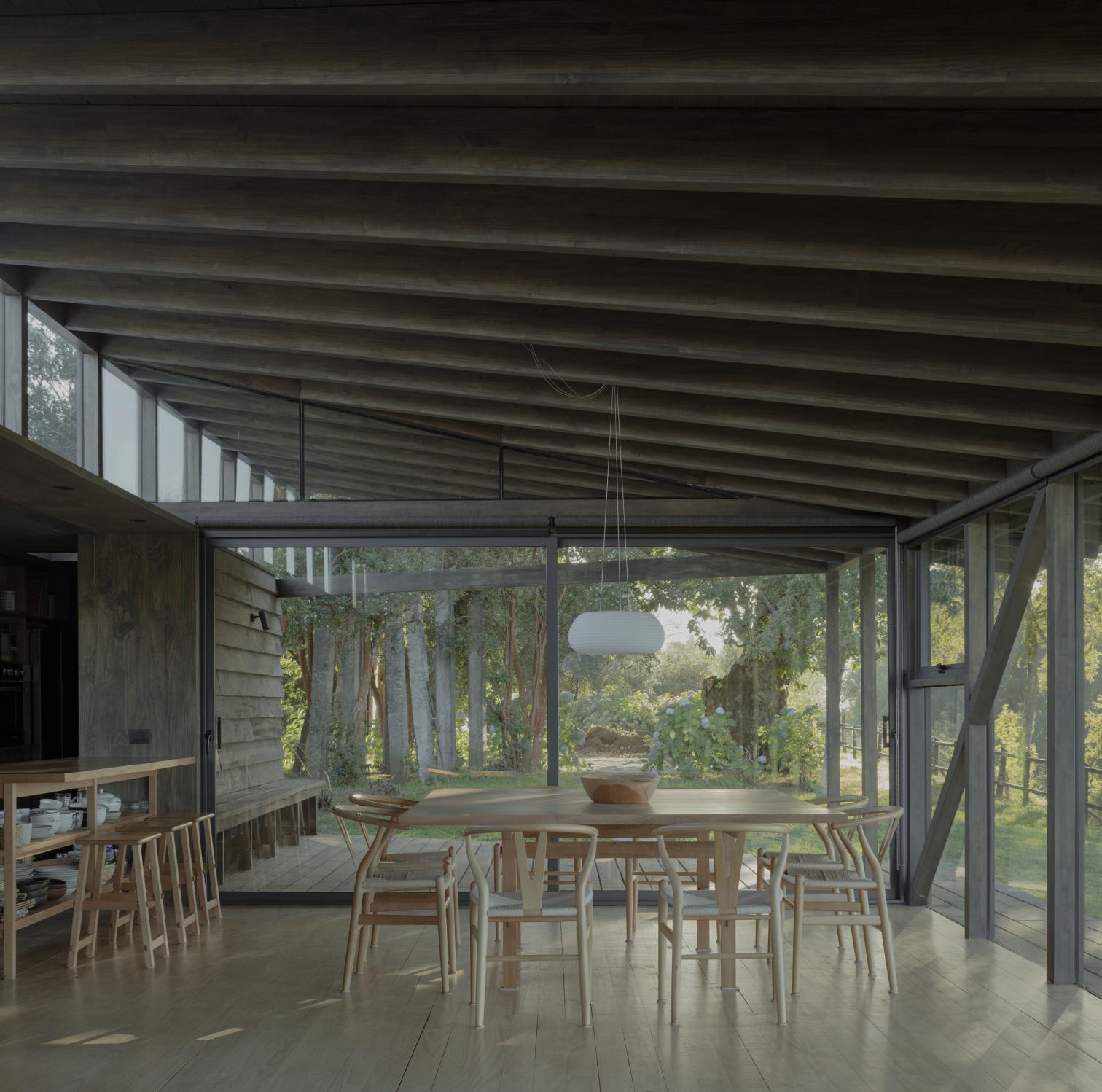
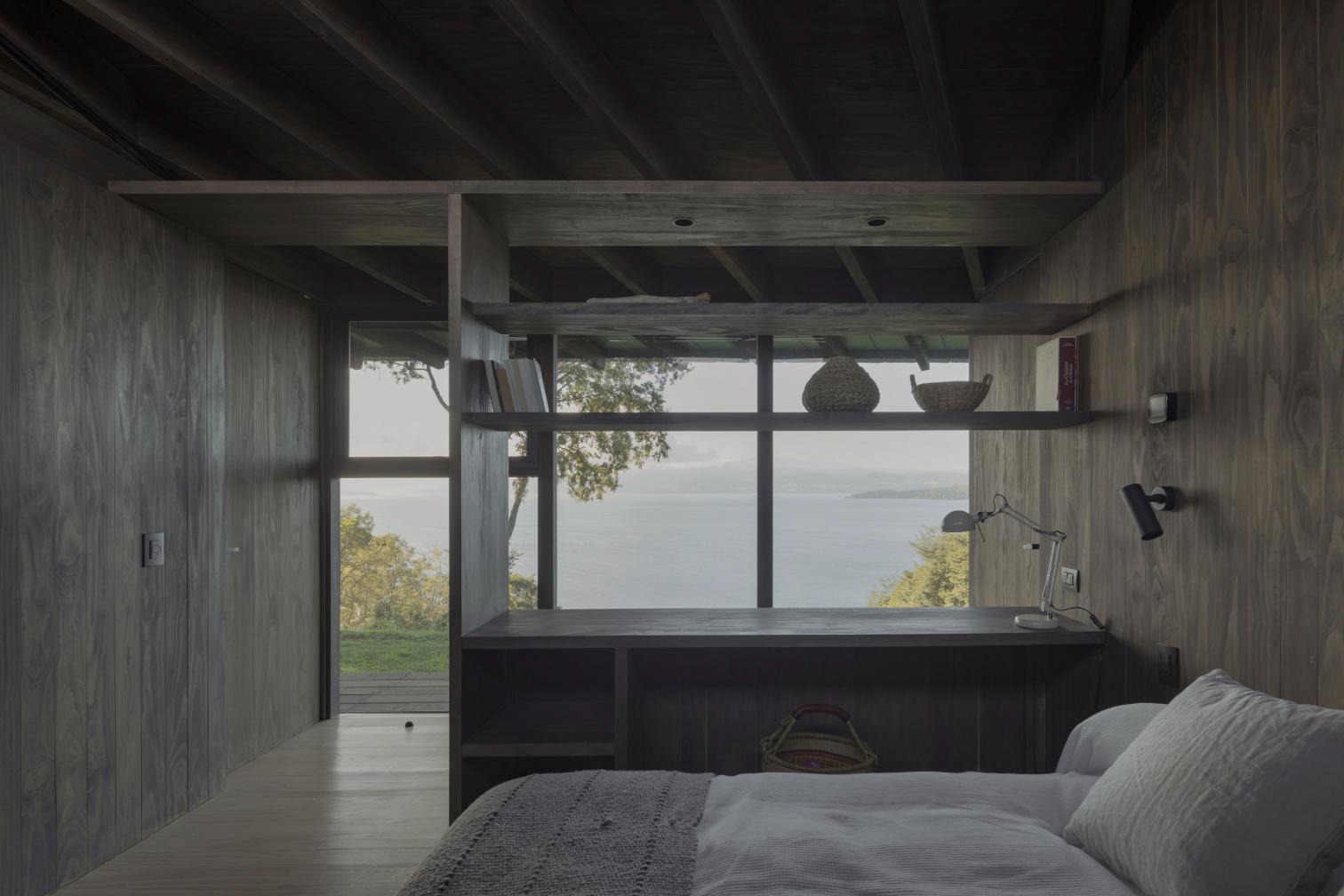
The interior is organized with a corridor logic: the spaces are arranged linearly, reducing internal circulations to a minimum and ensuring that each room – living room, bedroom or kitchen – opens its view towards the greenery or the water. It is an approach that prioritizes the visual relationship with the environment, rather than the interior geometry.
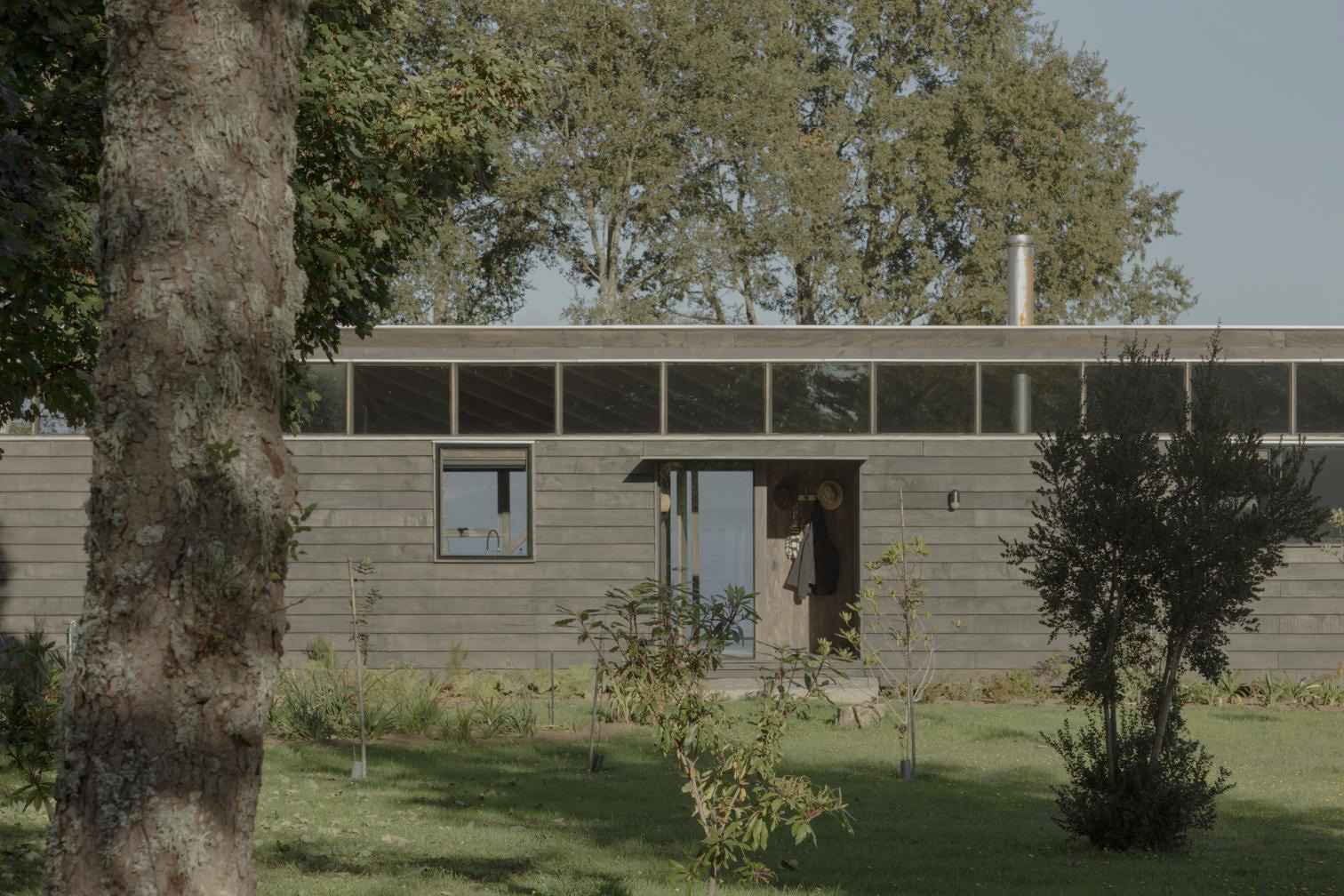
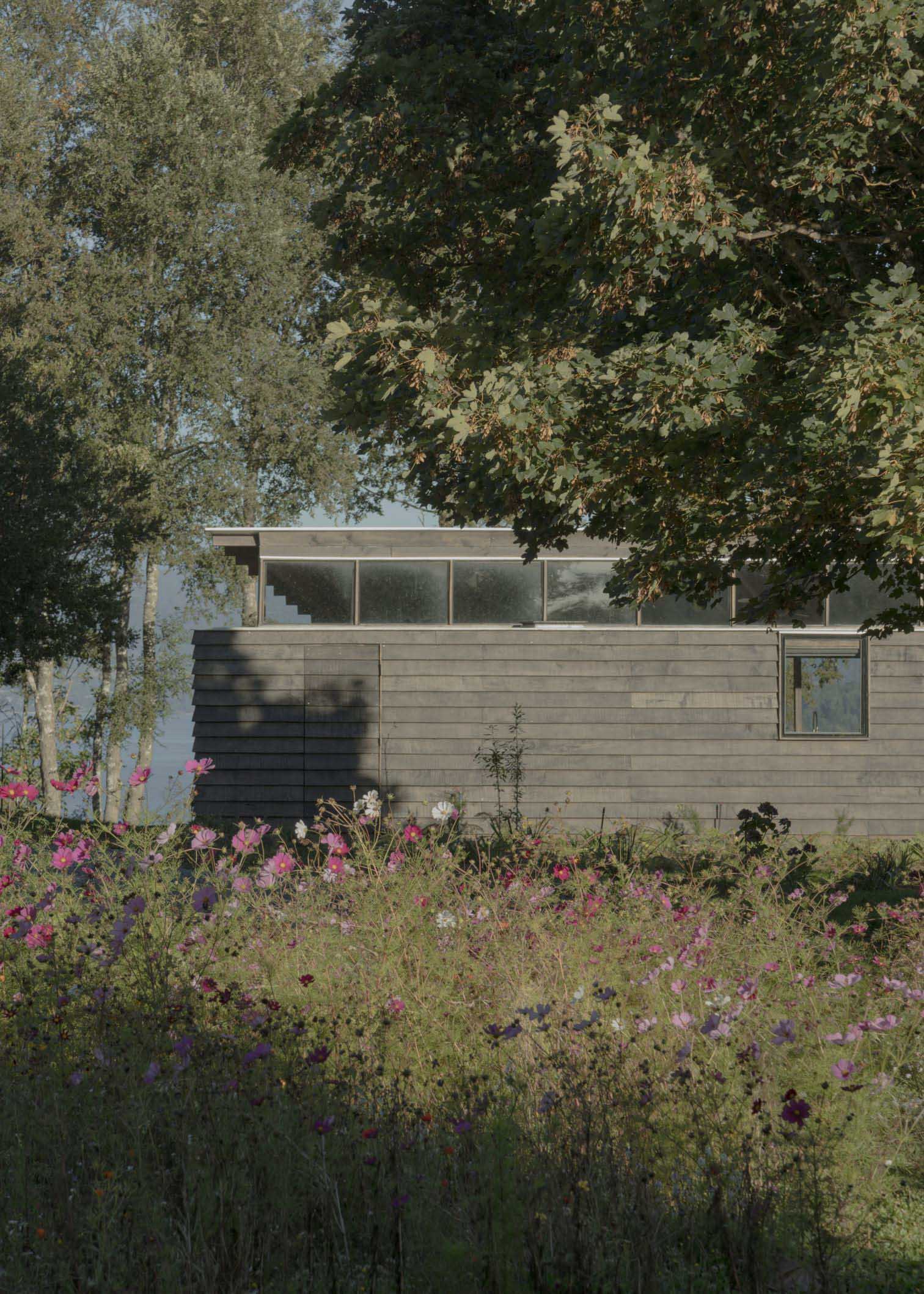
The ends of the floor plan incorporate triangular enclosures that lighten the rigidity of the rectangle, producing a trapezoidal volume. This subtle geometry distorts the usual perception of the facades and offers greater volumetric dynamism.
Timber, piles and pitched roof
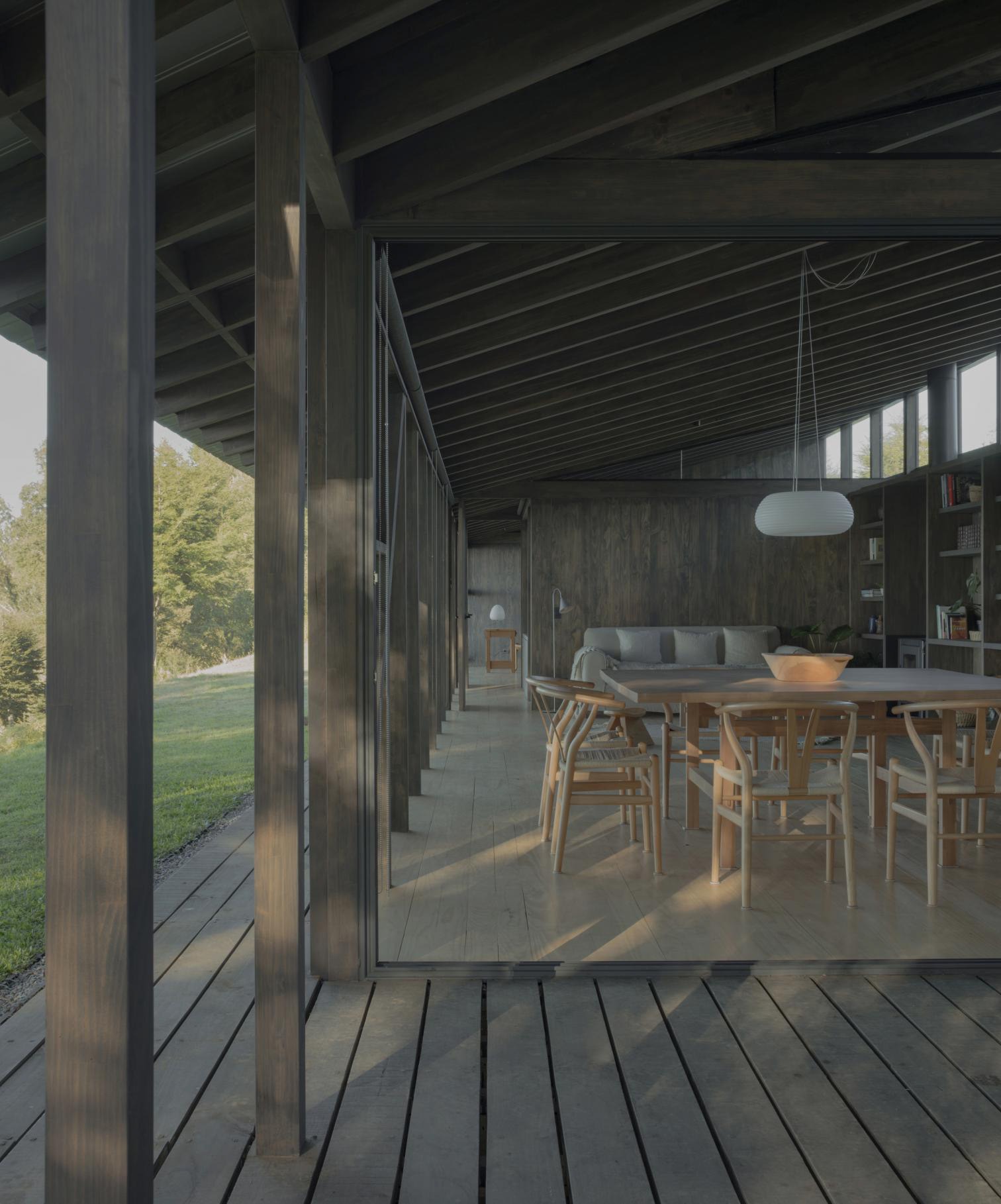
The main structure resorts almost entirely to wood, in keeping with the nearby forest. Only the supports, metal tubes on punctual foundations, avoid a major alteration of the terrain: the house seems to float on the slope, with minimal impact.
The sloping metal roof responds both to the climate -rainy in the area- and to the natural slope of the terrain, integrating the house into the topography. This decision establishes visual continuity with nearby buildings, avoiding disruptions in the landscape.
Indoor without barriers: nature within reach
Thanks to its open floor plan and strategic opening of openings, the house blurs the boundaries between inside and outside. The forest and the lake become visual extensions of the interior space.
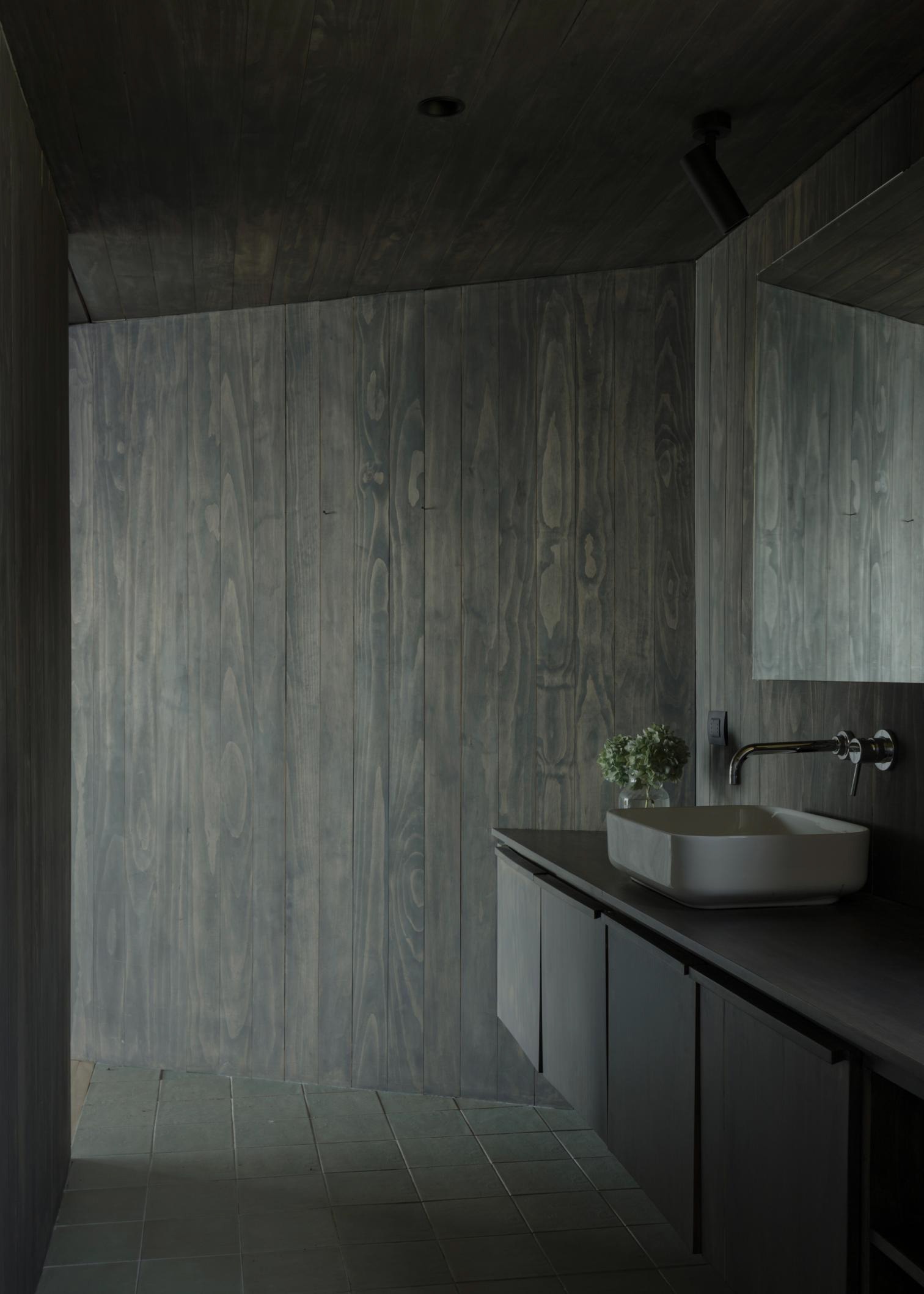
Every window, orientation and material makes sense: the interior wood modulates light and warmth, and the constructive simplicity ensures comfort in moderation. There are no unnecessary ornaments, just a domestic pavilion that breathes with nature.